
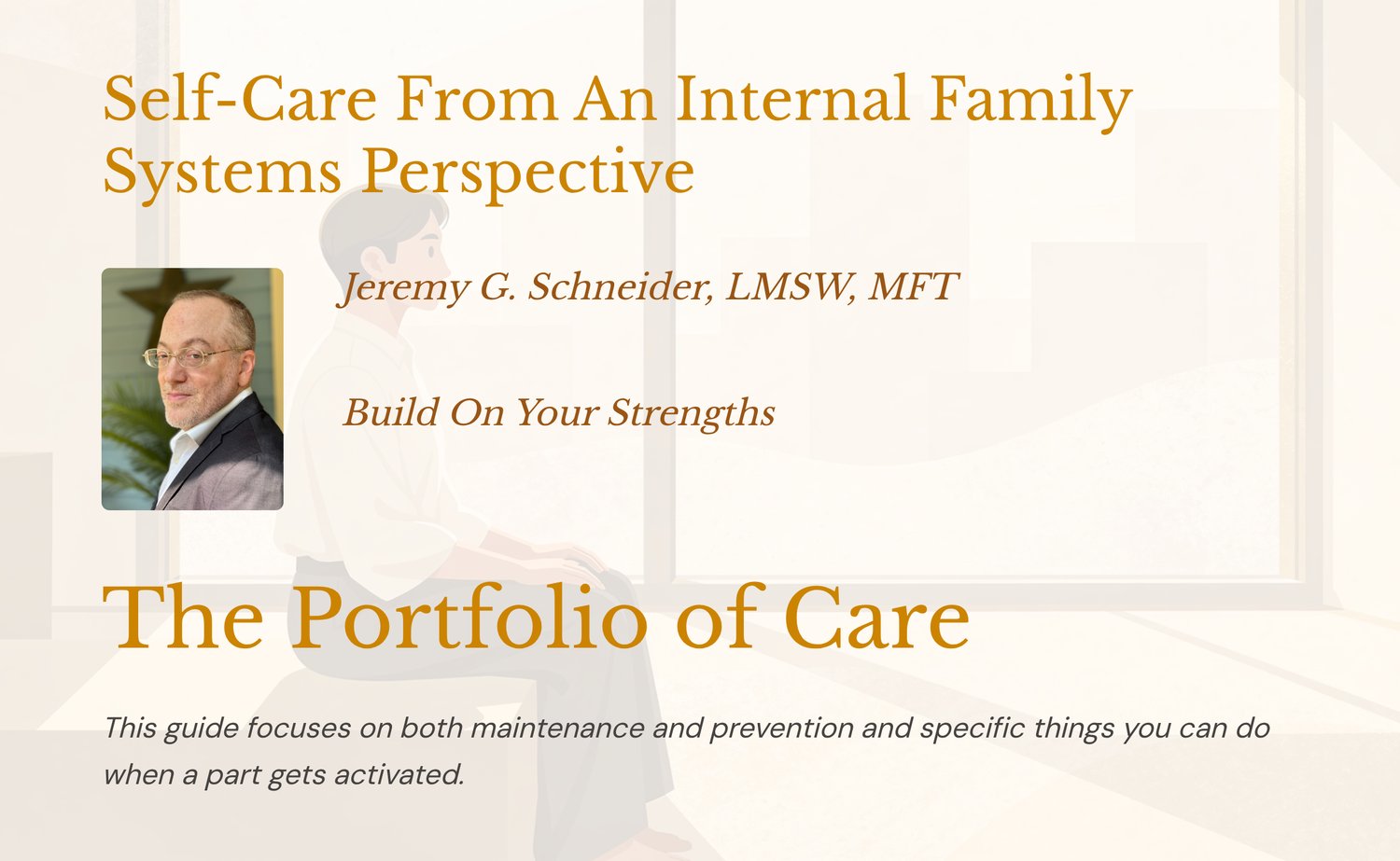
Self-Care From An Internal Family Systems Perspective
Self-Care That Doesn't Feel Like Another Thing You're Failing At
A two-guide system for understanding your nervous system and your inner parts — built for people who carry more than they show.
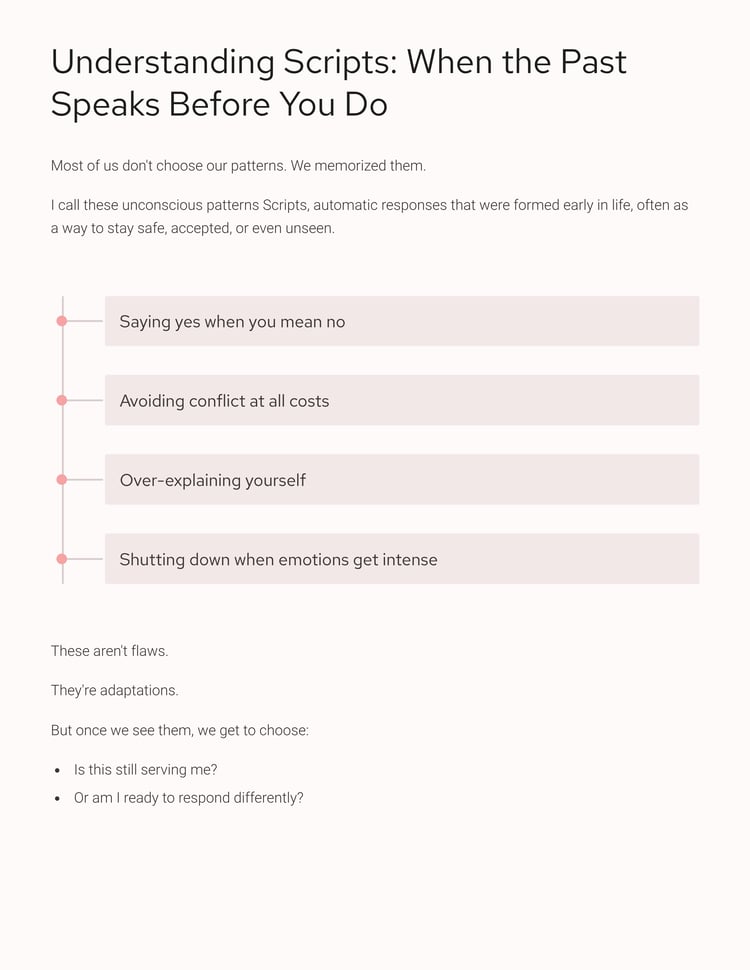
You know the feeling of moving through your day with an invisible backpack. Every stressor, every difficult conversation, every flare of pain or shame adds weight. Some of it is from today. Some of it is from things that happened a long time ago and never fully got put down.
Most self-care advice ignores the backpack. It tells you to do more — meditate longer, journal more, hydrate, exercise, breathe. So you add those things to the pile, and the pile gets heavier.
This is a different approach.
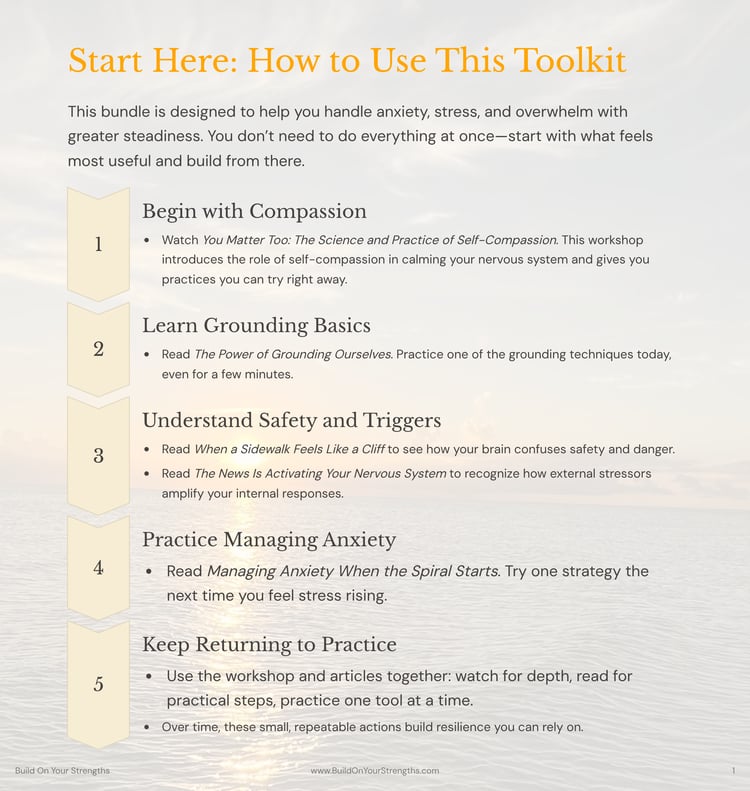
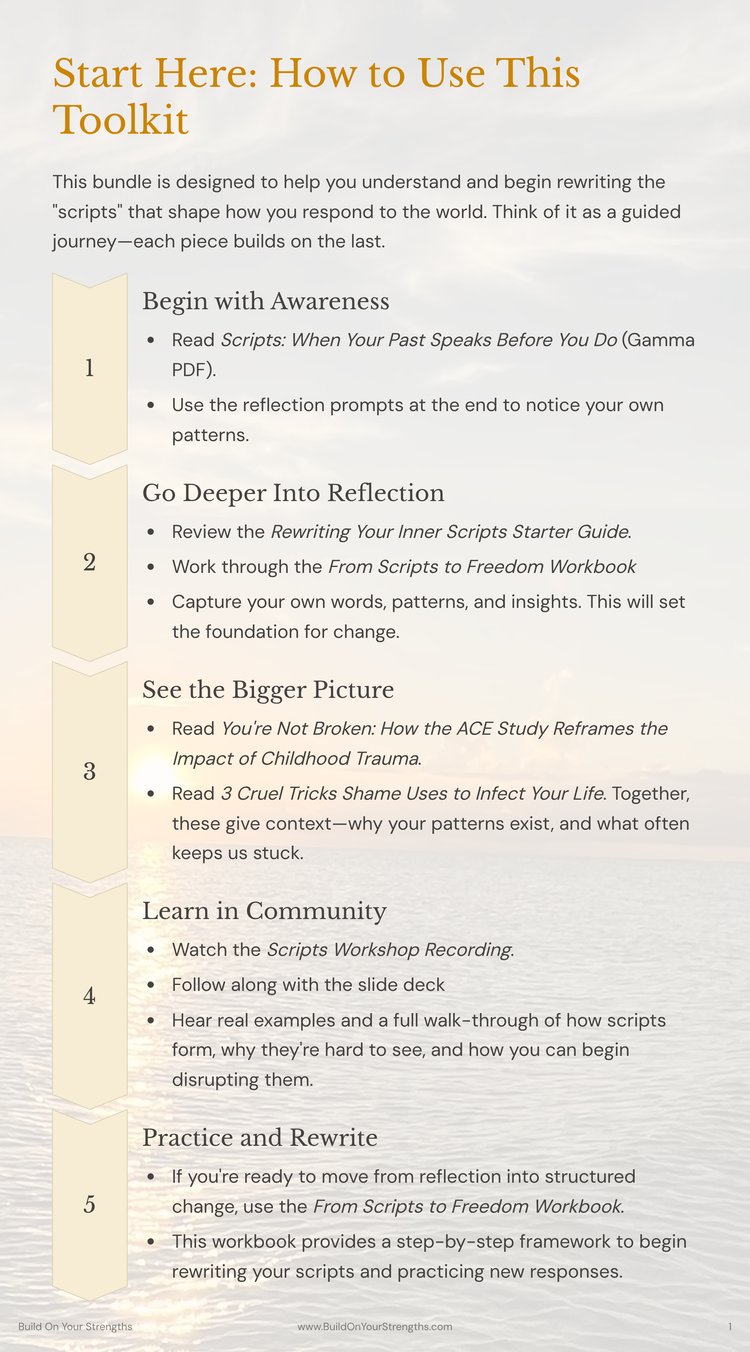
The Self-Care Guide and Portfolio of Care are built on Internal Family Systems (IFS), a clinical framework for understanding why your nervous system reacts the way it does and what is happening when a part of you takes over. The guides explain the framework clearly, then give you practical tools you can actually use.
You are not meant to do all of them. You are meant to find the two or three that work for you.
What's Inside
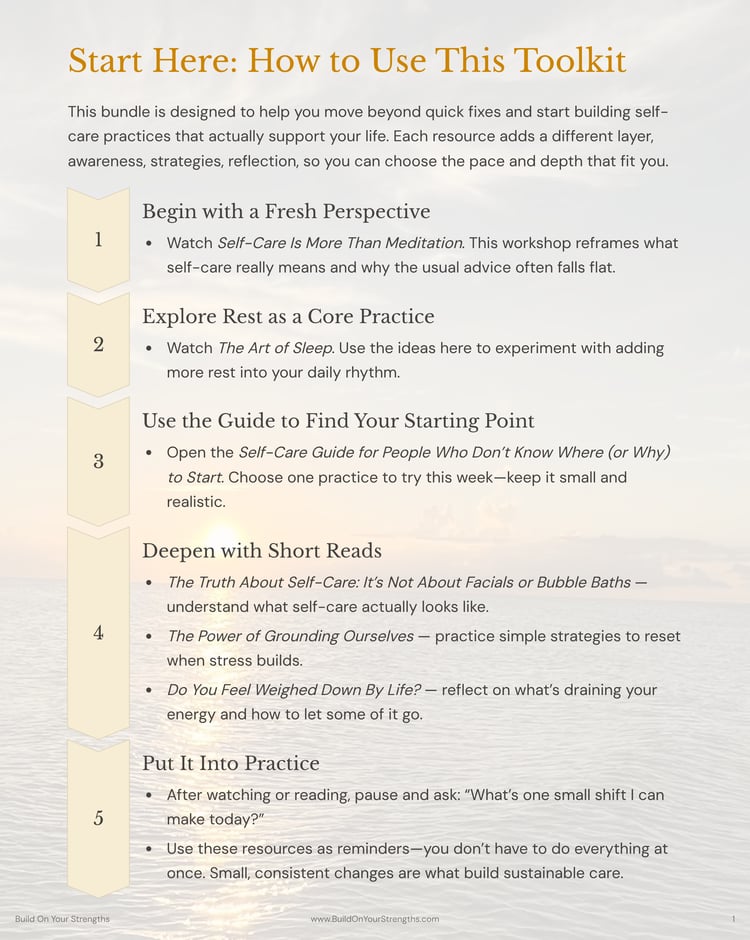
- The Self-Care Guide explains how self-care actually works inside the IFS model. Why parts get loud. Why your nervous system stays activated. Why good things sometimes feel hard. Why daily care matters more than crisis care. Read this one to understand.
- The Portfolio of Care is your in-the-moment companion. Tools organized by what your body is asking for: wired and panicked, flat and shut down, looping and spiraling, young and overwhelmed. Daily practices for maintenance and prevention. Scripts for when a part is activated and your own words have disappeared. Use this one when you need somewhere to start.
Both guides are professionally designed and ready to read on your phone, tablet, or printed out for your nightstand.
Who This Is For
People who have done some inner work and want a clearer framework for why they react the way they do. People who live with chronic pain, fibromyalgia, or trauma history and need self-care that respects what their body can actually tolerate. People who are tired of self-care content that treats them like a project to optimize.
If you have ever read self-care advice and thought that's not the problem, this was built for you.
About the Author
Jeremy G. Schneider, LMSW, MFT, is a trauma-informed coach and the founder of Build On Your Strengths. He has been featured in the New York Times, Washington Post, and CNN, and writes a Psychology Today column on the intersection of AI and mental health.