


5 Graphy Alternatives for Creators and Sellers
Last updated: June 30, 2026
Graphy is a popular platform for selling digital products and services. However, as people use their platform, they start to see some issues unfold. Sellers who want to scale their businesses often feel restricted by the platform and are now looking for one that offers more features for high-volume sellers. They also want more control over their audience, business models, product types, and more. Naturally, people look to Graphy alternatives to find solutions that meet their ever-changing needs.
Key Takeaways
- Payhip is the best Graphy alternative as an all-in-one platform packed with features
- Podia is a simple Graphy alternative
- Udemy is a Graphy alternative that offers a marketplace
- Kajabi allows you to build funnels
- Thinkific is for course creators
Why People Look for Graphy Alternatives
1. Sellers outgrow the platform
Graphy is a platform early-stage creators often use to sell courses, digital products, or coaching programs. However, as those early-stage creators scale their businesses, they realize their products need more. They turn to Graphy alternatives to gain more control over branding, secure better pricing, and even create more elaborate funnels to help them scale their business. Overall, sellers want a platform that allows them to scale easily with minimal friction.
2. Sellers want to own their audience
When sellers turn away from Graphy, it’s usually because they want more control of their audience. While you can build communities on Graphy, it’s harder to build direct relationships with their followers, fans, or customers. They want to tap into email lists and their owned platforms to manage their brand.
3. Sellers want to change business models
Sellers also look for Graphy alternatives to sell a greater variety of product types and business models. On Graphy, you can only sell three product types. You can’t sell memberships or physical products. Some sellers may want to expand their product offerings to increase sales. Plus, some may want the freedom to charge in different ways, such as pay-what-you-want pricing.
4. Sellers want to sell internationally
Graphy allows you to connect payment gateways, such as Stripe and Razorpay. However, there are over 100 payment gateways to choose from on Graphy alternatives, giving sellers more freedom over where they sell. For instance, many African countries require unique payment gateways since platforms like Stripe and PayPal don’t service them. For those who want to reach a truly international audience, an alternative to Graphy may be better suited to the scale they seek.
Comparing Graphy Alternatives
| Platform | Best For | Pricing | Key Pros | Key Cons | Best Overall Verdict |
|---|---|---|---|---|---|
| Payhip | Creators selling courses, digital & physical products, memberships | Free: 5% fee Plus: $29/mo (2%) Pro: $99/mo (0%) |
All-in-one platform, unlimited products & revenue, 100+ payment gateways, instant payouts, built-in marketing tools | Limited free themes | Best overall Graphy alternative for multitude of features |
| Podia | Creators selling digital products and courses | Mover: $49/mo (5%) Shaker: $99/mo Earthquaker: $179/mo |
Built-in email marketing, all-in-one platform | Limited payment gateways, no instant payouts, fewer advanced features | Best for simplicity |
| Udemy | Course creators using marketplaces | Free to publish 37%–97% revenue share |
Massive built-in audience, no upfront costs | High fees, no customer ownership, limited branding | Best for marketplace reach |
| Kajabi | Advanced course creators building funnels | $179–$499/mo | Built-in funnels, automation, email marketing | Very expensive, complex, feature limits per plan | Best for advanced marketers |
| Thinkific | Course creators needing advanced tracking | $49–$199/mo | Strong course analytics, integrations | Not all-in-one, requires extra tools, limited marketing features | Best for course analytics |
5 Graphy Alternatives for Creators and Sellers
1. Payhip
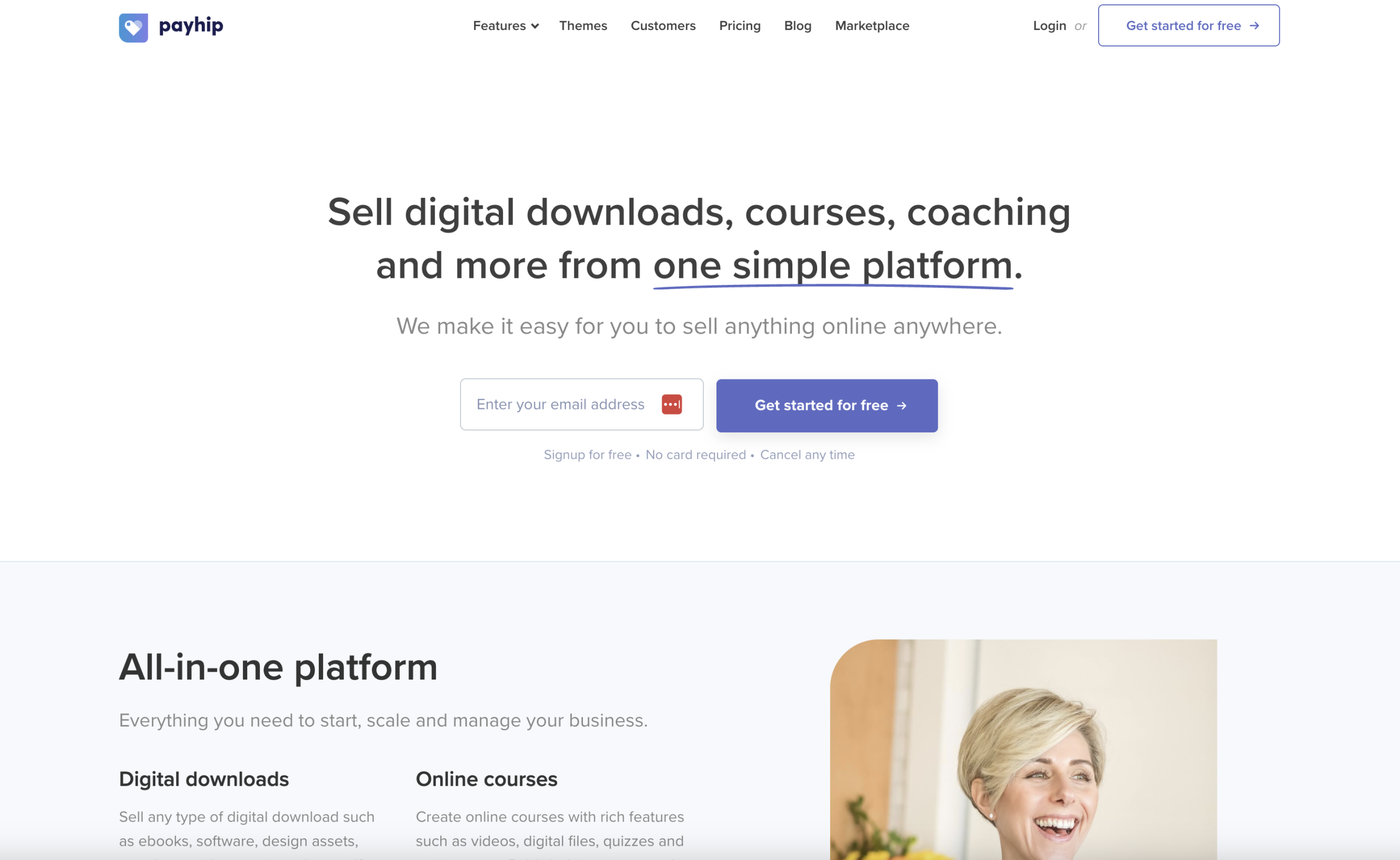
Payhip is the best Graphy alternative for creators and sellers, as it lets you create a beautiful website in just a few minutes. Plus, the platform is perfect for both beginners and at scale because all features are included across all plans, and plans are designed to keep more money in your pocket.
Payhip also lets you sell a wide range of products, each with its own specialized features to help you maximize your business on the platform. Plus, you’ll even have access to marketing tools like affiliate marketing programs, referral system, and upsells and cross-sells. Overall, this feature-rich platform gives you all the functionality and tooling you’d need to start selling online.
PRICING
While Graphy costs an expensive $49 per month to use their platform, sellers may be interested in Payhip, which has a Free Forever plan with no monthly fees but only a 5% transaction fee once you’ve made a sale. This plan lets you take your time building your platform, with no pressure to generate immediate sales to cover your costs. Unlike most platforms that offer features as you move up subscription tiers, Payhip actually offers all features, unlimited products, and unlimited revenue on even the free plan. If you choose to upgrade to the $29 per month plan, you’ll also pay a reduced 2% transaction fee. To eliminate transaction fees, you’ll need to pay for the $99-per-month plan.
PROS
- From beginner to high-volume seller, you’ll be able to start and scale on this platform
- Create your own website in minutes with this all-in-one platform
- Sell your digital and physical products on Payhip Marketplace with no added fees
- Own your customer data and remarket to customers with ease
- Choose from a variety of product types, such as digital downloads, online courses, memberships, coaching services, and physical products
- Charge customers based on a range of business models, such as pay-what-you-want, recurring subscriptions, free trials, or one-time fees
- Pick from over 100 payment gateways to reach customers around the globe
- Have you VAT and sales tax automatically handled
- Advanced features for each product type, such as a beautiful course player, drip content, unique lesson types, and more for online courses
- Instant payouts on Stripe and PayPal
- Piracy prevention tools, such as PDF stamping and download limits
CONS
- Limited selection of free themes
Sell Digital Products with Payhip
No monthly fees. No tech headaches.
2. Podia
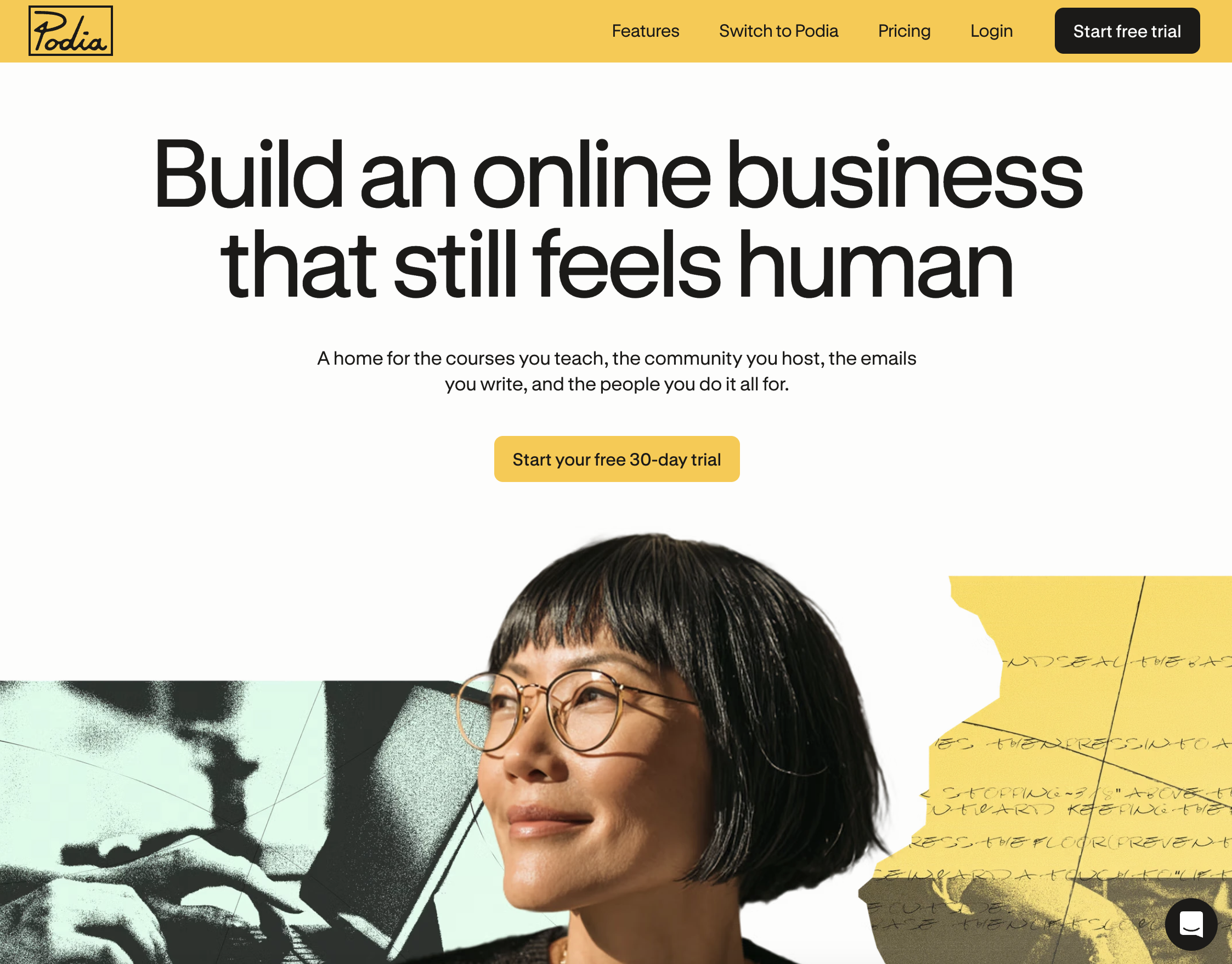
Podia is a more expensive Graphy alternative that lacks some of the financial tooling you need to run a business. Most Graphy alternatives let you choose from over 100 payment gateways, so you can reach customers in countries not supported by Stripe or PayPal. However, Podia only offers two payment gateways, limiting which countries you can sell in. There are also no instant payouts; you need to wait two days to receive payment.
Podia has some features for its products; however, it lacks the advanced tooling that sellers would need to create a complete learning experience for its online courses, for example.
PRICING
Podia has a three-tier pricing system. The Mover plan costs $49 and 5% transaction fees; the Shaker plan costs $99 per month, and the Earthquaker plan costs $179 per month. Unfortunately, the platform doesn’t offer a free plan; only a limited 30-day free trial is available.
PROS
- Built-in email marketing and newsletters that don’t require third-party tools
- All-in-one platform allowing you to sell a range of digital products
CONS
- Limited page customization options, such as layouts
- Lacks advanced features for courses
- Few built-in tools for building a community
- Charges high transaction fees on an expensive paid plan
- Locks affiliate marketing behind the highest tier plan
- No instant payouts, payouts take two business days
- Only supports Stripe and/or PayPal, lacks a variety of international payment gateways
- Doesn’t have a dedicated mobile app
3. Udemy
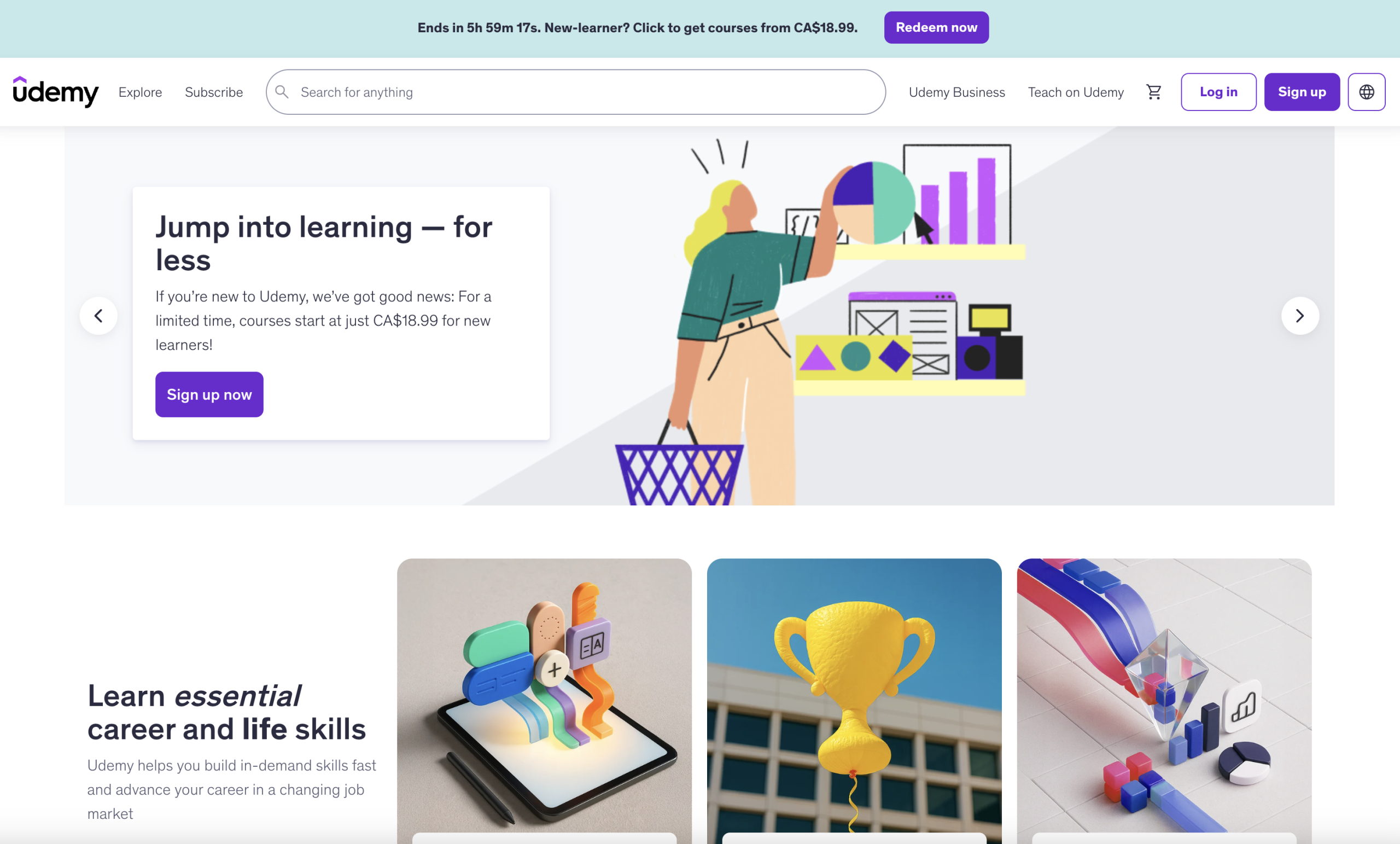
Udemy is one of the most popular online course platforms, with a massive built-in audience for its marketplace. While you’ll have access to millions of learners on this Graphy alternative, it tends to be an expensive platform when it comes to fees.
Udemy tends to run many promotions on its website, offering massive discounts to attract potential customers and drive as many sales as possible. So, you don’t have full control over your pricing.
PRICING
Udemy doesn’t have any upfront fees for selling courses on its platform. You will, however, be paid only 37% of the sale when you’ve made a sale through Udemy. If you bring in a customer through your own promotions, you’ll receive 97% of the sale. Course creators are free to opt out of the Udemy Deals Program so they can keep the prices of their course within their control. You will only be able to withdraw your revenue when you’ve reached $25 USD in sales.
PROS
- Udemy has 84 million learners and 340k subscribers as of December 31, 2025, making its marketplace a popular choice for course sellers
- It’s free to create and publish courses on the platform compared to Graphy’s paid plan
CONS
- You don’t own your customer data, as students belong to Udemy
- Can only sell online courses rather than other digital or physical products
- Udemy takes a large cut of the sale when it happens through their promotions
- Hard to set your own prices due to Udemy discounts
- You can’t build a brand on the platform
- Highly competitive marketplace with 85,000 other instructors on the same marketplace
- You’re dependent on Udemy’s algorithm for success
4. Kajabi

Kajabi is a pricey Graphy alternative that allows you to build complex funnels for your online courses. Some online course creators may find the platform overkill for the features they really need, while others may find it valuable. The idea of creating funnels for a course creator isn’t intuitive and may not be as beginner-friendly as some of the other Graphy alternatives on this list.
PRICING
Kajabi is the most expensive Graphy alternative on this list, with plans starting at over $100. Their Basic plan costs $179 per month, but you can only sell 5 products. The Growth plan charges $249 per month, whereas the Pro costs $499 per month. Overall, you’ll be capped with specific features depending on which plan you use, which can skyrocket your fees if you’re a seller.
PROS
- You’ll have access to built-in email marketing, automation, and segmentation for your online courses to build a funnel
- An all-in-one platform that requires fewer third-party tools for website building, landing pages, CRM, and more
CONS
- No free plan, overall very high costs
- Each plan caps how many products you can sell, and you must be on the most expensive plan to sell an unlimited number of products
- Everything is locked inside their ecosystem, preventing you from having a choice in who your email provider is, for example
- Not the best platform for fully customizing your layouts
- Features for online courses are rather basic rather than true to an LMS
- There are hidden fees for transactions, including international cards
- Not a beginner-friendly platform, as the tooling can be complex
5. Thinkific

Unlike many Graphy alternatives, Thinkific isn’t an all-in-one platform. If you’re selling courses, it offers the functionality you need. However, if you’re hoping to make this your business you’ll need third-party tools for payments, email, and funnels, which can add up to being more work for you overall.
PRICING
Thinkific offers three public pricing plans: Basic ($49 per month), Start ($99 per month), and Grow ($199 per month). They also have a Plus plan, where you’ll need to talk to a sales team, as you’ll have your own pricing. While some Graphy alternatives offer all features on all plans, this one doesn’t. You need to constantly upgrade your plan to access more and better features.
PROS
- Offers advanced student progress tracking
- Allows you to integrate outside tools
CONS
- Not an all-in-one platform
- Can be hard to set up for beginners
- Lack of built-in marketing tools or features
- Important features are gated to high-tier plans
- Access to support depends on the plan tier
- The platform can feel disconnected due to needing other tools for different components of selling courses
FAQ
What is the best Graphy alternative?
The best Graphy alternative is Payhip, which offers unique features across all its product types to help you sell products more easily. Plus, you’ll have access to tools that help you increase your average order value, such as affiliate marketing and upselling.
Is it easy to migrate from Graphy to another platform?
Yes, it’s easy to migrate from Graphy to another platform. You would need to export your product and customer list so you can import it into a platform like Payhip, which only takes a few minutes to set up. Then, you’ll need to back up your sales data so you can refer back to your sales history as needed.
Can you get paid faster on a Graphy alternative?
Yes, you can get paid faster on the Graphy alternative Payhip, which offers instant payouts on both Stripe and PayPal.
Which payment gateways will I have access to on a Graphy alternative?
Some Graphy alternatives, like Payhip, offer over 100 payment gateways beyond the traditional Stripe and PayPal. You’ll be able to reach customers in Africa, India, and other parts of the world that aren’t serviced by traditional payment gateways.
Do any Graphy alternatives have free plans?
Yes, Graphy alternatives like Payhip have free plans. On the free plan, you’ll only pay a 5% transaction fee once you’ve made a sale. As your business scales, you can choose a paid plan without transaction fees to reduce your costs.
What Graphy alternative is best for beginners and scaling?
Graphy alternative Payhip is best for beginners and scaling. For beginners, you’ll get access to selling unlimited products while earning unlimited revenue on the free plan. Plus, it’s packed with all the features, too. For scaling, you can choose a paid plan that reduces your overall costs as a high-volume seller.


Payhip
Join over 130,000 creators who have launched their businesses selling digital products, online courses, memberships, coaching, and physical products.
Get started for free today
Comments
7 Comments
I am so glad I found this opportunity to join and share my products with payhip. This is the best platform I’ve ever had so far. Blessed are the creator of this platform. Good luck and God bless to us all.
With love and care.
Hi Frank, we’re glad to have you on Payhip. Best of luck, and welcome to the community!
Thank you Kim @payhip!💖
Não acredito que achei um artigo escrito por uma brasileira justo quando estava procurando uma alternativa pra Selar kkkkkkkkkk. Expandi minhas operações pra África na última semana e nunca passei por isso na minha vida de 5 anos de digital: Simplesmente bloquearam minha conta, depois a deletaram, revertendo as transações para os clientes sem motivo aparente na Selar.
Todos os emails que respondi não obtive retorno, além de sistematicamente eles darem time out nos tickets para que eu não possa contestar a decisão. Irei com certeza dar uma olhada!
Definitely take a look around and see what fits your business best. If you have any questions about migrating products, setting things up, or how things work on Payhip, feel free to ask. Happy to help! 🙂
Good overview of the alternatives. A lot of creators are looking for platforms that give them more flexibility, better customization, and fewer limitations when selling digital products online. It’s interesting how much presentation and branding now matter alongside the actual content itself.
Thanks, Georgiy!
Leave a Comment