


5 Amazon KDP Alternatives for Self-Published Authors
Amazon KDP is the largest platform for selling ebooks online. However, being the biggest marketplace doesn’t necessarily mean the best. Not only do you pocket fewer royalties than you’d hope, but you also have to be exclusive to Amazon to stay on it. Plus, Amazon limits your price by offering the best royalties for a specified price range. You won’t have access to customer data to grow your sales. And the competition on the platform is so stiff that it’ll be hard to stand out. All these issues cause people to look for Amazon KDP alternatives. On this list, you’ll find new platforms to sell ebooks online.
Why People Are Looking for Amazon KDP Alternatives
1. Lower royalties than expected
When selling ebooks on Amazon KDP, you might decide to look for an Amazon KDP alternative because Amazon takes a large chunk of the sale. While you don’t pay any upfront fees to be listed on Amazon’s marketplace, you only get paid 35% or 70% of the sale of your book, depending on the price you sell your book at. There are other platforms that offer more generous commissions for selling ebooks online.
2. KDP requires exclusivity
To be listed on Amazon’s KDP, you offer Amazon exclusive rights to carry your book. That means you won’t be able to sell your ebooks on any other Amazon KDP alternatives while you’re in the KDP program. Keep in mind that book sales typically generate more sales than book royalties. The reader who finishes your ebook on Amazon KDP won’t be giving you more money than the one who buys your book outright. You’re giving up exclusivity for royalties rather than sales. Plus, by being exclusive to Amazon, you miss out on sales at dozens of book platforms where you can sell your book to a much larger audience online.
3. Risk of account suspension
Amazon KDP is known for sudden account bans with limited explanations. You might not know why your account was banned, so you can’t resolve the issue and make it right. If your account is terminated, you lose all your income just like that. The lack of stability and security in your books staying on the platform can make people look for Amazon KDP alternatives. Sometimes, something as simple as using a trademarked phrase in a book can be enough to get a book banned from the platform. However, it’s possible you didn’t know the phrase was trademarked when you used it
4. Lack of customer data
On Amazon KDP, you’re unable to access customer data to grow your sales. You won’t have direct access to buyers. You won’t get any customer emails. Plus, you don’t get the opportunity to remarket to customers via retargeting ads since you don’t own the website. On Amazon KDP, all you get is the opportunity to get followers to your Amazon listing page, where customers can choose to follow you. When you release a book, the customers who follow you will get an email about your new release. This can help you get some sales directly from email, but you won’t have much control over when they’re sent or whether they’re sent at all. Thus, some people start looking for Amazon KDP alternatives.
5. Price restrictions cap earning potential
To get the 70% royalty on Amazon KDP, you need to price your book between $2.99 and $9.99. Unfortunately, this is actually much lower than what the average book sells for on most websites. For instance, many authors price ebooks between $19 and $47 when selling directly to consumers. If you create a unique book with valuable content, you can charge higher fees for it. However, Amazon’s walled garden shrinks your earning potential by offering its best royalties under a specified price bracket.
6. High marketplace competition
Another reason you might look for Amazon KDP alternatives is that Amazon is the world’s largest marketplace. The competition is stiff. You’ll be struggling to get sales when competing with dozens of books around the same topics. Some books might have the same titles. Plus, some authors may even have the same name, creating even more stiff competition for yourself. Overall, the marketplace is highly competitive, so it’s hard to stand out. Being on other platforms can give you more visibility.
| Platform | Best For | Royalties / Pricing | Key Pros | Key Cons | Best Overall Verdict |
|---|---|---|---|---|---|
| Payhip | Authors selling ebooks directly with full control | 5% fee (keep ~95%) Optional subscriptions reduce fees |
Highest earnings, own customer data, instant payouts, no exclusivity, set your own prices, built-in marketing tools | Must handle your own marketing and support | Best overall Amazon KDP alternative for control and profits |
| Kobo | Fiction authors selling ebooks globally | 70% (>$2.99) 45% (<$2.99) |
No exclusivity, higher royalties than KDP, flexible pricing | Smaller audience, limited for non-fiction, $50 payout minimum | Best KDP-like alternative |
| Apple Books | Authors targeting Apple users | 70% royalties (no price restrictions) | No exclusivity, global reach, no pricing limits | No customer data, complex setup, limited marketing tools | Best for Apple ecosystem |
| IngramSpark | Wide distribution to retailers and libraries | 85% of net royalties | Mass distribution network, non-exclusive, library reach | Lower earnings, complex setup, formatting requirements | Best for distribution reach |
| Google Books | Authors targeting Android users | 70% (supported countries) 52% otherwise |
Wide global reach, no exclusivity | Limited tools, no print support, weaker ecosystem | Best for Google ecosystem |
5 Amazon KDP Alternatives for Self-Published Authors
1. Payhip
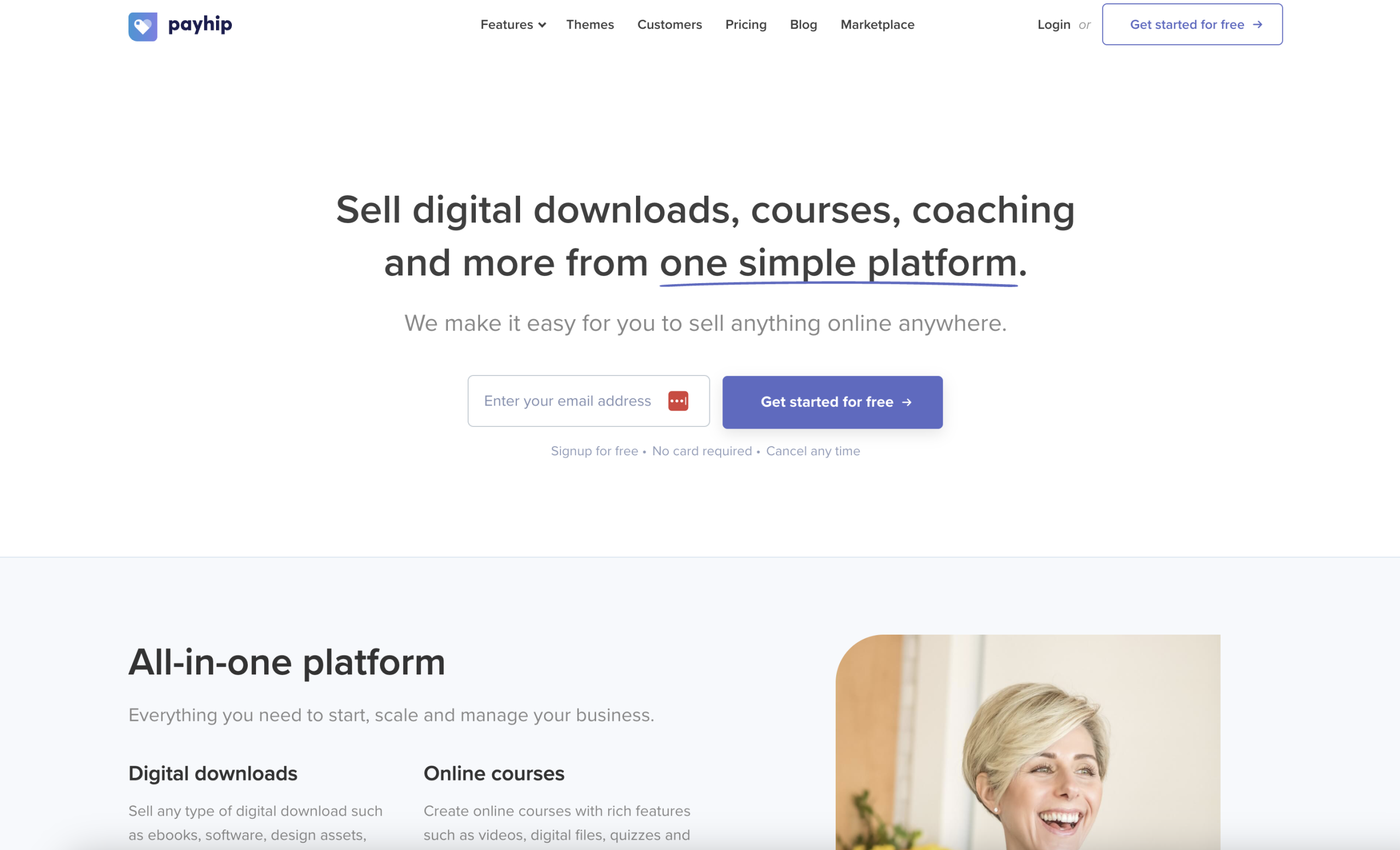
Payhip is the best Amazon KDP alternative for self-published authors. This platform lets you build your own website to sell your ebooks without restrictions. You won’t be forced into exclusivity, so you can also sell on other platforms should you want to. Sellers will also own customer data, allowing them to remarket to customers via email or retargeting ads as they see fit.
Unlike Amazon KDP, you’ll receive payouts instantly with PayPal or Stripe, rather than waiting 60 days. This platform also allows you to PDF-stamp your ebooks and limit file downloads, helping prevent piracy.
While you will have to manage your own customer support and marketing, you’ll be able to reach a bigger audience by growing email lists and other assets as you gain sales. Plus, you’ll also get fan mail directly to your website, so you’ll get to see what people think of your books.
PRICING
Free Forever
- $0/month
- 5% transaction fee
Plus
- $29/month
- 2% transaction fee
Pro
- $99/month
- 0% transaction fee
PROS
- Higher royalties per sale, with 95% of book sales ending up in your pocket
- Own customer data by building an email list, marketing directly, or retargeting customers
- Instant payouts, unlike KDP’s 60 days
- Set any price you want for your products
- Handles VAT and sales tax, which can be complex for sellers
- Easy website storefront builder
- PDF stamping to prevent piracy
- Allows multiple file formats, such as PDF, EPUB, or MOBI
- Built-in marketing tools, such as an affiliate program, coupon codes, etc
- Instant ebook delivery
- Limit downloads per customer to prevent piracy
- No exclusivity
- Sell both ebooks and physical books on one platform
- Payhip marketplace allows you to sell your ebooks to an existing audience
CONS
- You’re responsible for your own customer support
Sell Digital Products with Payhip
No monthly fees. No tech headaches.
2. Kobo
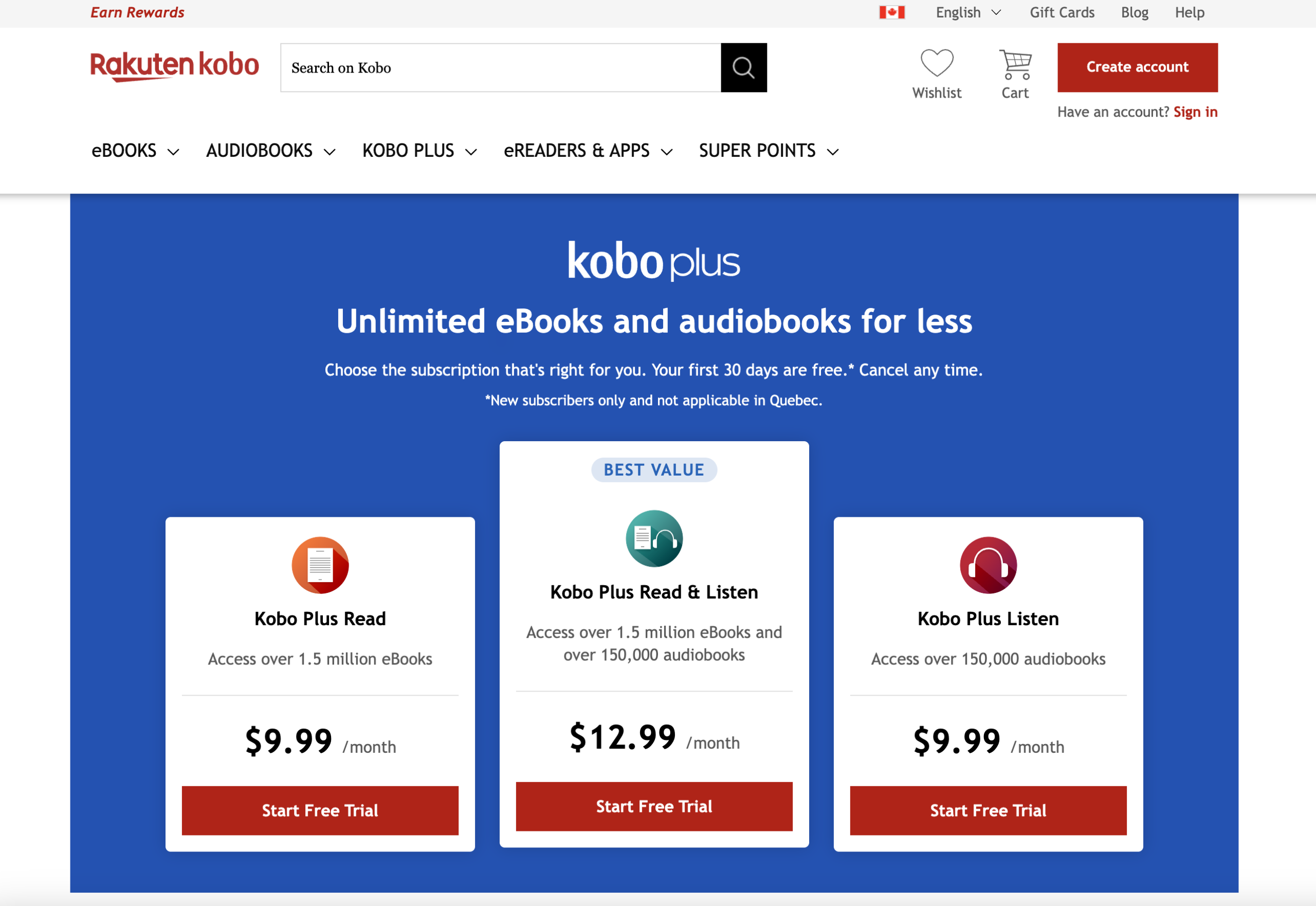
Kobo might be a smaller platform than Amazon KDP, but that doesn’t make it any less of a worthy Amazon KDP alternative. You’ll find more flexibility in pricing your products, as royalty rates are much higher on Kobo.
This platform is predominantly suited for fiction books, so non-fiction sellers might not benefit from sales at the same rate. Unfortunately, there is a minimum withdrawal amount of $50.
If you’re hoping to sell physical books as well, this platform doesn’t have any print-on-demand services like Amazon KDP. You’ll need to turn to another platform instead.
PRICING
Kobo Pricing
- 70% for books over $2.99 USD
- 45% for books under $2.99
- 20% of the list price for books part of the public domain
PROS
- No exclusivity required
- Offers better royalty rates
CONS
- Smaller market share in the US
- Authors tend to sell fewer books on the platform
- Not the best platform for non-fiction
- Lacks dedicated author pages to enhance branding
- Requires $50 minimum to receive payments
- Lacks print options as it’s mainly for ebook sales
3. Apple Books
Apple Books is an Amazon KDP alternative that lets you reach Apple users who read ebooks. This platform has some perks. Like other Amazon KDP alternatives on this list, you won’t need to be exclusive on this platform. You also get a better royalty rate with no pricing restrictions.
This platform lacks the marketing resources to help you earn more income from your ebook sales. Plus, it is still a walled garden where you won’t own your customer data. The platform is known for a difficult setup process, which is why many people avoid it or sign up for third-party tools to add their ebooks to it.
PRICING
Apple Books Pricing
- 70% for books regardless of price point
PROS
- No price restrictions
- No file delivery fees for image-heavy books
- No exclusivity required
- The platform has a significant market share in over 50 countries
CONS
- Smaller market reach compared to Amazon KDP
- Only allows ebook sales, no print support
- Won’t own customer data
- Hard technical setup, many use third-party tools to sell on this platform
- No monthly subscription to get additional royalties from readers
- Lacks the marketing tools Amazon KDP provides
- Certain files lead to display issues for readers
- Only Apple users will have access to these ebooks
4. IngramSpark
IngramSpark is a popular platform for distributing ebooks. While they aren’t a single platform for selling ebooks, they promote your ebooks to hundreds of retailers and thousands of libraries, so your ebooks could get the reach that you deserve.
Unfortunately, you get a lower royalty rate per sale, as you only receive 85% of the royalty you’d otherwise get. So if the book is listed on a platform that gives a 70% royalty, you would only get 85% of that 70%. So, relying on third-party publishers will eat away more of your earnings.
PRICING
- 85% of net revenue is received by IngramSpark with each sale, regardless of retailer
PROS
- Non-exclusive network
- Sends books to libraries as well
- Easy print-to-ebook conversion
CONS
- Charges fees for revisions after the 60-day free period
- Strict requirements regarding file formatting
- Inconsistent print quality
- Doesn’t distribute to Google
- Steep learning curve, less intuitive interface
5. Google Books
Google Books is a popular platform for selling ebooks to Android users. While they don’t have any pricing caps, you’ll be forced to accept the Terms of Service to get the full royalty rate while also living in a supported country.
The platform has no exclusivity terms, allowing you to sell on any platform. However, it’s not the best platform for publishing print books. It also doesn’t have a monthly subscription service for readers, which would let you earn even more money online. And without a dedicated e-reader, you need to know how to format your books for standard e-readers, which may differ from what your readers use.
PRICING
Google Books Pricing
- 70% for most books in supported countries for partners who’ve accepted the Terms of Service
- 52% for partners who haven’t accepted the Terms of Services and are based in unsupported countries
PROS
- Has reach in over 75 countries
- No exclusivity
CONS
- Exclusively targeted at Android users
- Less market share than KDP
- Lower royalty rates for people who didn’t accept the Terms of Service or are based in unsupported countries
- No native e-reader device
- No print-on-demand for publishing physical books
- Lacks a subscription service for readers
- Less intuitive interface
FAQ
What is the best alternative to Amazon KDP?
The best alternative to Amazon KDP is Payhip, which allows you to keep 95% of your earnings when you sell online. You’ll also be able to PDF stamp your ebooks to prevent piracy, so you don’t end up on a pirate site.
Can I publish without Amazon KDP?
Yes, you can publish without Amazon KDP. You can publish on your own website via Payhip. You can also publish through a traditional publishing house. Alternatively, you can publish on another ebook platform like Kobo, Apple Books, or Google Books.
Which Amazon KDP alternative pays the highest royalties?
The Amazon KDP alternative that pays the highest royalties is Payhip. You keep 95% of the sale price when you sell on Payhip. You only pay a 5% transaction fee once you’ve made a sale. Plus, Payhip also has a marketplace where you can sell your ebooks once you’ve made $10 in sales. Overall, it’s a less competitive platform; you can retain your customer data and pocket more of your sales.
Do I make more money selling books outside Amazon?
You make more money selling books to a greater audience. On your own website, you can market your books as much as you want to reach a global audience. Plus, you won’t have to be exclusive on your own website. You can still sell on Amazon, as long as it’s not KDP, to retain non-exclusivity. The more places you sell, the more money you’ll make. Your own website is a good starting point as you’ll get to control the market without limits.
Does Amazon KDP take too much commission?
Yes, Amazon KDP does take too much commission. You have two royalty rates to choose from 35% or 70%. Overall, these are significant sales losses. Other platforms like Payhip let you keep 95% of the sale price. That allows you to keep more of what you sell for yourself so you can grow your sales more drastically.
Can I sell my book on other platforms if it’s on KDP?
No, you can’t sell your book on other platforms if it’s on KDP. KDP requires you to be exclusive to Amazon to sell on the platform. You will be banned from ever selling any books on Amazon should you sell on other platforms while a book is on KDP.
How do I move from Amazon KDP to another platform?
To move from Amazon KDP to another platform, you’ll need to go to
kdp.amazon.com. From there, you’ll need to go to your Bookshelf. Then, you’ll need to go to your book where it says “KDP Select: eBook enrolled.” This means your book is currently on KDP. Next to the “Promote and advertise” button, you’ll see three dots; click them. Go to “Manage KDP Select.” You’ll see the term start date and end date. You need to unclick “Automatically renew this book’s enrollment in KDP Select for another 90 days.” However, after you unselect it, you still need to wait until the day after the term’s end date to promote your books on another platform or your own website.
Can I use multiple self-publishing platforms at the same time?
Yes, you can use multiple self-publishing platforms simultaneously. However, some platforms may have rules that prevent selling on other platforms, such as Amazon KDP. However, you can still sell your ebook on Amazon without KDP by selling on other platforms, such as your own website, using Payhip’s website builder.
How can I market my book without Amazon?
You can market your book without Amazon by building a website with Payhip. On Payhip, you can build a blog to drive traffic to your website via search. Plus, you can promote your blog posts, book listings, and more via Pinterest as well. Overall, a search and advertising strategy can help you drive book sales without Amazon.
Do I own my audience on Amazon KDP?
No, you don’t own your audience on Amazon KDP. You won’t have access to email addresses or pixels to run retargeting ads either. Overall, if you want to own your audience, you need to build a website on Payhip.


Payhip
Join over 130,000 creators who have launched their businesses selling digital products, online courses, memberships, coaching, and physical products.
Get started for free today
Comments
Leave a Comment