Your Cart
Loading

CLINICAL PRACTITIONER DEVELOPMENT PRODUCTS

The Clinical Practitioner Series is designed for experienced chiropractors and other appropriately qualified clinicians who already possess the foundations of examination and patient management but want to continue refining their clinical reasoning, assessment, decision-making, and everyday patient-care skills.

These collections are particularly suited to practitioners who want to revisit important clinical concepts, recognize findings they may have stopped looking for, and add practical clinical pearls to an established approach to patient care.


The Problem → The Benefit

Experience is invaluable—but years in practice can also create routines.

It becomes easy to examine patients in familiar ways, rely on established patterns, or overlook subtle findings that do not initially appear important.

The Clinical Practitioner Series is designed to challenge that clinical autopilot.

The objective is not to teach experienced practitioners how to practice again. It is to provide focused clinical refreshers, practical pearls, alternative perspectives, and clinically useful reminders that can be incorporated into an existing examination and management approach.

The goal: keep experienced clinical thinking active, curious, efficient, and patient-focused.


What Is Included?

The complete Clinical Practitioner program consists of eight focused CP collections, each addressing an important area of clinical refinement.

Rather than functioning as conventional textbooks, the collections are designed as concise professional-development resources that can be reviewed quickly and returned to when a particular patient presentation makes the information relevant.


Key Topics & Learning Outcomes

Across the Clinical Practitioner Series, the practitioner is encouraged to:

  • Reconsider familiar patient presentations from a fresh clinical perspective;
  • Refine history-taking and focused examination strategies;
  • Recognize subtle or easily overlooked clinical findings;
  • Improve differential-diagnostic reasoning;
  • Connect examination findings with their clinical significance;
  • Recognize when the patient's presentation warrants additional investigation;
  • Strengthen treat, reassess, co-manage and referral decisions;
  • Reconsider patients who are not responding as expected;
  • Integrate practical clinical pearls into established practice routines;
  • Maintain clinical curiosity rather than relying exclusively on habitual examination patterns;
  • Continue developing clinical judgment throughout professional practice.

Built for the Experienced Practitioner

The Clinical Practitioner Series recognizes an important principle:

Clinical expertise is not simply how much you know—it is how effectively you recognize, interpret, integrate, and act upon what you find.

These collections are therefore intended to complement experience, not replace it.

Use them as refreshers, clinical prompts, professional-development resources, or simply as an opportunity to ask:

“Is there something else I should be considering with this patient?”
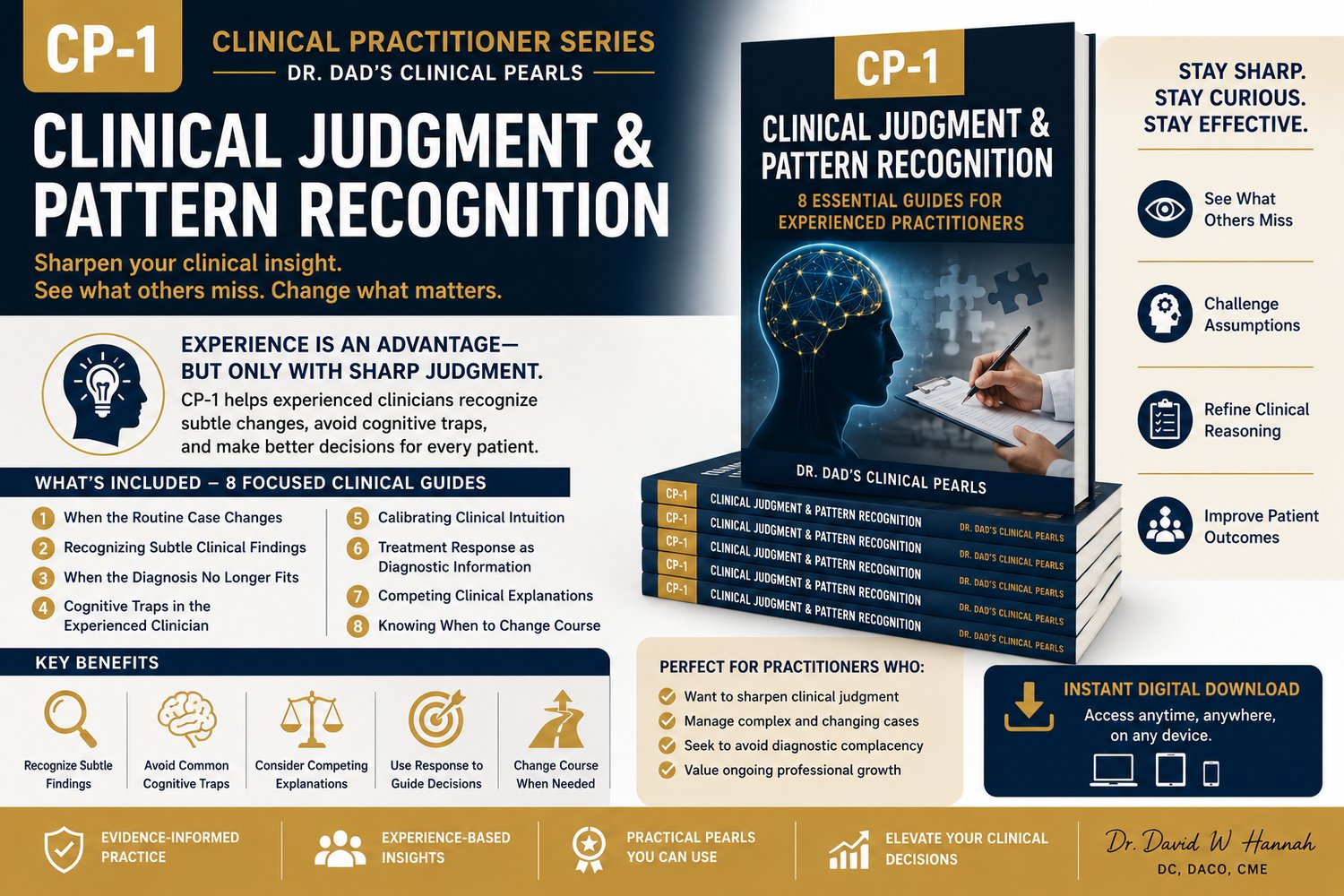
CLINICAL JUDGMENT AND PATTERN RECOGNITION

Designed for experienced chiropractors and clinical practitioners who want to sharpen the clinical judgment that develops after years of patient care while avoiding the complacency that can sometimes accompany familiar presentations.


Experience improves pattern recognition—but familiar patterns can also encourage premature conclusions. CP-1 helps you reconsider the routine case, recognize subtle changes, challenge a diagnosis that no longer fits, and determine when your clinical reasoning needs to change direction.

The goal: use experience as an advantage without allowing familiarity to replace critical thinking.


This guide helps you refine your ability to recognize meaningful changes in familiar presentations; distinguish useful pattern recognition from premature closure; reconsider competing explanations; use treatment response as additional clinical information; identify cognitive biases; and recognize when the available evidence requires a change in diagnosis, investigation, management, or referral.

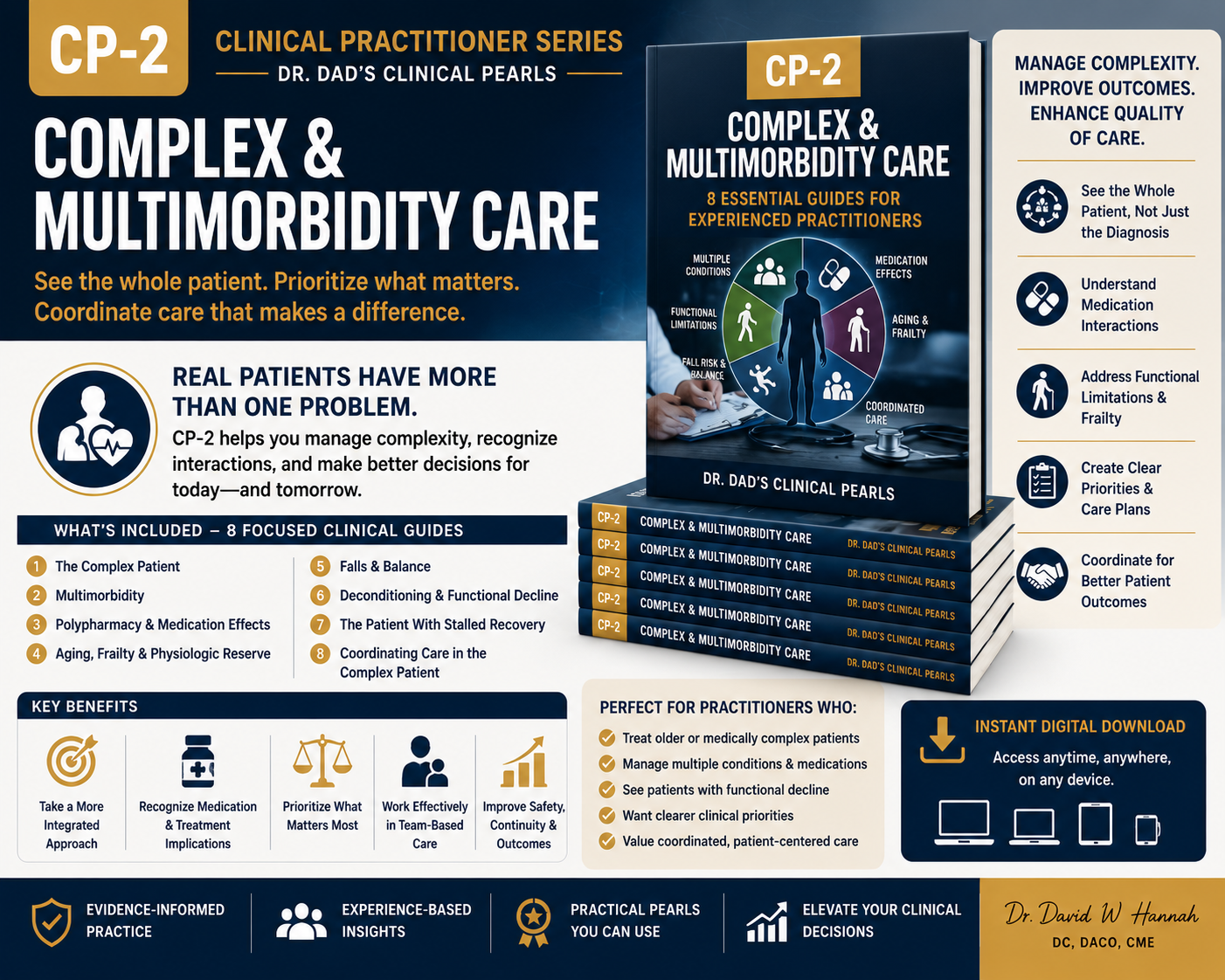
COMPLEX AND MULTIMORBIDITY CARE

Designed for practitioners managing older, medically complex, deconditioned, or multimorbid patients whose presentations cannot be understood by looking at a single diagnosis in isolation.


Real patients frequently arrive with multiple diagnoses, medications, functional limitations, age-related changes, and competing contributors to their symptoms.


Develop a more integrated approach to multimorbidity; recognize medication-related clinical clues; appreciate frailty and reduced physiologic reserve; identify fall and balance concerns; distinguish persistent pathology from deconditioning; reconsider stalled recovery; prioritize competing clinical problems; and recognize when coordinated or multidisciplinary care is appropriate.

THERAPEUTIC DECISION-MAKING

Choose With Purpose. Treat With Precision.

Therapeutic Decision Making is designed for practicing clinicians who want to refine how they select, prioritize, sequence, and modify treatment. The focus is not simply on knowing what interventions are available, but on determining which intervention is most appropriate for this patient, at this time, and why.

CP-3 integrates clinical reasoning, examination findings, patient goals, preferences, risk factors, and current evidence into a practical framework for individualized care. It emphasizes thoughtful treatment selection while avoiding habitual protocols, unnecessary care, and interventions that are not producing meaningful clinical benefit.


Practicing chiropractors and other clinicians who already possess foundational assessment and treatment skills but want to strengthen the judgment behind their therapeutic choices.

Digital PDF Educational Guide


Refine Your Decisions. Transform Your Results.

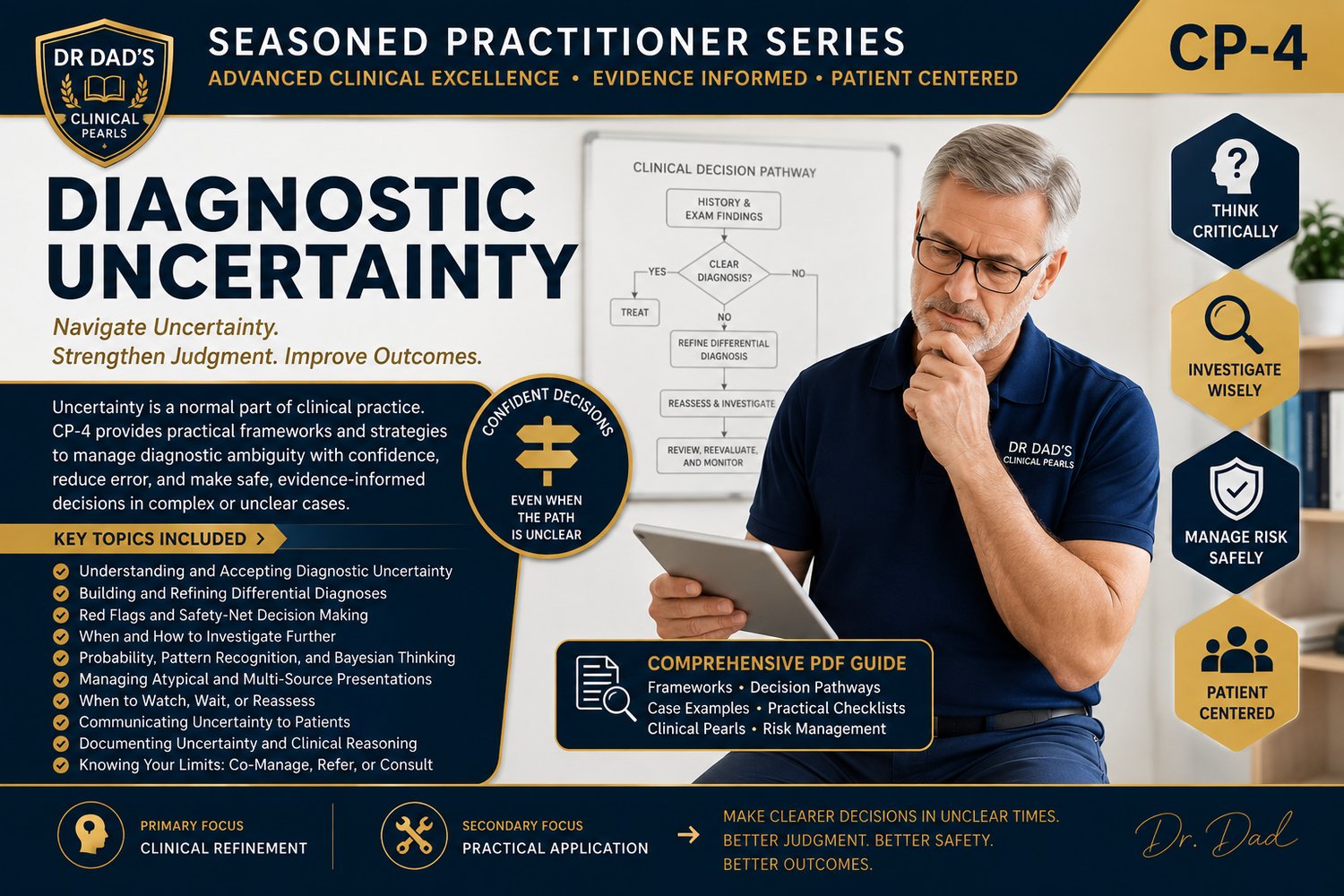
DIAGNOSTIC UNCERTAINTY

Diagnostic uncertainty is not a failure of clinical reasoning—it is an unavoidable part of clinical practice. Patients do not always present with textbook patterns, examination findings may conflict, diagnostic tests may be inconclusive, and the clinical picture may evolve over time.

Diagnostic Uncertainty is designed to help experienced clinicians remain systematic, safe, and clinically effective when the diagnosis is not immediately clear.

Rather than forcing premature diagnostic certainty, this guide provides practical frameworks for recognizing uncertainty, refining the differential diagnosis, assessing risk, determining when additional investigation is warranted, and deciding when to treat, monitor, reassess, co-manage, consult, or refer.


Practicing chiropractors and other clinicians who want to strengthen their clinical judgment when faced with ambiguous, atypical, conflicting, evolving, or diagnostically challenging patient presentations.

This guide is particularly valuable for the seasoned practitioner who recognizes that advanced clinical expertise is not simply knowing more diagnoses—it is knowing how to make safe decisions when the diagnosis remains uncertain.


Make Clearer Decisions in Unclear Times. Better Judgment. Better Safety. Better Outcomes.

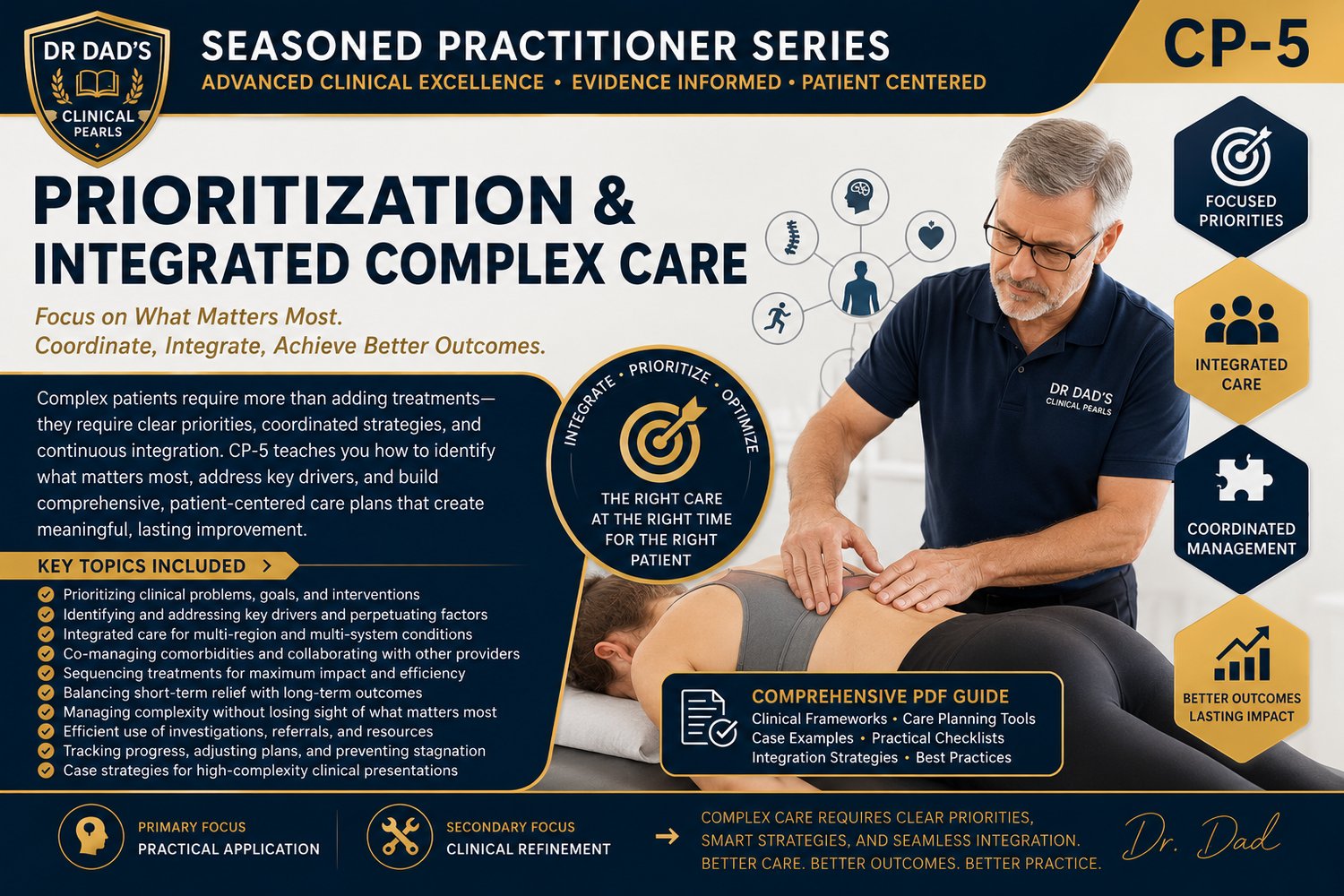
PRIORITIZATION AND INTEGRATED COMPLEX CARE

Complex patients rarely present with a single isolated problem. Multiple complaints, comorbidities, competing priorities, psychosocial influences, previous treatment failures, and overlapping clinical findings can make even experienced clinicians question what should be addressed first—and what can safely wait.

Prioritization & Integrated Complex Care focuses on the practical clinical skill of organizing complexity. It provides a structured approach to identifying the most important problems, recognizing key clinical drivers, establishing treatment priorities, and integrating multiple components of care into a coherent patient-centered management strategy.

The goal is not to treat everything at once. It is to determine what matters most, what is most modifiable, what carries the greatest risk, and what is most likely to meaningfully improve the patient's function and outcome.

Practicing chiropractors and other clinicians who regularly encounter patients with multiple complaints, comorbidities, overlapping clinical findings, competing treatment priorities, or complicated care pathways.

This guide is particularly valuable for the experienced practitioner who already understands individual diagnoses and treatment options but wants to become more effective at integrating those decisions into a logical, efficient, and defensible overall management strategy.


Complex Care Requires Clear Priorities, Smart Strategies, and Seamless Integration.

Better Care. Better Outcomes. Better Practice.

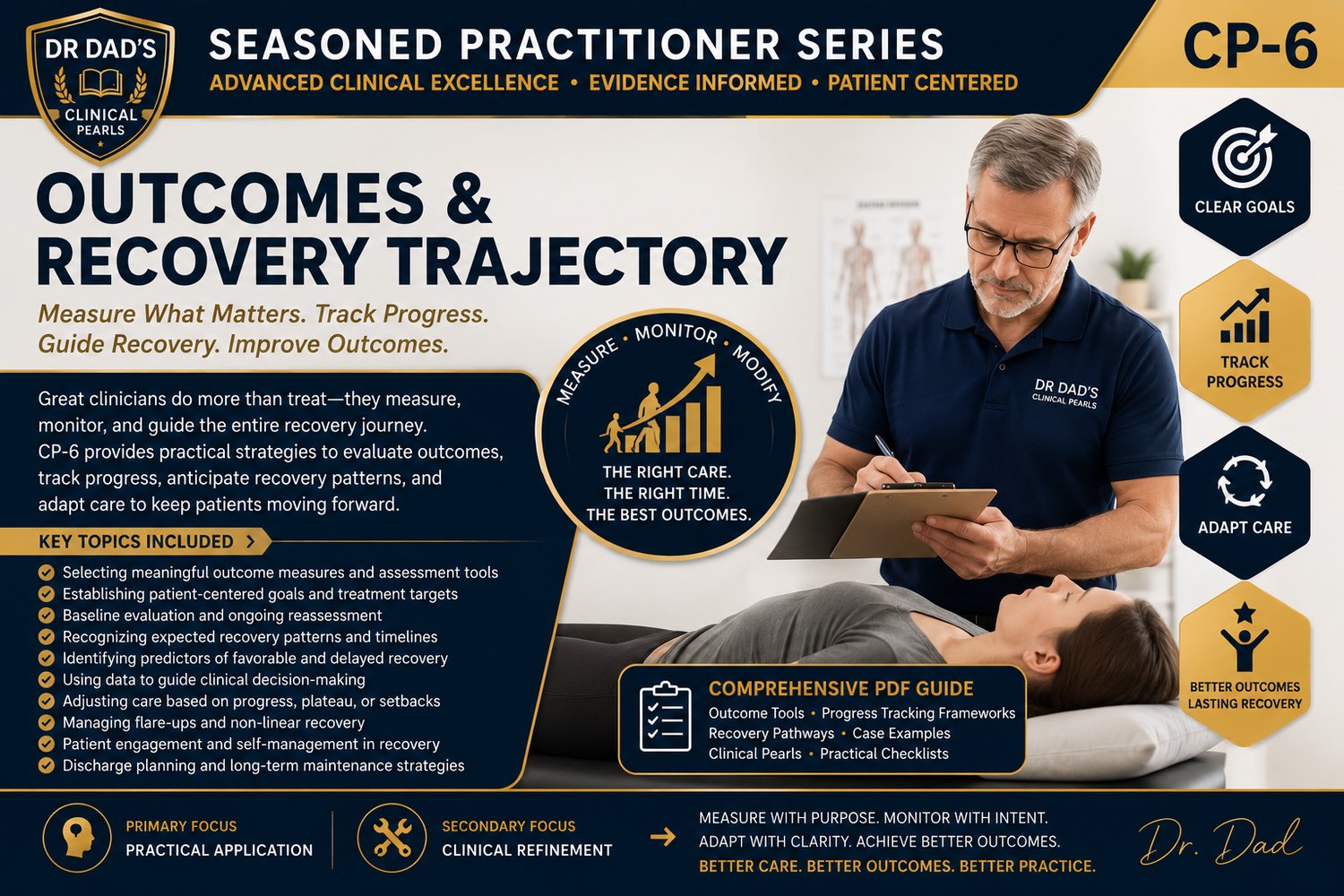
OUTCOMES AND RECOVERY TRAJECTORY

Effective clinical care requires more than selecting and delivering treatment. The experienced clinician must also determine whether the patient is actually improving, whether recovery is progressing as expected, and when the management strategy needs to change.

Outcomes & Recovery Trajectory focuses on the practical process of measuring meaningful change, recognizing patterns of recovery, reassessing clinical progress, and using outcomes to guide ongoing management decisions.

Patients do not always recover in a straight line. Some improve rapidly, others progress gradually, and some plateau, fluctuate, or deteriorate. This guide helps clinicians distinguish expected variation from clinically meaningful change—and recognize when the patient's trajectory requires modification of care, further investigation, co-management, referral, or discharge.


Practicing chiropractors and other clinicians who want to become more systematic in measuring patient progress, interpreting treatment response, recognizing recovery patterns, and making defensible decisions about ongoing care.

This guide is particularly valuable for clinicians who want to move beyond asking simply, “Is the patient feeling better?” and instead evaluate the more important question:

“Is this patient progressing in a clinically meaningful way—and what should I do next?”


Measure With Purpose. Monitor With Intent. Adapt With Clarity.

Better Care. Better Outcomes. Better Practice.

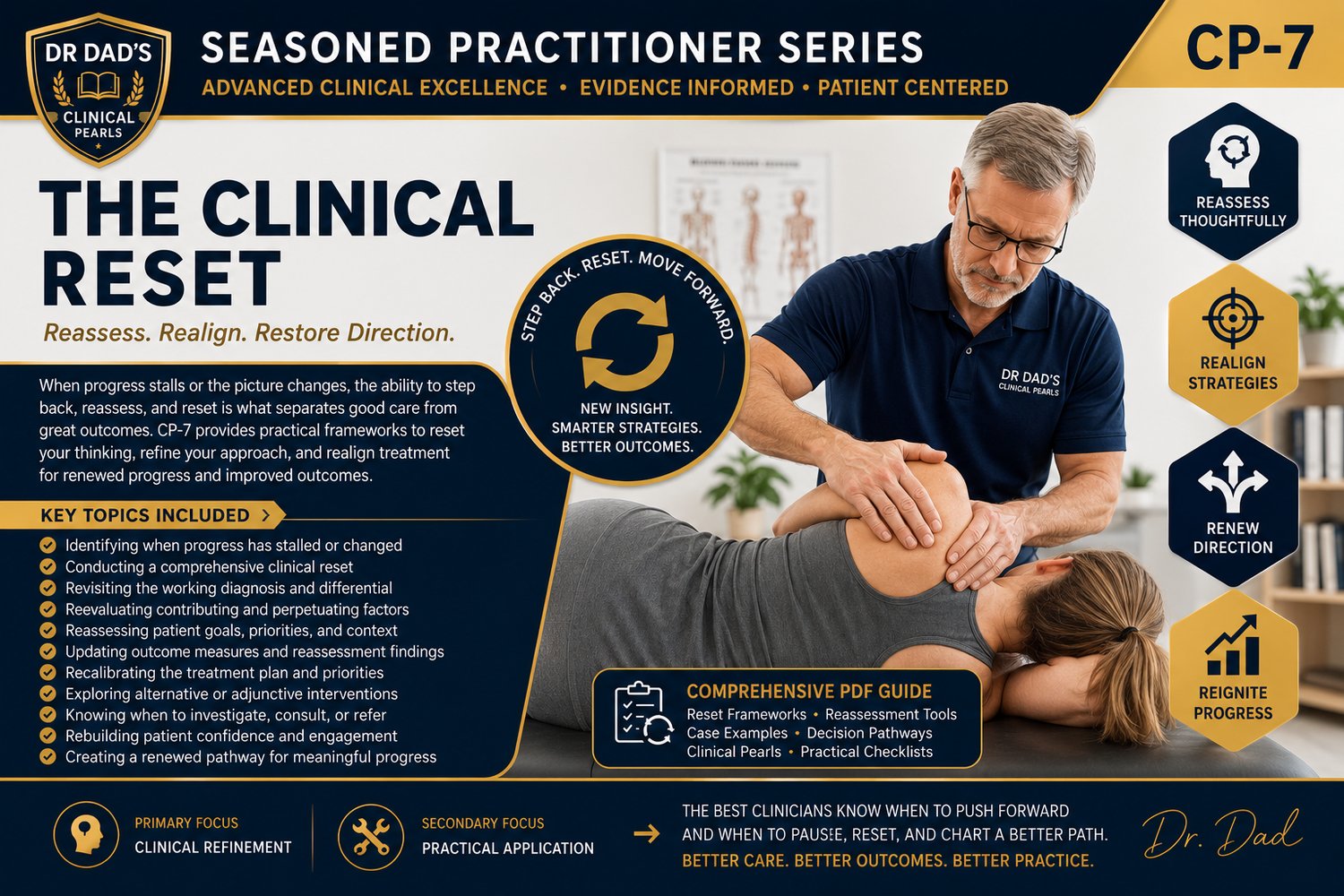
CLINICAL RESET

There are times in clinical practice when continuing to do more of the same is no longer the appropriate strategy. The patient may have plateaued, improvement may be slower than expected, symptoms may have changed, new findings may have emerged, or the original clinical assumptions may simply need to be reconsidered.


The Clinical Reset addresses one of the most important skills of the experienced practitioner: knowing when to stop, step back, reassess the entire clinical picture, and establish a better path forward.

Rather than automatically adding another treatment or extending the existing plan, the Clinical Reset provides a structured framework for returning to the fundamentals—history, examination, differential diagnosis, contributing factors, patient goals, treatment response, and current risk—and asking whether the working clinical model still makes sense.

The objective is not simply to change treatment. It is to determine why progress has stalled, what may have been overlooked, and what needs to change to restore meaningful direction.


Practicing chiropractors and other clinicians who encounter patients who plateau, fail to progress as anticipated, develop changing presentations, repeatedly experience setbacks, or simply do not respond as expected.

This guide is particularly valuable for experienced clinicians because familiarity can sometimes encourage continuation of an established treatment pathway even when the clinical picture has changed.

The Clinical Reset provides a deliberate checkpoint:

Does the diagnosis still fit?

Are the original priorities still appropriate?

Is the treatment accomplishing what was intended?

Has something important been missed?

What should happen next?


A clinical reset is not an admission that previous care was unsuccessful. It is a disciplined clinical strategy for recognizing when new information requires new thinking.


The Best Clinicians Know When to Push Forward—and When to Pause, Reset, and Chart a Better Path.

Better Care. Better Outcomes. Better Practice.

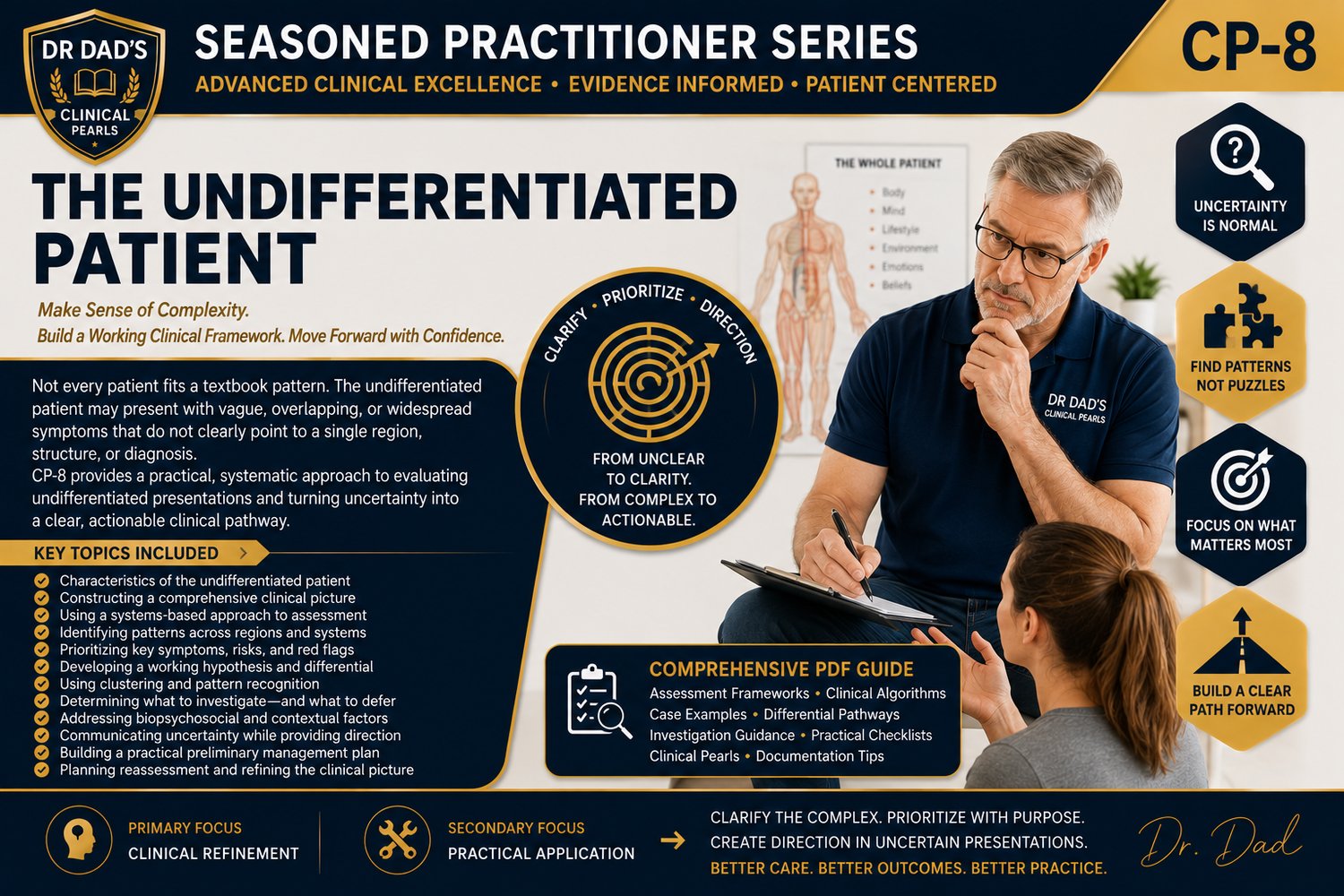
THE UNDIFFERENTIATED PATIENT

Not every patient arrives with a clearly defined musculoskeletal complaint, recognizable syndrome, or textbook pattern. Some present with vague symptoms, multiple complaints, overlapping systems, inconsistent findings, or a story that simply does not point neatly toward a single diagnosis.

This is the undifferentiated patient—and it represents one of the most demanding situations in clinical practice.

The Undifferentiated Patient provides a practical framework for approaching these presentations systematically. The objective is not to force an immediate diagnosis. It is to organize the available information, identify meaningful patterns, prioritize risk, construct a defensible working clinical model, and determine the safest next step.

The experienced clinician must be comfortable moving forward even when every diagnostic question has not yet been answered.


Practicing chiropractors and other clinicians who encounter patients whose presentations do not immediately fit a recognizable diagnostic pattern.

This guide is particularly valuable when the patient presents with multiple complaints, vague symptoms, changing symptoms, widespread findings, conflicting information, or a combination of musculoskeletal and non-musculoskeletal concerns.

Rather than asking:

“What diagnosis fits this patient?”

CP-8 encourages the clinician first to ask:

“What is happening here, what matters most, what must not be missed, and what is the safest next step?”


Managing the undifferentiated patient requires more than an extensive list of differential diagnoses. It requires the ability to create order from incomplete information without manufacturing certainty that does not yet exist.

CP-8 provides a practical progression:

Clarify → Organize → Identify Risk → Recognize Patterns → Prioritize → Form a Working Hypothesis → Act → Reassess

This approach allows the clinician to move from an unclear presentation toward an increasingly focused and actionable clinical picture while maintaining patient safety.

As the final guide in the Seasoned Practitioner Series, CP-8 brings together many of the advanced skills developed throughout CP-1–CP-7: clinical judgment, complexity management, therapeutic decision-making, diagnostic uncertainty, prioritization, outcome assessment, and clinical reassessment.


Clarify the Complex. Prioritize With Purpose. Create Direction in Uncertain Presentations.

Better Care. Better Outcomes. Better Practice.