Including Craniocervical and Pelvic Interrelationships
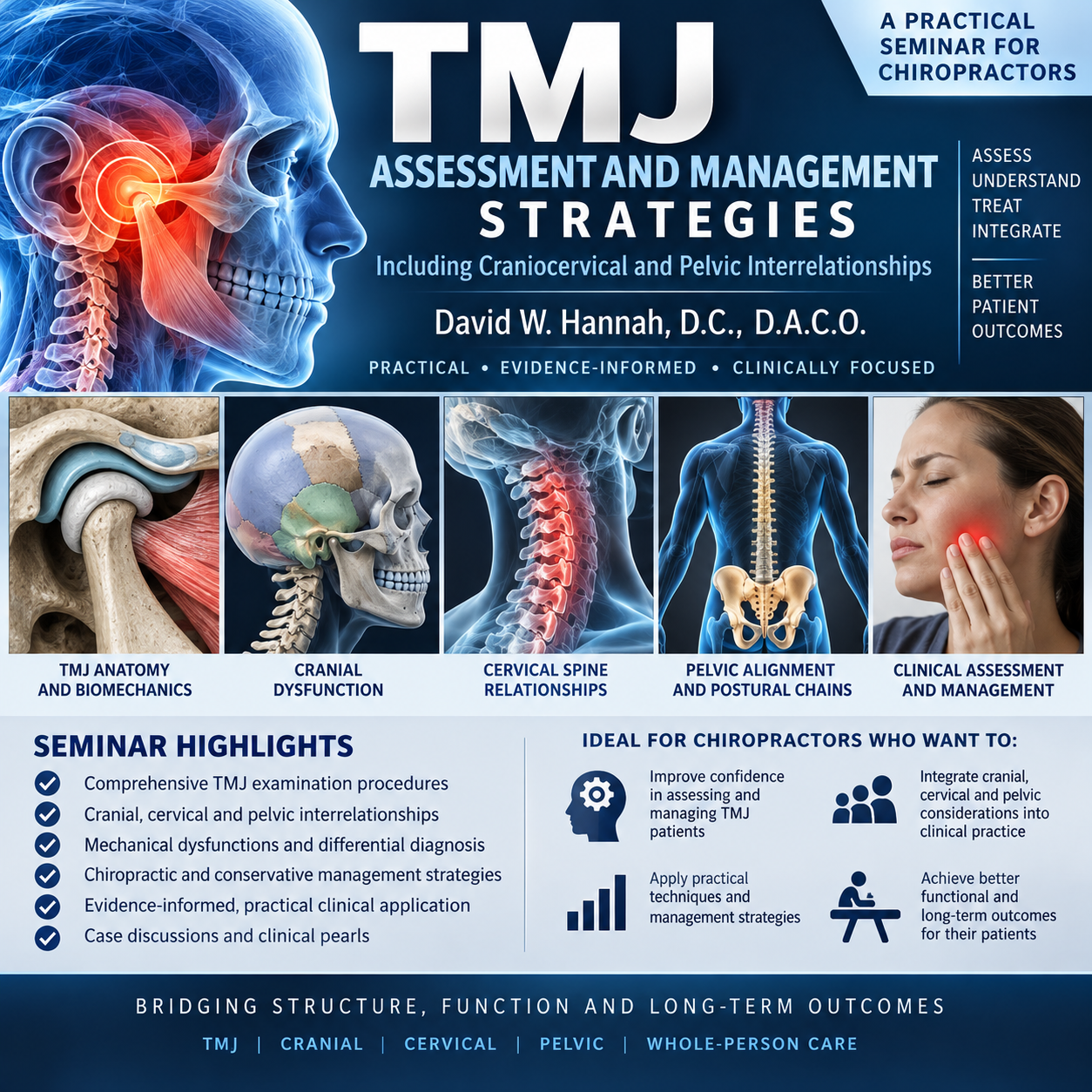
Develop a broader understanding of the temporomandibular joint and its relationship to the cranial, cervical, postural and pelvic systems.
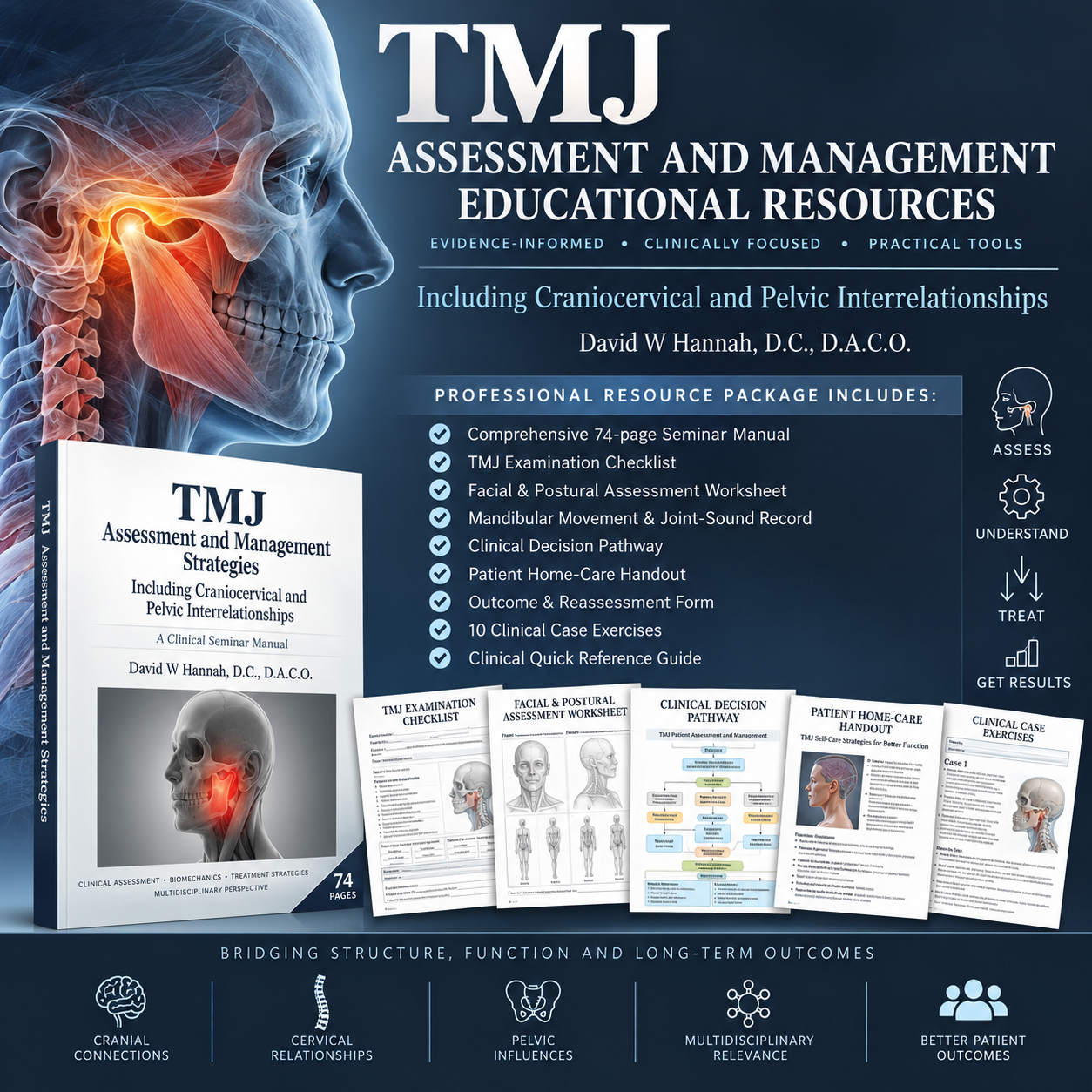
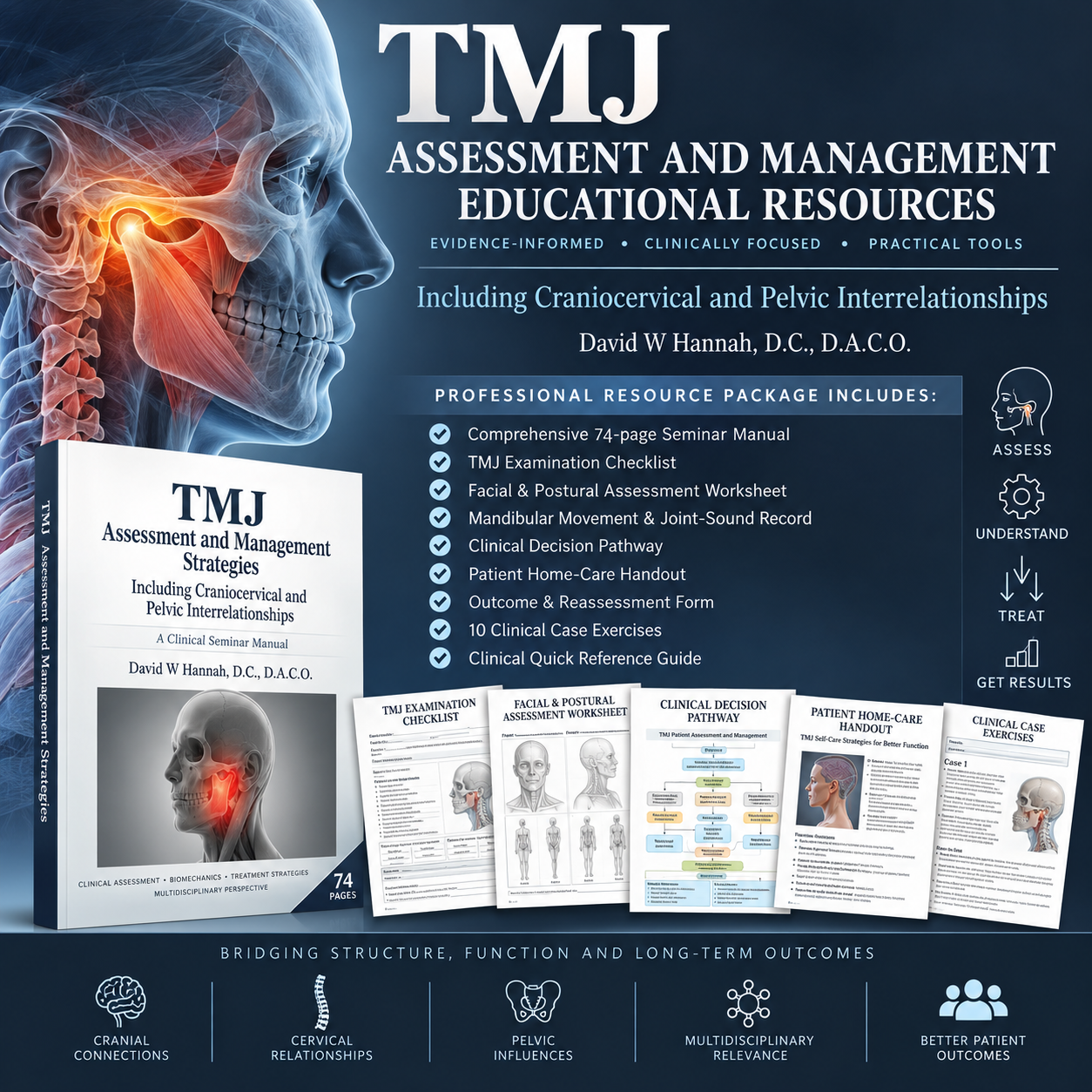
This 74-page clinical seminar manual has been developed from the comprehensive TMJ Assessment and Management Strategies seminar by David W. Hannah, D.C., D.A.C.O. Rather than simply reproducing presentation slides, the material has been organized into a detailed, readable professional reference for chiropractors, students and other appropriately trained healthcare professionals.
The manual takes the reader from foundational TMJ anatomy and biomechanics through clinical assessment, mandibular movement, postural relationships, mechanical dysfunction and conservative management strategies.
Topics include TMJ anatomy and biomechanics; normal opening and closing mechanics; deviation and deflection; joint sounds and disc dysfunction; facial and cranial assessment; ascending and descending postural patterns; cervical and pelvic relationships; muscle and soft-tissue involvement; orthopedic assessment; mobilization and chiropractic approaches; home-care considerations; myofunctional and airway considerations; dental and interdisciplinary collaboration; and clinical case applications.
More Than Just the Jaw
A central theme of the manual is that TMJ dysfunction should not automatically be viewed as an isolated jaw problem. The material encourages clinicians to consider the potential interaction between:
TMJ ↔ Cranial Structures ↔ Cervical Spine ↔ Posture ↔ Pelvis
The objective is to help clinicians develop a more systematic approach to recognizing, assessing and managing patients presenting with TMJ-related complaints.
74 Pages • Detailed Clinical Reference • Professionally Organized PDF
This is the standalone Clinical Seminar Manual. Examination forms, clinical worksheets, decision pathways, patient handouts, reassessment tools and additional case resources are available separately in the TMJ Professional Resource Package.
For educational purposes only. This manual does not replace appropriate professional training, individualized diagnosis, clinical judgment, informed consent, referral or applicable scope-of-practice requirements.