Your Cart
Loading

DIPLOMATE AND FORMAL SPECIALTY PROGRAMS

Explore the Next Stage of Your Professional Development

For chiropractors interested in advanced credentials, specialty education, and formal postgraduate pathways, knowing where to begin—and what each pathway actually involves—can be challenging.

The PG-DIP Diplomate & Formal Specialty Programs series was developed to provide an organized educational introduction to the many postgraduate, diplomate, board-certification, and specialty opportunities available within and related to the chiropractic profession.

These resources are designed to help practicing chiropractors explore potential areas of advanced study, understand the general structure of specialty pathways, and make informed decisions about their continuing professional development.

Depending upon the program or specialty, individual guides may include information on:

  • Specialty and diplomate pathway overviews
  • Educational and eligibility considerations
  • Credentialing and certification structures
  • Typical examination and preparation considerations
  • Study and professional-development roadmaps
  • Core knowledge areas associated with the specialty
  • Clinical applications and specialty-focused concepts
  • Review questions and self-assessment activities
  • Professional organizations and certifying bodies
  • Suggested references and resources
  • Start Here / How to Use This Guide instructions

The collection explores a broad range of postgraduate opportunities, including areas such as chiropractic orthopedics, sports chiropractic, neuromusculoskeletal medicine, pediatrics, internal disorders, clinical nutrition, rehabilitation, acupuncture, occupational health and ergonomics, forensic sciences, craniocervical procedures, pain management, animal chiropractic, pregnancy and family practice, and emerging professional credentials.


A Roadmap—Not a Credential

The purpose of the PG-DIP series is to help chiropractors understand the landscape of advanced professional education and identify pathways they may wish to investigate further.

These materials are independent educational and preparatory resources. Purchasing or completing a PG-DIP guide does not confer diplomate status, board certification, specialty recognition, continuing-education credit, or eligibility for a professional credential.

Credentialing requirements, recognized designations, examinations, educational prerequisites, and regulatory recognition can change and may differ significantly between organizations and jurisdictions. Always confirm current requirements directly with the appropriate certifying organization, educational institution, professional association, or regulatory authority.


Continuing the Professional Journey

Graduation is the beginning—not the end—of professional education.

The PG-DIP series is intended to help chiropractors see what opportunities may exist beyond general practice and provide a clearer starting point for those considering advanced education, formal specialty training, or professional certification.

Dr. Dad’s Chiropractic Clinical Education

Supporting lifelong learning, clinical development, and the advancement of the chiropractic profession.
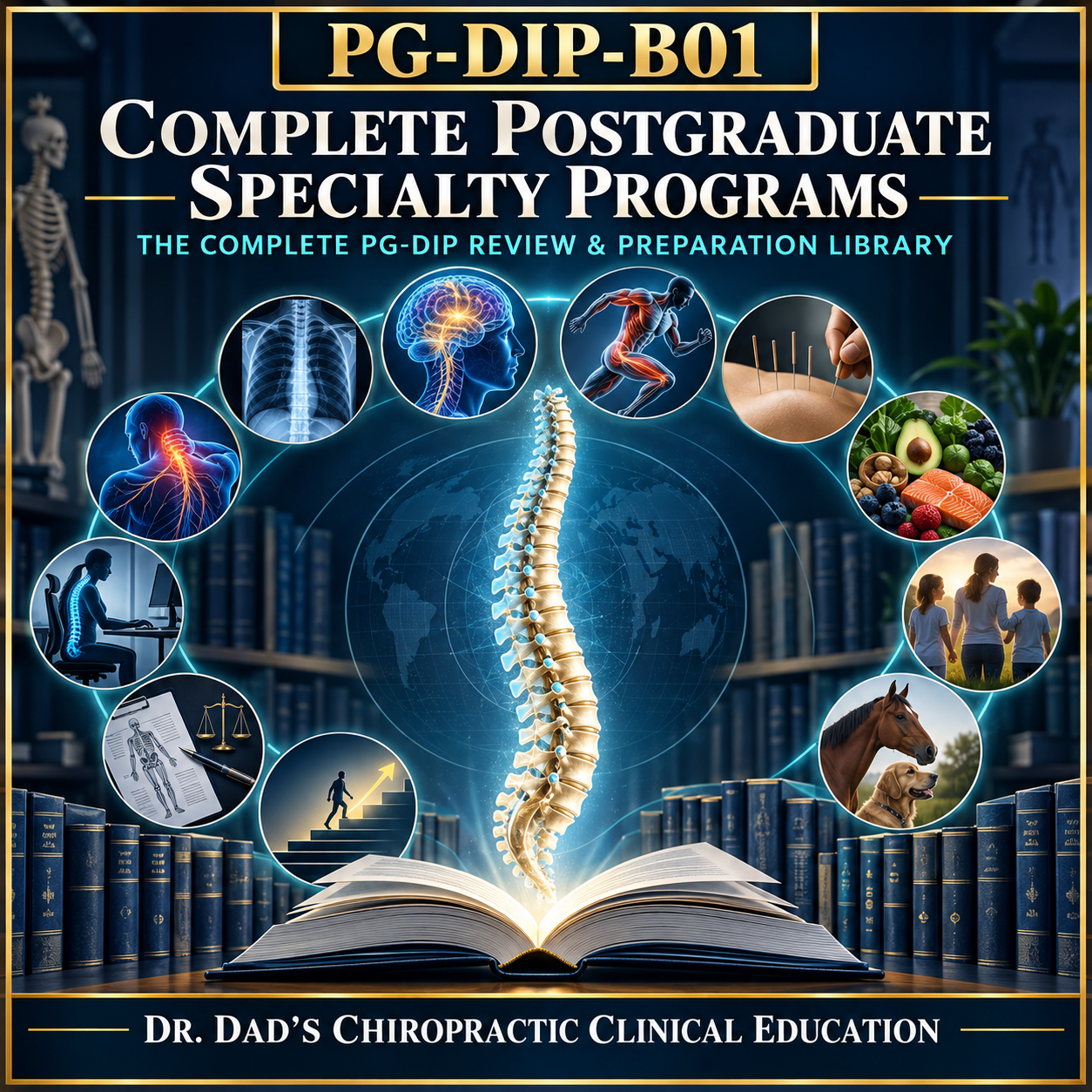
PG-DIP-B01 COMPLETE POSTGRADUATE SPECIALTY PROGRAM
On Sale
$199.95
$199.95
Added to cart

Explore the breadth of postgraduate chiropractic education with one comprehensive specialty-review and professional-development library.

PG-DIP-B01 | Complete Postgraduate Specialty Programs brings together all 19 PG-DIP guides created for chiropractors investigating diplomate programs, specialty certifications, advanced clinical education and emerging professional pathways.

Each guide provides more than a simple overview. The collection connects specialty-specific clinical material with pathway research, patient safety, professional boundaries, examination preparation, case application and long-term development planning.

The complete library includes:

  1. PG-DIP-01 | Chiropractic Radiology and DACBR Pathway
  2. PG-DIP-02 | Chiropractic Neurology and DACNB Pathway
  3. PG-DIP-03 | Chiropractic Orthopedics
  4. PG-DIP-04 | Sports Chiropractic
  5. PG-DIP-05 | Neuromusculoskeletal Medicine and DIANM Pathway
  6. PG-DIP-06 | Chiropractic Pediatrics
  7. PG-DIP-07 | Internal Disorders and DABCI Pathway
  8. PG-DIP-08 | Clinical Nutrition
  9. PG-DIP-09 | Chiropractic Rehabilitation
  10. PG-DIP-10 | Acupuncture and DABCA Pathway
  11. PG-DIP-11 | Occupational Health and Applied Ergonomics
  12. PG-DIP-12 | Forensic Sciences
  13. PG-DIP-13 | Craniocervical Junction Procedures
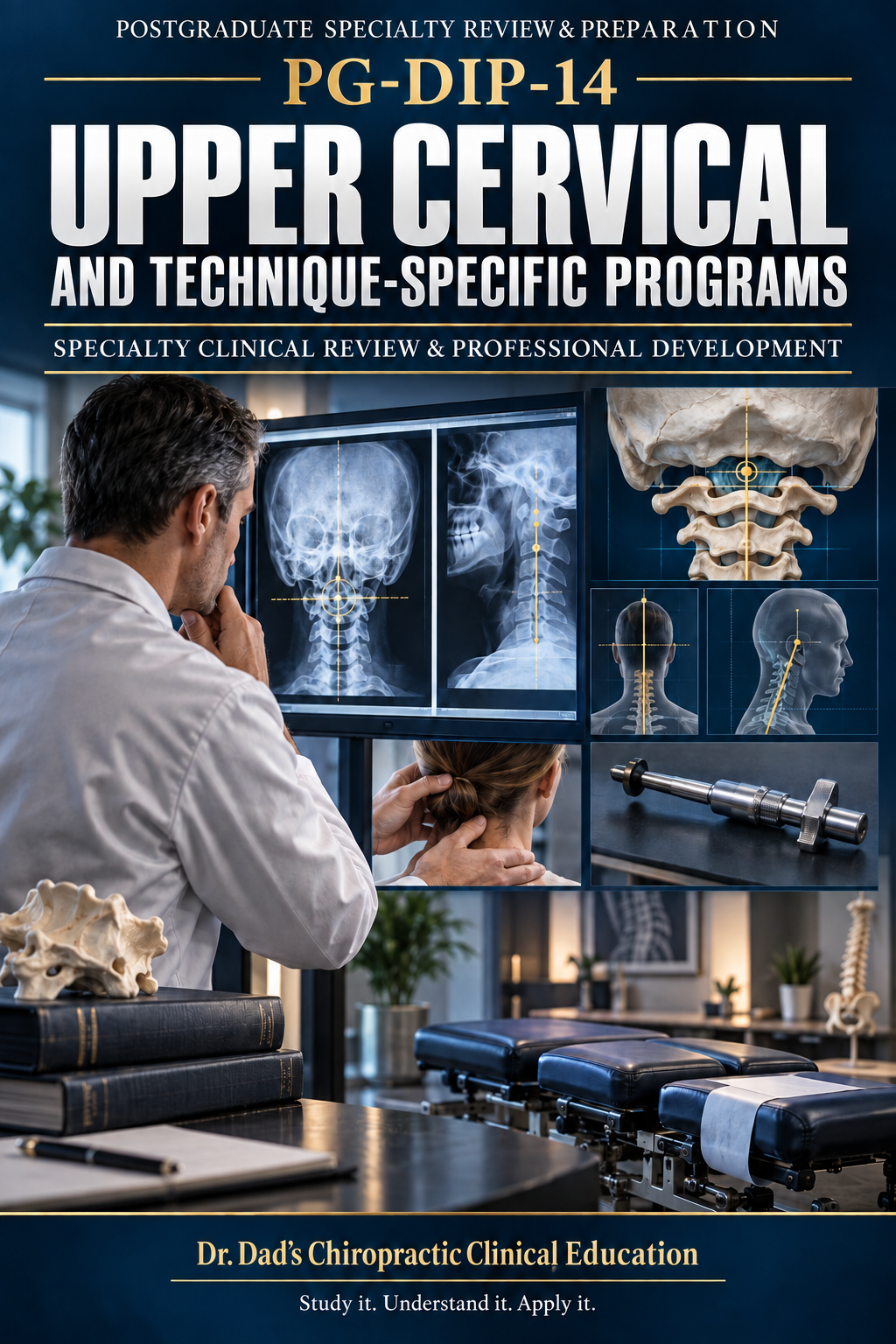
  14. PG-DIP-14 | Upper Cervical and Technique-Specific Programs
  15. PG-DIP-15 | Chiropractic Philosophy
  16. PG-DIP-16 | Pain Management
  17. PG-DIP-17 | Animal Chiropractic Certification Pathways
  18. PG-DIP-18 | Pregnancy, Perinatal and Family Practice
  19. PG-DIP-19 | Advanced Practice and Emerging Credentials

Across the collection, readers receive:

  • Specialty and pathway orientation
  • Clinical foundations and professional applications
  • Credential, certification and program-research guidance
  • Candidate preparation directions
  • Safety considerations and red-flag recognition
  • Scope-of-practice and professional-boundary guidance
  • Differential diagnosis and clinical-reasoning material
  • Documentation, informed-consent and referral principles
  • Case-based learning applications
  • Rapid-review sections
  • Specialty-specific self-assessment questions
  • Complete answer keys
  • Structured 12-month preparation roadmaps
  • Practitioner and candidate checklists
  • Selected professional and regulatory resources
  • Guidance for verifying current requirements, recognition and renewal obligations

Designed for:

  • Chiropractors considering diplomate or specialty education
  • Practitioners comparing postgraduate pathways
  • New graduates planning long-term professional development
  • Experienced clinicians expanding their clinical knowledge
  • Chiropractic educators and postgraduate instructors
  • Candidates organizing examination or certification preparation
  • Practitioners evaluating emerging credentials and advanced roles

One coordinated specialty library

Rather than purchasing and organizing each guide separately, PG-DIP-B01 provides the complete PG-DIP collection in one coordinated package. Readers can examine individual pathways, compare specialties and develop a realistic professional-development plan based on their interests, patient population, jurisdiction and career goals.

The guides also explain the essential differences among:

  • Course completion
  • Certificates of attendance
  • Professional certification
  • Diplomate status
  • Demonstrated clinical competence
  • Licensure and legal scope
  • Institutional privileges
  • Insurance and payer requirements

A clinically responsible approach

This collection emphasizes patient safety, evidence-informed practice, ethical communication, appropriate referral and the responsible evaluation of specialty-program claims.

Study it. Compare it. Plan it. Apply it responsibly.

This is an independent educational review and preparation library. It does not award diplomate status, certification, licensure, continuing-education credit or expanded practice authority. It does not replace official postgraduate instruction, supervised clinical education or hands-on competency assessment. Program availability, eligibility requirements, examinations, approved titles, renewal obligations and scope-of-practice regulations must always be verified with the appropriate credentialing organization, educational provider and licensing authority.

You will get a ZIP (38MB) file
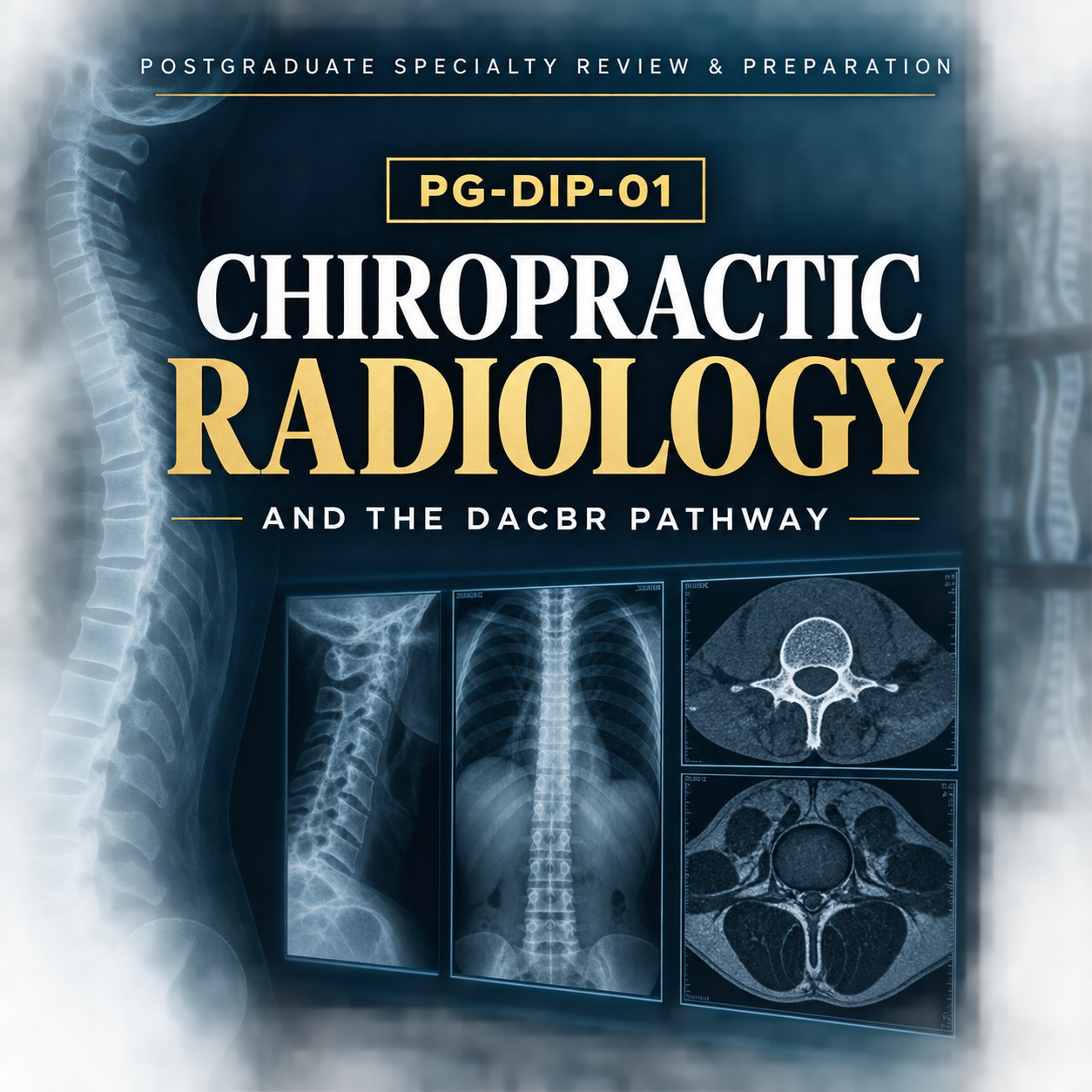
PG-DIP-01 CHIROPRACTIC RADIOLOGY AND DACBR PATHWAY
On Sale
$29.95
$29.95
Added to cart

Explore the professional pathway toward becoming a Diplomate of the American Chiropractic Board of Radiology (DACBR).

This 26-page guide provides a practical introduction to chiropractic radiology, diagnostic-imaging residency preparation, professional responsibilities and the clinical reasoning expected within this advanced specialty.

Unlike a brief specialty overview, PG-DIP-01 examines both the credentialing pathway and the foundational knowledge, habits and professional competencies needed by chiropractors considering postgraduate radiology training.

Inside the guide

  • The typical three-year diagnostic-imaging residency pathway;
  • The roles of the ACBR and American Chiropractic College of Radiology;
  • Residency-readiness assessment;
  • Core radiology competency framework;
  • Imaging selection and appropriateness;
  • Technical adequacy and image quality;
  • A reproducible image-review system;
  • Trauma and potential instability;
  • Degenerative and inflammatory disorders;
  • Tumors and aggressive osseous lesions;
  • Infection, metabolic disease and developmental variants;
  • Incidental and urgent findings;
  • Radiology reporting and critical-result communication;
  • Diagnostic-error prevention and quality assurance;
  • Four clinical integration cases;
  • Rapid-review section;
  • Ten self-assessment questions with answers and rationales;
  • Twelve-month pre-residency development plan;
  • Candidate preparation checklist;
  • Current official organizations and resource links.

Who is this guide for?

PG-DIP-01 is designed for:

  • Chiropractic students exploring advanced career pathways;
  • Doctors of chiropractic considering radiology residency;
  • Residency applicants strengthening their preparation;
  • Educators introducing postgraduate specialty opportunities;
  • Practitioners seeking a better understanding of diagnostic-imaging consultation and professional responsibilities.

More than a credential overview

The guide emphasizes the habits that support safe imaging practice: systematic interpretation, appropriate modality selection, recognition of urgent findings, clear reporting, closed-loop communication and an understanding of when imaging findings do—or do not—explain a patient’s presentation.

A structured twelve-month development plan helps prospective applicants organize their preparation in anatomy, pathology, imaging physics, reporting, literature appraisal, case presentation and professional readiness.

Relationship to PG-SP-G001

PG-DIP-01 complements PG-SP-G001 — Chiropractic Diagnostic Imaging and Radiology by providing a substantially deeper examination of residency preparation, the DACBR pathway, professional responsibilities and foundational imaging reasoning.

It can be purchased and used independently.

Important educational notice

This is an independent educational review and career-preparation resource. It does not confer certification, establish eligibility for an examination, replace an approved diagnostic-imaging residency or reproduce an official ACBR examination blueprint.

Residency availability, application requirements, examination policies, credential maintenance and permitted specialty-title usage may change. Candidates should verify all current requirements directly with the American Chiropractic Board of Radiology, individual residency programs and their applicable licensing authority.

26 Pages • DACBR Pathway • Residency Readiness • Clinical Cases • Self-Assessment • Preparation Plan

Dr. Dad’s Chiropractic Clinical Education

Study it. Understand it. Apply it.

You will get a PDF (128KB) file
PG-DIP-02 CHIROPRACTIC NEUROLOGY AND DACBN PATHWAY
On Sale
$29.95
$29.95
Added to cart

Explore the clinical focus, postgraduate preparation and professional pathway associated with advanced chiropractic neurology.

PG-DIP-02 provides a structured introduction to neurologic assessment, clinical localization, patient-safety decision making and the educational pathway commonly associated with the Diplomate of the American Chiropractic Neurology Board (DACNB) credential.

The guide is designed to help chiropractors understand both the demands of advanced neurologic study and the practical clinical reasoning required when evaluating patients with neurologic symptoms.

Areas covered

  • Chiropractic neurology as a postgraduate specialty;
  • The DACNB educational and examination pathway;
  • Preparing for advanced postgraduate study;
  • Functional and structural neuroanatomy;
  • Neurologic history and symptom analysis;
  • Central versus peripheral localization;
  • Cranial-nerve assessment;
  • Motor, sensory and reflex examination;
  • Cerebellar function and coordination;
  • Gait and balance evaluation;
  • Vestibular and oculomotor assessment;
  • Peripheral neuropathy and nerve-entrapment patterns;
  • Headache, dizziness and concussion considerations;
  • Upper and lower motor-neuron findings;
  • Neurodegenerative and systemic presentations;
  • Neurologic red flags and emergency referral;
  • Diagnostic imaging and ancillary testing;
  • Co-management with neurology and other specialists;
  • Documentation and communication;
  • Clinical integration cases;
  • Rapid review and self-assessment;
  • Candidate preparation and professional-development planning;
  • Official organizations and current resource links.

Who is this guide for?

PG-DIP-02 is appropriate for:

  • Chiropractic students exploring postgraduate specialties;
  • Doctors of chiropractic considering advanced neurology training;
  • Prospective DACNB candidates;
  • Educators introducing neurologic specialization;
  • New graduates strengthening neurologic examination skills;
  • Practitioners wanting a more systematic approach to neurologic assessment and referral.

Clinical reasoning and patient safety

The guide emphasizes a disciplined approach:

History → Neurologic Examination → Localization → Differential Diagnosis → Safety Screen → Testing or Referral → Management Decision

Particular attention is given to recognizing findings that should not be managed as routine musculoskeletal complaints, including progressive weakness, myelopathy, acute cranial-nerve abnormalities, altered mental status, suspected stroke, cauda equina features and other time-sensitive neurologic presentations.

Part of the postgraduate specialty series

PG-DIP-02 is an expanded pathway and preparation guide within the Postgraduate Specialty Review & Preparation division.

It complements the shorter specialty materials contained within PG-SP-C01 — Diplomate & Board-Certified Specialties by providing more extensive coverage of postgraduate preparation, neurologic clinical reasoning, patient safety and professional responsibilities.

The guide can also be purchased and used independently.

Important educational notice

This is an independent educational review and professional-development resource. It does not confer DACNB certification, guarantee examination eligibility, replace an approved postgraduate neurology program or reproduce an official examination blueprint.

Credentialing organizations, eligibility requirements, course expectations, examinations and permitted specialty-title usage may change. Readers should verify all current requirements directly with the appropriate certifying organization, educational provider and licensing authority.

Chiropractic Neurology • DACNB Pathway • Neurologic Examination • Clinical Localization • Patient Safety • Referral

Dr. Dad’s Chiropractic Clinical Education

Study it. Understand it. Apply it.

You will get a PDF (143KB) file
PG-DIP-03 CHIROPRACTIC ORTHOPEDIC PATHWAY
On Sale
$29.95
$29.95
Added to cart

Develop a deeper understanding of neuromusculoskeletal medicine, orthopedic diagnosis, clinical reasoning, and the professional pathway associated with the Diplomate of the International Academy of Neuromusculoskeletal Medicine (DIANM).

This advanced educational guide is designed for chiropractors, chiropractic students, and clinicians who want to explore the specialty beyond a brief credential overview. It connects foundational knowledge with practical clinical application, helping readers organize complex presentations, improve examination strategies, recognize important warning signs, and make more defensible management and referral decisions.

Topics Covered

  • The neuromusculoskeletal medicine specialty
  • The historical development from chiropractic orthopedics to DIANM
  • The current DIANM professional pathway
  • Specialty education and candidate preparation
  • Structured orthopedic and neurological history-taking
  • Regional physical and orthopedic examination
  • Differential diagnosis and clinical localization
  • Cervical, thoracic, lumbar, and pelvic disorders
  • Shoulder, elbow, wrist, and hand conditions
  • Hip, knee, ankle, and foot conditions
  • Peripheral nerve and entrapment presentations
  • Degenerative, inflammatory, traumatic, and systemic conditions
  • Imaging and ancillary-test considerations
  • Red flags and urgent referral indicators
  • Conservative management and rehabilitation principles
  • Clinical documentation and defensible decision-making
  • Interprofessional referral and co-management
  • Case-based clinical reasoning
  • Rapid-review material and self-assessment
  • A structured professional-development plan
  • Official-resource verification checklist

What Makes This Guide Different?

This is not simply a list of orthopedic tests or isolated diagnoses. The guide emphasizes how clinicians bring the pieces together:

History → examination → localization → differential diagnosis → investigation → management → reassessment

The objective is to develop organized clinical reasoning while maintaining appropriate professional boundaries, patient safety, and evidence-informed decision-making.

Who Is This Guide For?

  • Chiropractors exploring advanced neuromusculoskeletal education
  • Doctors preparing to enter a DIANM-aligned training pathway
  • Chiropractic students researching specialty opportunities
  • Clinicians seeking a structured orthopedic review
  • Educators looking for discussion and case-review material
  • Practitioners wanting stronger examination, documentation, and referral frameworks

Educational Positioning

PG-DIP guides provide more depth than the concise PG-SP specialty-review products. They are designed as substantial pathway, clinical-foundation, and professional-preparation resources.

This guide complements PG-SP-G003: Neuromusculoskeletal Medicine — DIANM Review Credential Preparation without replacing it.

Important Notice

This is an independent educational resource produced by Dr. Dad’s Chiropractic Clinical Education.

It is not issued, approved, or endorsed by the International Academy of Neuromusculoskeletal Medicine or another certification organization. It does not reproduce confidential examination material, guarantee examination performance, confer DIANM status, establish eligibility, or replace an approved postgraduate program.

Credential requirements, examination procedures, fees, deadlines, continuing-education obligations, and permitted professional titles may change. Always verify current information directly with the appropriate credentialing organization, educational provider, and licensing authority.

Study it. Understand it. Apply it.

You will get a PDF (139KB) file
PG-DIP-04 SPORTS CHIROPRACTIC PATHWAY
On Sale
$29.95
$29.95
Added to cart

Develop the clinical reasoning, emergency readiness, rehabilitation planning, and return-to-sport decision-making required when caring for athletes.

PG-DIP-04 | Sports Chiropractic is a comprehensive 34-page postgraduate specialty guide for chiropractors who want to strengthen their understanding of sports injury assessment, sideline care, athlete rehabilitation, and performance-focused clinical practice.

The guide also provides an independent orientation to the Certified Chiropractic Sports Physician (CCSP) and Diplomate American Chiropractic Board of Sports Physicians (DACBSP) pathways, including currently published education, examination, field-experience, emergency-training, and certification-maintenance requirements.

Topics include:

  • The role and professional boundaries of the sports chiropractor
  • CCSP and DACBSP pathway orientation
  • Certification maintenance and professional development
  • Preparticipation evaluation
  • Sports history, workload, mechanism, and injury risk
  • Sideline assessment and participation decisions
  • Emergency action plans and medical timeouts
  • Sudden cardiac arrest, CPR, and AED readiness
  • Exertional heat illness and athlete collapse
  • Concussion recognition, removal, recovery, and staged return
  • Cervical spine and neurological emergencies
  • Shoulder, elbow, wrist, and hand injuries
  • Hip, groin, pelvic, knee, ankle, foot, and lower-leg injuries
  • Muscle, tendon, ligament, and bone-stress injuries
  • Youth and adolescent athletes
  • Female athlete health and Relative Energy Deficiency in Sport
  • Adaptive and para-sport considerations
  • Performance assessment and injury prevention
  • Criteria-based rehabilitation
  • Return-to-participation, return-to-sport, and return-to-performance decisions
  • Manual care, recovery, and responsible performance claims
  • Imaging, medications, supplements, and anti-doping responsibilities
  • Documentation, ethics, confidentiality, and interdisciplinary communication

The guide concludes with clinical case workshops, rapid-review tables, self-assessment questions with rationales, selected professional resources, and a structured 12-month development plan.

Designed for:

  • Chiropractors exploring sports-focused postgraduate education
  • CCSP or DACBSP candidates seeking pathway orientation
  • Clinicians working with recreational, school, collegiate, or competitive athletes
  • Chiropractic educators and advanced students
  • Practitioners developing sideline, rehabilitation, or return-to-sport skills

Product format

Digital PDF • 34 pages • Immediate download

Part of the Postgraduate Specialty Review & Preparation collection from Dr. Dad’s Chiropractic Clinical Education.

Study it. Understand it. Apply it.

Educational disclaimer

This is an independent educational resource. It is not affiliated with, sponsored by, or endorsed by the American Chiropractic Board of Sports Physicians or any sports governing body. It does not provide CCSP or DACBSP certification, establish examination eligibility, replace approved postgraduate education, guarantee examination performance, or expand a clinician’s legal scope of practice. Credential requirements and sports policies should always be verified directly with the responsible organization.

You will get a PDF (3MB) file
PG-DIP-05 NEUROMUSCULOSKELETAL MEDICINE AND DIANM PATHWAY
On Sale
$29.95
$29.95
Added to cart

Explore the advanced clinical reasoning, professional preparation, and credentialing pathway associated with neuromusculoskeletal medicine.

PG-DIP-05 | Neuromusculoskeletal Medicine and the DIANM Pathway is an in-depth postgraduate specialty guide for chiropractors considering or pursuing advanced education and certification in nonsurgical neuromusculoskeletal medicine.

Unlike PG-DIP-03 | Chiropractic Orthopedics, which concentrates primarily on clinical orthopedic assessment and management, PG-DIP-05 focuses on the DIANM education, eligibility, examination, and continuing-competence pathway while reinforcing the integrated clinical knowledge candidates are expected to apply.

Topics include:

  • The evolution from chiropractic orthopedics to neuromusculoskeletal medicine
  • The role of the International Academy of Neuromusculoskeletal Medicine
  • Education providers, credentialing bodies, and licensing authorities
  • The currently published 300-plus-hour postgraduate education pathway
  • Eligibility review and transcript documentation
  • Part I written examination orientation
  • Part II Objective Structured Clinical Examination preparation
  • Public examination domains and competency expectations
  • Candidate readiness and professional responsibilities
  • Clinical history and problem representation
  • Orthopedic and neurological examination
  • Differential diagnosis and diagnostic reasoning
  • Spinal, extremity, peripheral nerve, and pain presentations
  • Imaging and ancillary testing decisions
  • Conservative management and rehabilitation
  • Red flags, referral, and interdisciplinary care
  • Documentation, informed consent, ethics, and scope
  • Continuing clinical competence and credential maintenance

The guide also contains clinical cases, rapid-review material, self-assessment questions with explanations, an examination-oriented preparation framework, a structured 12-month roadmap, a candidate checklist, and links to official pathway resources.

Designed for:

  • Chiropractors exploring the DIANM specialty pathway
  • Candidates preparing for postgraduate neuromusculoskeletal education
  • Clinicians preparing for written and OSCE-style examinations
  • Practitioners strengthening advanced diagnostic reasoning
  • Chiropractic educators and postgraduate program participants

How it complements PG-DIP-03

PG-DIP-03 | Chiropractic Orthopedics teaches the broader clinical assessment and management material.

PG-DIP-05 | Neuromusculoskeletal Medicine and the DIANM Pathway explains how advanced clinical knowledge connects with DIANM education, eligibility, examination preparation, certification, and continuing competence.

The two guides are complementary but remain independently useful.

Product format

Digital PDF • 30 pages • Immediate download

Part of the Postgraduate Specialty Review & Preparation collection from Dr. Dad’s Chiropractic Clinical Education.

Study it. Understand it. Apply it.

Educational disclaimer

This is an independently produced educational resource. It is not issued, approved, sponsored, or endorsed by the International Academy of Neuromusculoskeletal Medicine or any educational institution. It does not award DIANM certification, establish examination eligibility, reproduce confidential examination content, replace an approved postgraduate program, guarantee examination performance, or expand legal scope of practice.

Program requirements, accepted education, examination procedures, fees, deadlines, and continuing-competence obligations may change and must be verified directly with the appropriate credentialing organization and education provider.

You will get a PDF (4MB) file
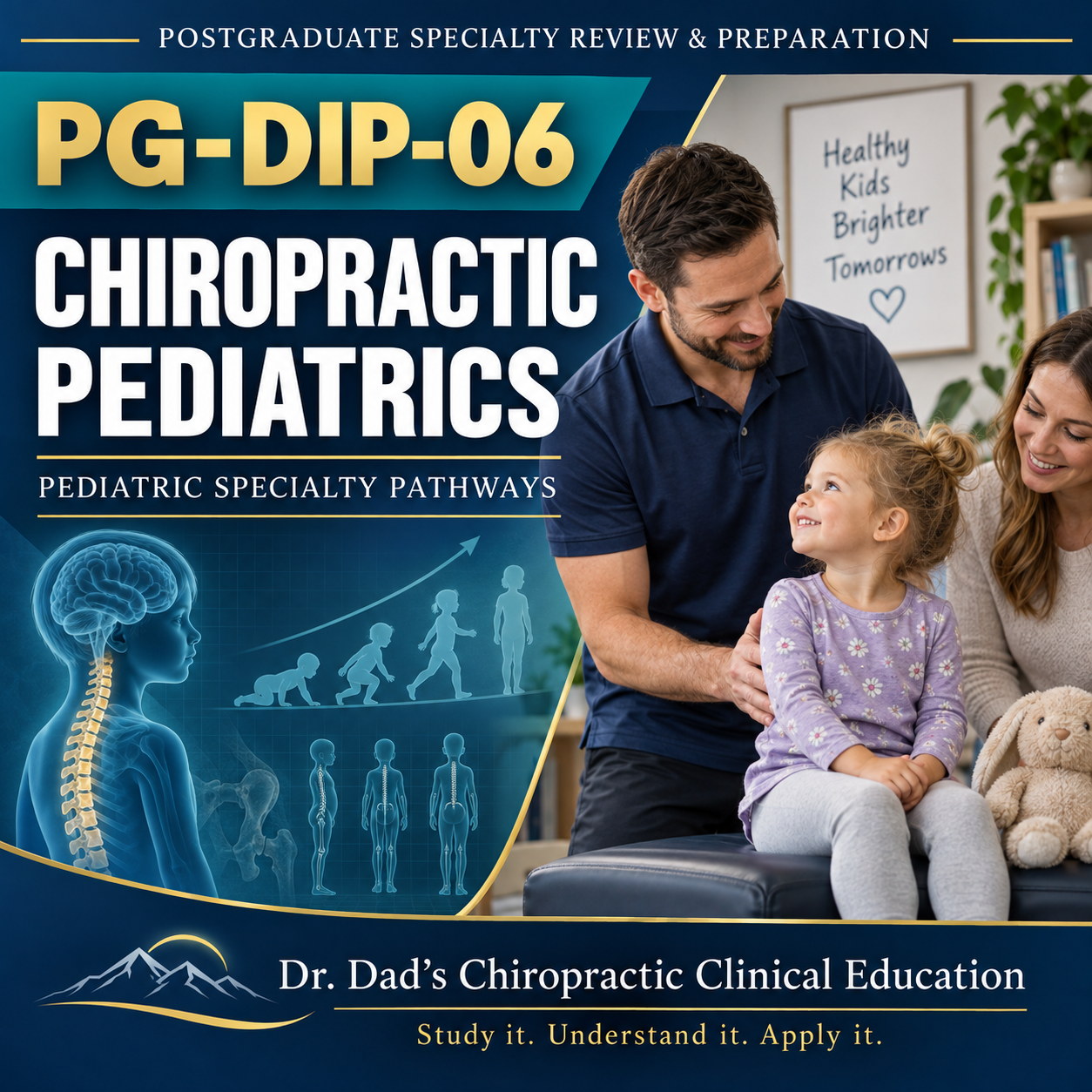
PG-DIP-06 CHIROPRACTIC PEDIATRICS
On Sale
$29.95
$29.95
Added to cart

Develop a safer, more structured understanding of pediatric chiropractic assessment, clinical decision-making, family communication, and postgraduate specialty pathways.

PG-DIP-06 | Chiropractic Pediatrics is an advanced specialty review for chiropractors interested in caring for infants, children, and adolescents within an evidence-informed, developmentally appropriate, and family-centered clinical framework.

The guide also provides an independent orientation to the major pediatric chiropractic education and credentialing routes, while carefully distinguishing certification, diplomate status, examination eligibility, professional recognition, and legal scope of practice.

Pediatric pathways reviewed

  • DABCP — American Board of Chiropractic Pediatrics Diplomate
  • DICCP — Diplomate in Clinical Chiropractic Pediatrics
  • CACCP — Pediatric certification through the Academy Council on Chiropractic Pediatrics
  • DACCP — Advanced diplomate pathway following the applicable Academy Council requirements

Each pathway is presented separately so readers can compare education, eligibility, examination, clinical-experience, renewal, and professional-development expectations without confusing one credential with another.

Clinical topics include:

  • The role and boundaries of pediatric chiropractic practice
  • Pediatric history-taking and parent or caregiver interviews
  • Consent, parental permission, and age-appropriate assent
  • Growth, maturation, developmental milestones, and normal variation
  • Examination of infants, children, and adolescents
  • Developmentally appropriate neurological and musculoskeletal assessment
  • Pediatric spinal and extremity presentations
  • Posture, gait, movement, and functional assessment
  • Birth, perinatal, and early-development history
  • Adolescent growth and sports-related considerations
  • Age-appropriate treatment planning and dosage
  • Communicating benefits, limitations, uncertainty, and alternatives
  • Red flags and urgent pediatric referral
  • Fracture, infection, neurological, inflammatory, neoplastic, and systemic concerns
  • Safeguarding, mandatory reporting, professional boundaries, and chaperones
  • Imaging and diagnostic testing considerations
  • Documentation and outcome measurement
  • Interprofessional referral and co-management
  • Evidence limitations and responsible clinical claims

The guide is designed to include pathway comparisons, clinical cases, rapid-review material, self-assessment questions with explanations, a structured professional-development roadmap, candidate-readiness checklists, and links to official pediatric specialty resources.

Designed for:

  • Chiropractors considering postgraduate pediatric education
  • Candidates comparing DABCP, DICCP, CACCP, and DACCP pathways
  • Clinicians developing a pediatric or family-focused practice
  • Chiropractic educators and postgraduate learners
  • Practitioners seeking stronger pediatric safety and referral frameworks

Product format

Digital PDF • Immediate download

Part of the Postgraduate Specialty Review & Preparation collection from Dr. Dad’s Chiropractic Clinical Education.

Study it. Understand it. Apply it.

Educational disclaimer

This is an independently produced educational resource. It is not issued, approved, sponsored, or endorsed by the American Board of Chiropractic Pediatrics, the International Chiropractors Association, the ICA Council on Chiropractic Pediatrics, the International Chiropractic Pediatric Association, the Academy Council on Chiropractic Pediatrics, or any educational institution.

It does not award certification or diplomate status, establish examination eligibility, replace an approved postgraduate program, guarantee examination performance, or expand legal scope of practice. Credential titles, requirements, education hours, examinations, fees, renewal obligations, and permitted professional claims must be verified directly with the responsible organization and applicable licensing authority.

You will get a PDF (4MB) file
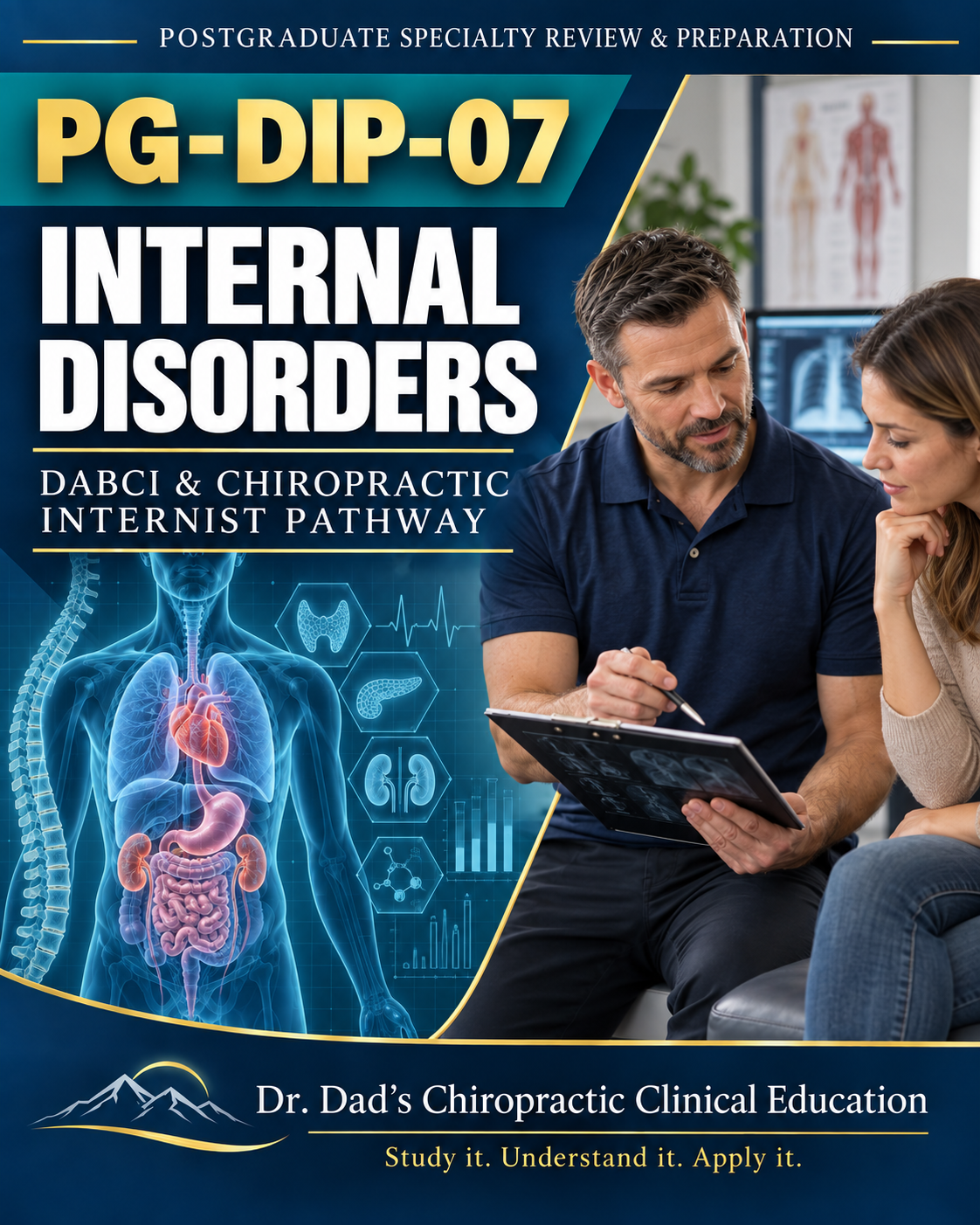
PG-DIP-07 INTERNAL DISORDERS
On Sale
$29.95
$29.95
Added to cart

DABCI & Chiropractic Internist Pathway

Expand your clinical reasoning beyond musculoskeletal presentations with this comprehensive review of internal disorders, systemic health concerns, laboratory findings, and appropriate chiropractic co-management.

PG-DIP-07 | Internal Disorders is designed for chiropractors exploring the DABCI and chiropractic internist pathway, as well as practitioners seeking stronger preparation in differential diagnosis, patient safety, referral decisions, and the recognition of non-musculoskeletal disease.

This guide connects internal medicine knowledge with the chiropractor’s role as a portal-of-entry healthcare professional—helping readers recognize when a patient’s symptoms may reflect an underlying systemic disorder rather than a routine neuromusculoskeletal condition.

Topics include:

  • Overview of the DABCI and chiropractic internist pathway
  • Cardiovascular and respiratory disorders
  • Gastrointestinal and hepatobiliary conditions
  • Renal and genitourinary disorders
  • Endocrine, metabolic, and nutritional conditions
  • Hematologic and immune-system disorders
  • Infectious and inflammatory presentations
  • Dermatologic findings with systemic significance
  • Medication awareness and possible adverse effects
  • Vital signs and general health assessment
  • Laboratory-test interpretation within professional scope
  • Systemic red flags and diagnostic warning signs
  • Differential diagnosis and clinical reasoning
  • Referral, consultation, and interdisciplinary co-management
  • Documentation and patient communication
  • Case-based clinical applications
  • Rapid-review material and self-assessment questions
  • A structured specialty-preparation roadmap
  • Candidate planning and pathway checklist
  • Selected professional resources

Designed for:

  • Chiropractors considering advanced internal-disorders education
  • DABCI and chiropractic internist pathway candidates
  • Clinicians seeking stronger systemic-disease recognition skills
  • New graduates developing referral and co-management confidence
  • Experienced practitioners reviewing internal diagnostic principles
  • Educators teaching differential diagnosis and patient safety

A clinically responsible approach

This guide emphasizes recognition, clinical reasoning, appropriate referral, and collaborative care. It does not encourage chiropractors to diagnose or manage conditions beyond their education, licensure, or jurisdictional scope.

Study it. Understand it. Apply it.

This is an independent educational resource. It does not award diplomate status, satisfy official program requirements, or replace approved postgraduate education. Credential requirements, designation rules, examination procedures, and scope-of-practice regulations should always be confirmed with the appropriate organization and licensing authority.

You will get a PDF (4MB) file
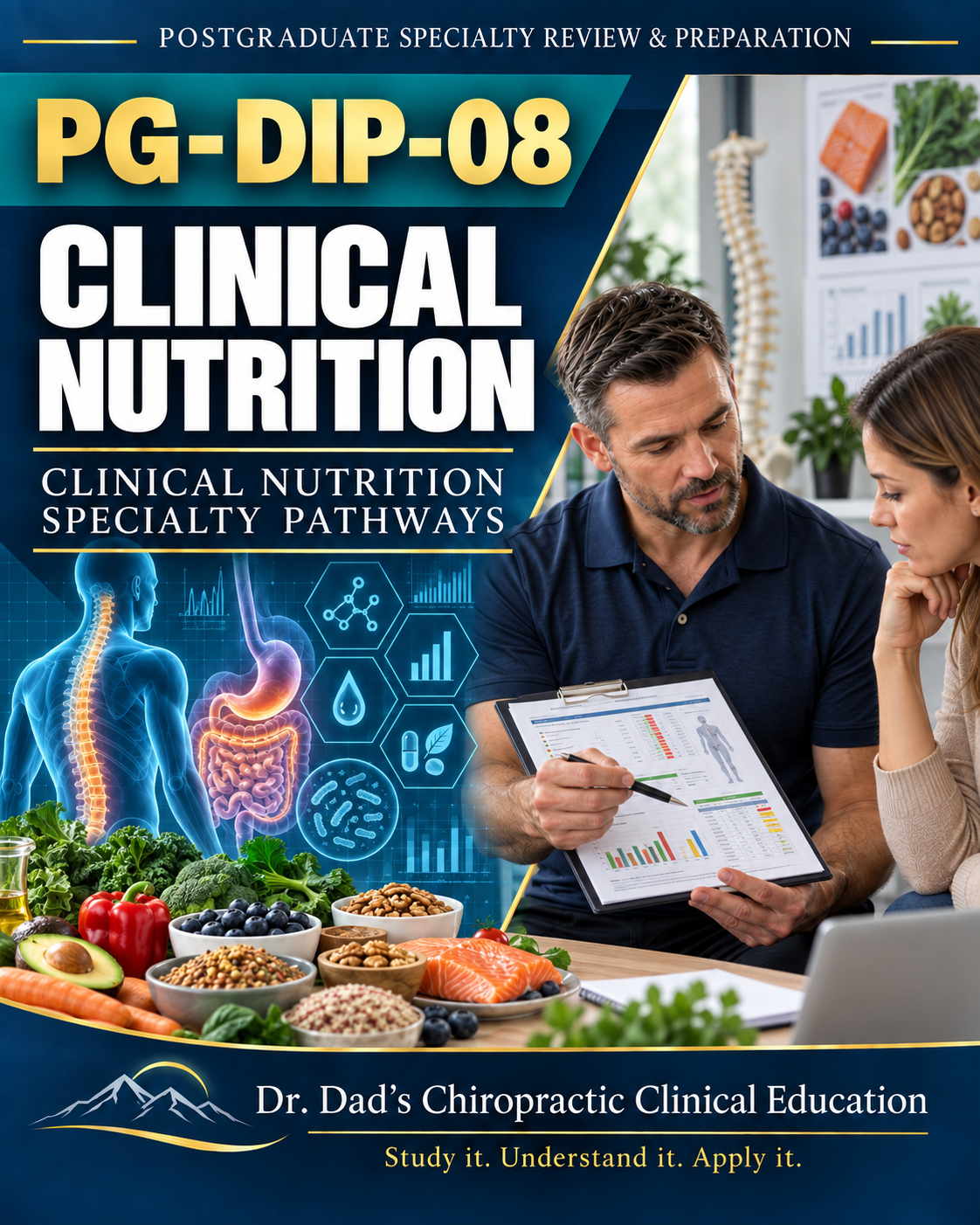
PG-DIP-08 CLINICAL NUTRITION
On Sale
$29.95
$29.95
Added to cart

Clinical Nutrition Specialty Pathways

Strengthen your ability to evaluate nutrition-related concerns, interpret relevant clinical information, recognize safety issues, and integrate evidence-informed nutritional guidance into responsible chiropractic practice.

PG-DIP-08 | Clinical Nutrition is designed for chiropractors exploring advanced clinical nutrition education and specialty pathways such as DACBN and DCBCN, as well as practitioners seeking a structured review of nutritional assessment, laboratory findings, supplementation, metabolic health, and interdisciplinary co-management.

The guide connects nutritional science with practical clinical reasoning. It emphasizes individualized assessment, realistic recommendations, recognition of professional boundaries, and appropriate referral—not generalized diets, unsupported testing, or promises to cure disease through nutrition.

Topics include:

  • Overview of chiropractic clinical-nutrition specialty pathways
  • DACBN and DCBCN pathway orientation
  • Nutritional history and dietary assessment
  • Food patterns, portions, hydration, and energy balance
  • Macronutrients and micronutrients
  • Digestion, absorption, and gastrointestinal health
  • Metabolic health and blood-glucose regulation
  • Cardiovascular and lipid-related nutrition
  • Bone, muscle, and connective-tissue nutrition
  • Nutrition across the lifespan
  • Weight change, appetite, and body-composition considerations
  • Complete blood count and metabolic-panel patterns
  • Iron, ferritin, vitamin B12, folate, and vitamin D
  • Renal, hepatic, thyroid, and inflammatory laboratory considerations
  • Nutrient deficiencies and excesses
  • Dietary supplements, quality, dosage, and safety
  • Food-drug, nutrient-drug, and supplement-drug interactions
  • Nutrition-related red flags and referral decisions
  • Evidence quality and responsible interpretation of nutrition research
  • Patient communication and behavior-change strategies
  • Documentation, outcome monitoring, and co-management
  • Case-based clinical applications
  • Rapid review and self-assessment
  • A structured 12-month preparation roadmap
  • Candidate planning and pathway checklist
  • Selected professional resources

Designed for:

  • Chiropractors considering advanced clinical-nutrition education
  • DACBN and DCBCN pathway candidates
  • Clinicians seeking stronger nutritional-assessment skills
  • New graduates developing safe nutrition and supplementation practices
  • Experienced practitioners reviewing laboratory and metabolic principles
  • Educators teaching nutrition, prevention, and clinical reasoning

A clinically responsible approach

This guide promotes nutrition as one component of comprehensive patient care. Recommendations should remain evidence-informed, individualized, appropriately monitored, and within the clinician’s education and legal scope.

The guide discourages indiscriminate laboratory panels, restrictive diets without clear indications, excessive supplementation, “detoxification” claims, and nutritional treatment that delays necessary medical care.

Study it. Understand it. Apply it.

This is an independent educational resource. It does not award certification or diplomate status, satisfy official specialty-program requirements, authorize practice beyond existing licensure, or replace approved postgraduate education. Credential requirements, designation rules, examination procedures, and maintenance obligations should be confirmed directly with the appropriate specialty organization.

You will get a PDF (4MB) file
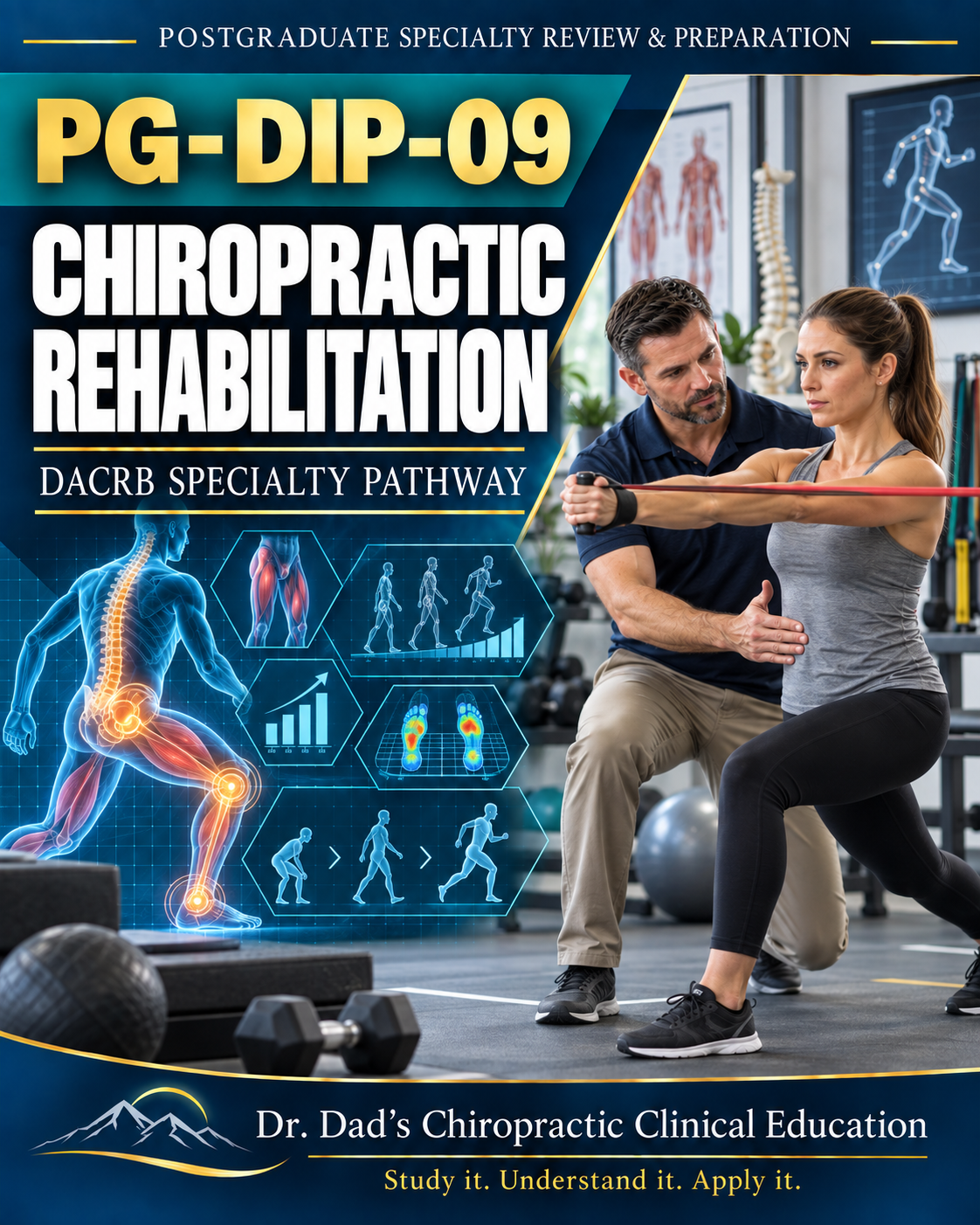
PG-DIP-09 CHIROPRACTIC REHABILITATION
On Sale
$29.95
$29.95
Added to cart

DACRB Specialty Pathway

Move beyond passive care and develop a structured approach to functional assessment, corrective exercise, progressive loading, recovery monitoring, and return to meaningful activity.

PG-DIP-09 | Chiropractic Rehabilitation is designed for chiropractors exploring the DACRB specialty pathway, as well as clinicians seeking stronger skills in active care, exercise prescription, movement assessment, and evidence-informed rehabilitation.

The guide connects chiropractic evaluation and manual care with progressive rehabilitation—helping practitioners select meaningful functional outcomes, prescribe an appropriate starting dosage, monitor response, and advance patients safely from symptom control toward strength, capacity, confidence, and participation.

Topics include:

  • Overview of the DACRB specialty pathway
  • Candidate eligibility and preparation planning
  • Rehabilitation history and functional goal setting
  • Movement, posture, gait, balance, and task assessment
  • Strength, endurance, mobility, coordination, and motor control
  • Pain mechanisms and recovery expectations
  • Exercise selection and clinical reasoning
  • Dosage, frequency, intensity, volume, and progression
  • Load management and tissue-capacity development
  • Patient education and self-management
  • Cervical and thoracic rehabilitation
  • Lumbar spine and pelvic rehabilitation
  • Shoulder, elbow, wrist, and hand rehabilitation
  • Hip, knee, ankle, and foot rehabilitation
  • Balance, proprioception, and fall-risk reduction
  • Breathing, trunk control, and graded conditioning
  • Rehabilitation following injury or immobilization
  • Chronic and recurrent musculoskeletal conditions
  • Sports, occupational, and daily-activity demands
  • Return-to-work, return-to-sport, and return-to-activity decisions
  • Rehabilitation for older adults and complex patients
  • Contraindications, precautions, and clinical red flags
  • Adverse responses and modification strategies
  • Outcome measures and reassessment
  • Documentation, informed consent, and co-management
  • Case-based rehabilitation planning
  • Rapid review and self-assessment
  • A structured 12-month preparation roadmap
  • Candidate planning and pathway checklist
  • Selected professional resources

Designed for:

  • Chiropractors considering DACRB education
  • DACRB pathway candidates
  • Clinicians expanding active-care services
  • New graduates developing exercise-prescription confidence
  • Sports and rehabilitation-focused chiropractors
  • Experienced practitioners updating rehabilitation principles
  • Educators teaching functional assessment and active care

A patient-centered rehabilitation approach

This guide emphasizes that rehabilitation should be individualized, goal-directed, appropriately dosed, and regularly reassessed. Exercise selection should reflect the patient’s condition, function, preferences, environment, recovery stage, and available resources.

The objective is not to create a collection of exercises. It is to develop a reasoned progression from the patient’s present capacity toward the activities that matter to them.

Study it. Understand it. Apply it.

This is an independent educational resource. It does not award DACRB status, establish examination eligibility, satisfy official specialty-program requirements, expand professional scope, or replace approved postgraduate education. Candidates should verify current eligibility, examination, certification, and maintenance requirements directly with the appropriate certifying organization.

You will get a PDF (4MB) file
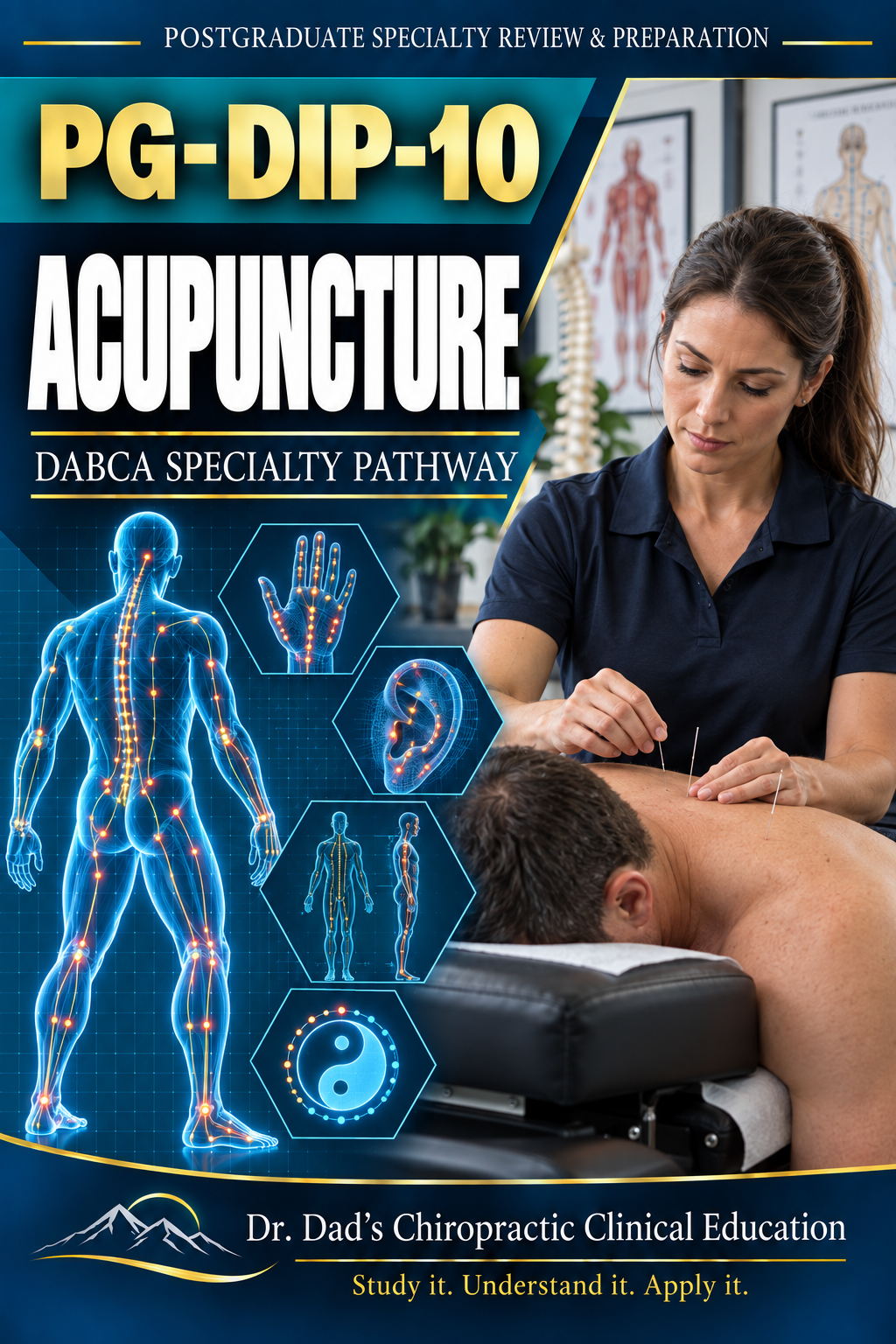
PG-DIP-10 ACUPUNCTURE
On Sale
$29.95
$29.95
Added to cart

DABCA Specialty Pathway

Expand your understanding of chiropractic acupuncture with a comprehensive review of acupuncture theory, point location, clinical reasoning, procedural safety, patient selection, and the pathway toward the Diplomate of the American Board of Chiropractic Acupuncture (DABCA) credential.

PG-DIP-10 | Acupuncture is designed for chiropractors exploring advanced acupuncture education, preparing for the DABCA specialty pathway, or seeking a structured review of acupuncture principles relevant to chiropractic practice.

The guide connects traditional acupuncture concepts with contemporary clinical assessment, patient safety, documentation, and responsible integration into musculoskeletal practice.

Topics include:

  • Overview of the DABCA specialty pathway
  • Candidate planning and credential-preparation considerations
  • Foundations of acupuncture theory
  • Yin-Yang and Five Element concepts
  • Qi, Blood, Jing, Shen, and body-fluid principles
  • Zang-Fu organ-system relationships
  • Meridians, channels, collaterals, and extraordinary vessels
  • Anatomical landmarks and proportional point measurement
  • Major acupuncture-point categories and functions
  • Frequently used points and clinically relevant combinations
  • Point indications, precautions, depth, and anatomical safety
  • Traditional diagnostic concepts and pattern recognition
  • Observation, questioning, palpation, tongue, and pulse assessment
  • Integration with chiropractic history and physical examination
  • Differential diagnosis and recognition of non-musculoskeletal disease
  • Clean-needle technique and infection-control principles
  • Needle selection, insertion, manipulation, retention, and removal
  • Patient positioning, consent, monitoring, and documentation
  • Contraindications, precautions, adverse reactions, and emergency procedures
  • Acupuncture considerations during pregnancy
  • Bleeding risk, anticoagulant use, immune compromise, and medical complexity
  • Electroacupuncture principles and electrical-safety considerations
  • Auricular, scalp, trigger-point, and related acupuncture approaches
  • Moxibustion, cupping, gua sha, and other adjunctive procedures
  • Acupuncture applications for common neuromusculoskeletal presentations
  • Evidence, limitations, and responsible communication of expected outcomes
  • Referral and interdisciplinary co-management
  • Case-based clinical applications
  • Practical and oral-examination preparation concepts
  • Rapid-review material and self-assessment questions
  • A structured 12-month specialty-preparation roadmap
  • Candidate planning and pathway checklist
  • Selected professional and regulatory resources

Designed for:

  • Chiropractors considering postgraduate acupuncture education
  • DABCA pathway candidates
  • Practitioners reviewing acupuncture theory and point location
  • Clinicians seeking stronger procedural-safety knowledge
  • Chiropractors integrating acupuncture with musculoskeletal care
  • Educators teaching chiropractic acupuncture principles
  • Experienced practitioners preparing for specialty reassessment

More than a point-location guide

This resource emphasizes the complete clinical process: determining whether acupuncture is appropriate, recognizing contraindications, selecting defensible treatment strategies, applying procedures safely, monitoring patient response, documenting care, and referring when the patient’s needs exceed the clinician’s competence or legal authority.

A clinically responsible approach

The guide emphasizes patient safety, clean-needle technique, informed consent, differential diagnosis, appropriate referral, evidence-informed practice, and compliance with jurisdiction-specific regulations.

Acupuncture laws vary substantially between jurisdictions. Completion of acupuncture coursework or purchase of this guide does not independently authorize a chiropractor to perform acupuncture.

Study it. Understand it. Apply it.

This is an independent educational and credential-preparation resource. It is not issued, approved, sponsored, or endorsed by the American Board of Chiropractic Acupuncture, the Council of Chiropractic Acupuncture, the American Chiropractic Association, or any acupuncture education provider.

This guide does not award DABCA status, establish examination eligibility, replace required postgraduate acupuncture education, certify clean-needle competency, reproduce confidential examination content, expand professional scope, or confer legal authority to practice acupuncture. Current educational requirements, examination procedures, credential-maintenance obligations, and scope-of-practice regulations should always be confirmed with the appropriate certifying organization and licensing authority.

You will get a PDF (4MB) file
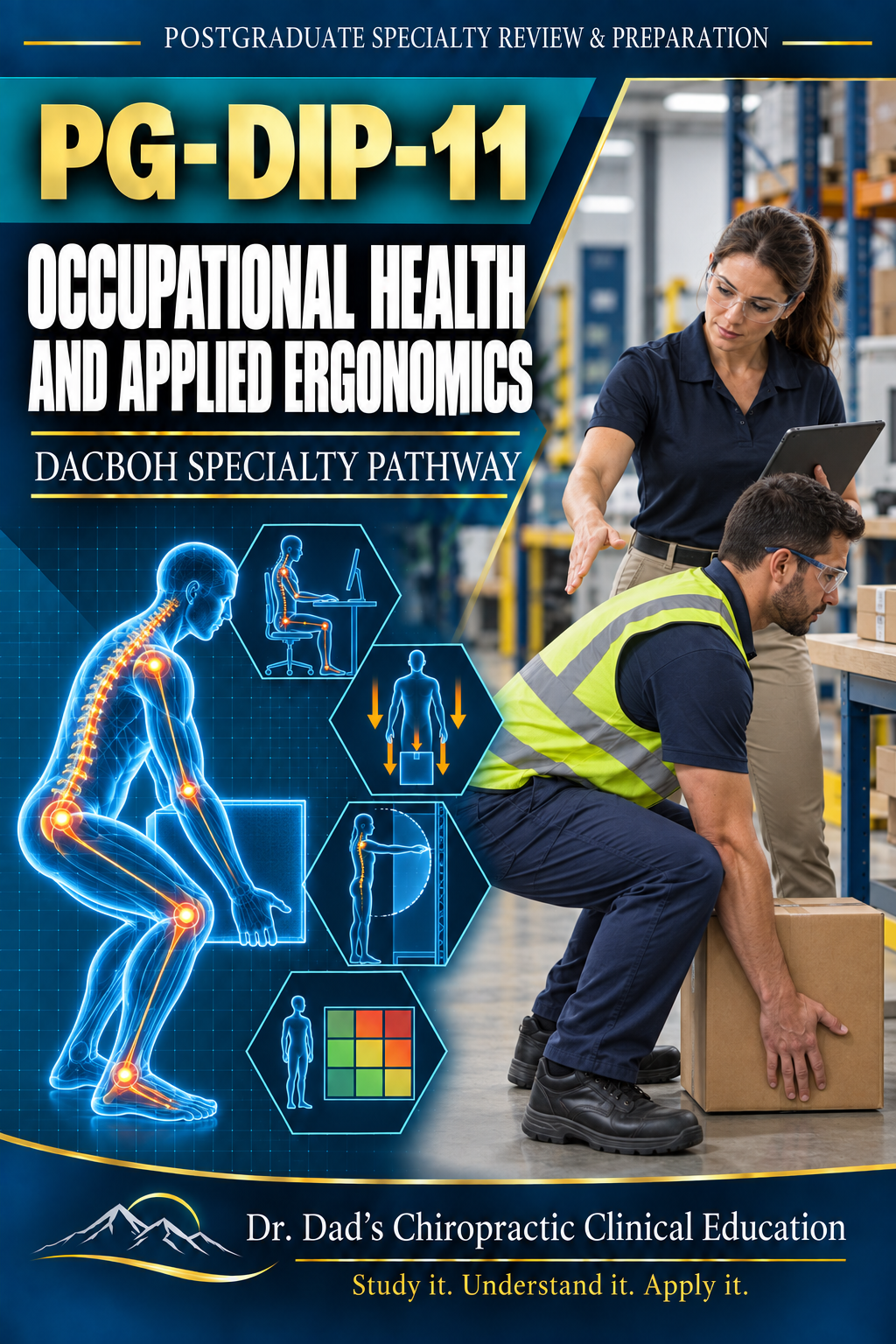
PG-DIP-11 OCCUPATIONAL HEALTH AND APPLIED ERGONOMICS
On Sale
$29.95
$29.95
Added to cart

DACBOH Specialty Pathway

Develop the clinical, ergonomic, and workplace-assessment skills needed to help prevent occupational injuries, evaluate work-related functional limitations, and support safe, sustainable return to work.

PG-DIP-11 | Occupational Health and Applied Ergonomics provides a comprehensive review of workplace health, applied biomechanics, ergonomic assessment, injury prevention, functional evaluation, disability management, and interdisciplinary occupational-health practice.

The guide also introduces the Diplomate of the American Chiropractic Board of Occupational Health (DACBOH) pathway while clearly distinguishing specialty education, professional certification, and legal scope of practice.

Topics include:

  • Overview of chiropractic occupational health
  • Current DACBOH specialty-pathway orientation
  • Candidate planning and credential-verification considerations
  • Roles of the occupational-health chiropractor
  • Workplace injury and illness prevention
  • Occupational history and job-demand analysis
  • Physical, chemical, biological, psychosocial, and environmental hazards
  • Hazard identification and workplace risk assessment
  • Applied ergonomics and human-factors principles
  • Workstation assessment and office ergonomics
  • Industrial, warehouse, manufacturing, and material-handling ergonomics
  • Lifting, lowering, carrying, pushing, and pulling biomechanics
  • Repetition, force, posture, vibration, contact stress, and duration
  • Work-rest cycles, fatigue, recovery, and cumulative exposure
  • Upper-extremity and repetitive-strain risk
  • Spine and lower-extremity workplace demands
  • Occupational musculoskeletal examination
  • Functional-capacity and work-tolerance assessment
  • Job-specific functional testing
  • Physical-demand classifications
  • Work conditioning and work-hardening concepts
  • Injury prevention and worker education
  • Early intervention and modified-duty planning
  • Return-to-work decision-making
  • Transitional and graduated return-to-work programs
  • Work restrictions, limitations, and functional abilities
  • Impairment, disability, and activity limitation
  • Workers’ compensation fundamentals
  • Independent medical and occupational evaluations
  • Causation, aggravation, recurrence, and apportionment concepts
  • Documentation, reporting, and defensible clinical communication
  • Employer, insurer, attorney, and healthcare-team communication
  • Workplace wellness and health-promotion programs
  • Regulatory awareness and professional boundaries
  • Ethical considerations and conflicts of interest
  • Referral and interdisciplinary co-management
  • Case-based workplace applications
  • Rapid-review material and self-assessment questions
  • A structured 12-month specialty-preparation roadmap
  • Candidate planning and pathway checklist
  • Selected professional and regulatory resources

Designed for:

  • Chiropractors interested in occupational-health practice
  • Practitioners exploring the DACBOH specialty pathway
  • Clinicians performing workplace and ergonomic assessments
  • Chiropractors involved in workers’ compensation cases
  • Providers supporting modified-duty and return-to-work planning
  • Clinicians reviewing functional-capacity and disability concepts
  • New graduates developing workplace-health knowledge
  • Experienced practitioners expanding employer and industrial services
  • Educators teaching occupational health, biomechanics, and ergonomics

More than workstation advice

Applied ergonomics is not simply adjusting a chair or instructing every worker to lift in the same way. Effective occupational-health practice requires analysis of the worker, task, equipment, environment, exposure pattern, organizational system, and consequences of error.

This guide emphasizes practical workplace reasoning: identifying relevant hazards, understanding job demands, comparing demands with individual capacity, recommending feasible controls, communicating functional abilities, and measuring whether an intervention produces meaningful improvement.

A clinically responsible approach

The guide emphasizes evidence-informed assessment, injury prevention, functional restoration, worker autonomy, accurate documentation, appropriate referral, and collaboration with employers and other healthcare professionals.

It does not encourage chiropractors to perform industrial-hygiene testing, disability determinations, regulated examinations, impairment ratings, or other occupational-health services beyond their education, competence, licensure, and jurisdictional authority.

Current pathway note

At the time this product was prepared, the American Chiropractic Board of Occupational Health (ACBOH) stated that updated program materials were being developed and that testing information would be announced when available. Prospective candidates should therefore confirm the current availability, eligibility rules, education requirements, examination procedures, fees, and maintenance obligations directly with ACBOH before making professional or financial decisions.

Study it. Understand it. Apply it.

This is an independent educational and specialty-preparation resource. It is not issued, approved, sponsored, or endorsed by the American Chiropractic Board of Occupational Health, the American Chiropractic Association, any occupational-health credentialing organization, employer, insurer, or education provider.

This guide does not award DACBOH status, establish examination eligibility, confer specialist recognition, replace approved postgraduate education, satisfy regulatory training requirements, expand professional scope, or guarantee examination or practice outcomes. Credential requirements, examination availability, professional titles, workers’ compensation rules, impairment-rating authority, and scope-of-practice regulations should always be confirmed with the appropriate organization, licensing authority, employer, and jurisdiction.

You will get a PDF (4MB) file
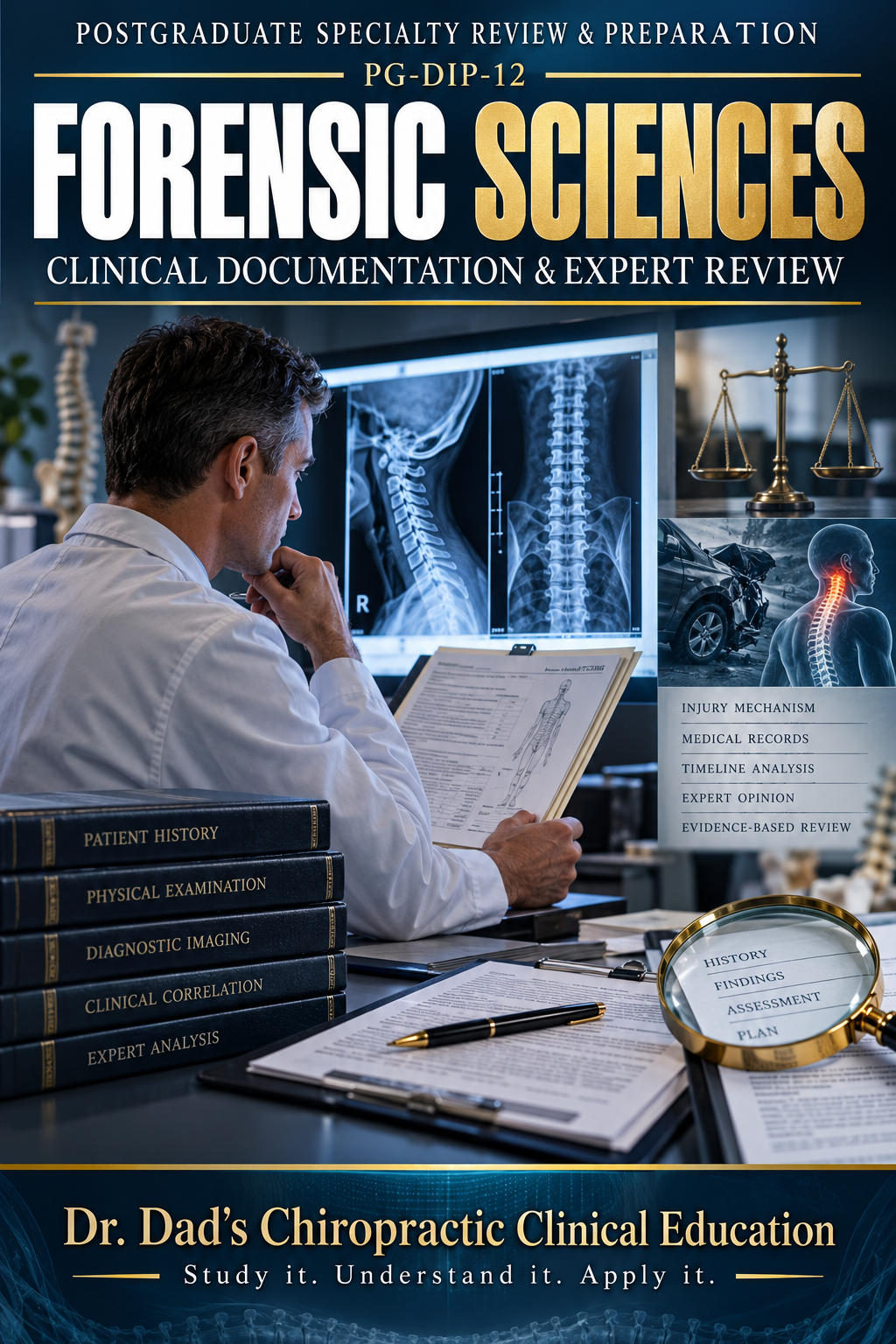
PG-DIP-12 FORENSIC SCIENCES
On Sale
$29.95
$29.95
Added to cart

Clinical Documentation, Injury Analysis and Expert Review

Develop the analytical, documentation, and communication skills required when chiropractic care intersects with legal, insurance, disability, occupational, and personal-injury matters.

PG-DIP-12 | Forensic Sciences provides a structured introduction to the chiropractor’s potential role in forensic and medicolegal cases. It emphasizes objective clinical reasoning, accurate record review, injury-mechanism analysis, causation assessment, defensible documentation, and the clear communication of professional opinions.

The guide helps readers distinguish clinical findings from patient reports, assumptions, legal conclusions, and unsupported opinions. It also examines the responsibilities and limitations associated with treating-practitioner reports, independent evaluations, depositions, expert testimony, and interdisciplinary case review.

Topics include:

  • Introduction to chiropractic forensic sciences
  • The chiropractor’s role in medicolegal matters
  • Treating practitioner versus independent evaluator
  • Objective clinical documentation
  • Medical-record and case-file review
  • Chronology and timeline construction
  • Injury-mechanism and biomechanical analysis
  • Motor-vehicle collision considerations
  • Occupational and personal-injury cases
  • Clinical correlation of history, examination, imaging, and records
  • Pre-existing conditions and prior injuries
  • Causation, contribution, aggravation, and exacerbation
  • Apportionment and competing explanations
  • Consistency, reliability, and evidentiary limitations
  • Maximum medical improvement
  • Impairment, disability, restrictions, and functional limitations
  • Prognosis and future-care opinions
  • Independent medical and chiropractic evaluations
  • Expert reports and professional opinion writing
  • Depositions, testimony, and courtroom communication
  • Working with attorneys, insurers, employers, and other professionals
  • Ethical responsibilities, bias, conflicts of interest, and confidentiality
  • Case-based forensic applications
  • Rapid-review material and self-assessment questions
  • A structured professional-development roadmap
  • Practitioner preparation and case-review checklist
  • Selected professional resources

Designed for:

  • Chiropractors involved in personal-injury cases
  • Clinicians reviewing motor-vehicle or occupational injuries
  • Practitioners preparing medicolegal reports
  • Chiropractors considering forensic or expert-review work
  • Independent evaluators and record-review consultants
  • Educators teaching documentation and professional reasoning
  • Experienced practitioners seeking stronger defensibility and communication

A careful and defensible approach

This guide emphasizes impartial analysis, accurate documentation, evidence-informed reasoning, appropriate professional boundaries, and the clear acknowledgment of uncertainty.

It does not teach readers to act as attorneys, accident-reconstruction engineers, radiologists, or other specialists outside their education, competence, licensure, or jurisdictional authority.

Study it. Understand it. Apply it.

This is an independent educational resource. It does not award a forensic credential, establish expert-witness qualification, authorize independent examinations, expand professional scope, provide legal advice, or guarantee acceptance of an opinion by a court, insurer, employer, attorney, or administrative agency. Applicable laws, evidentiary standards, professional requirements, payer policies, and jurisdictional regulations should always be independently verified.

You will get a PDF (4MB) file
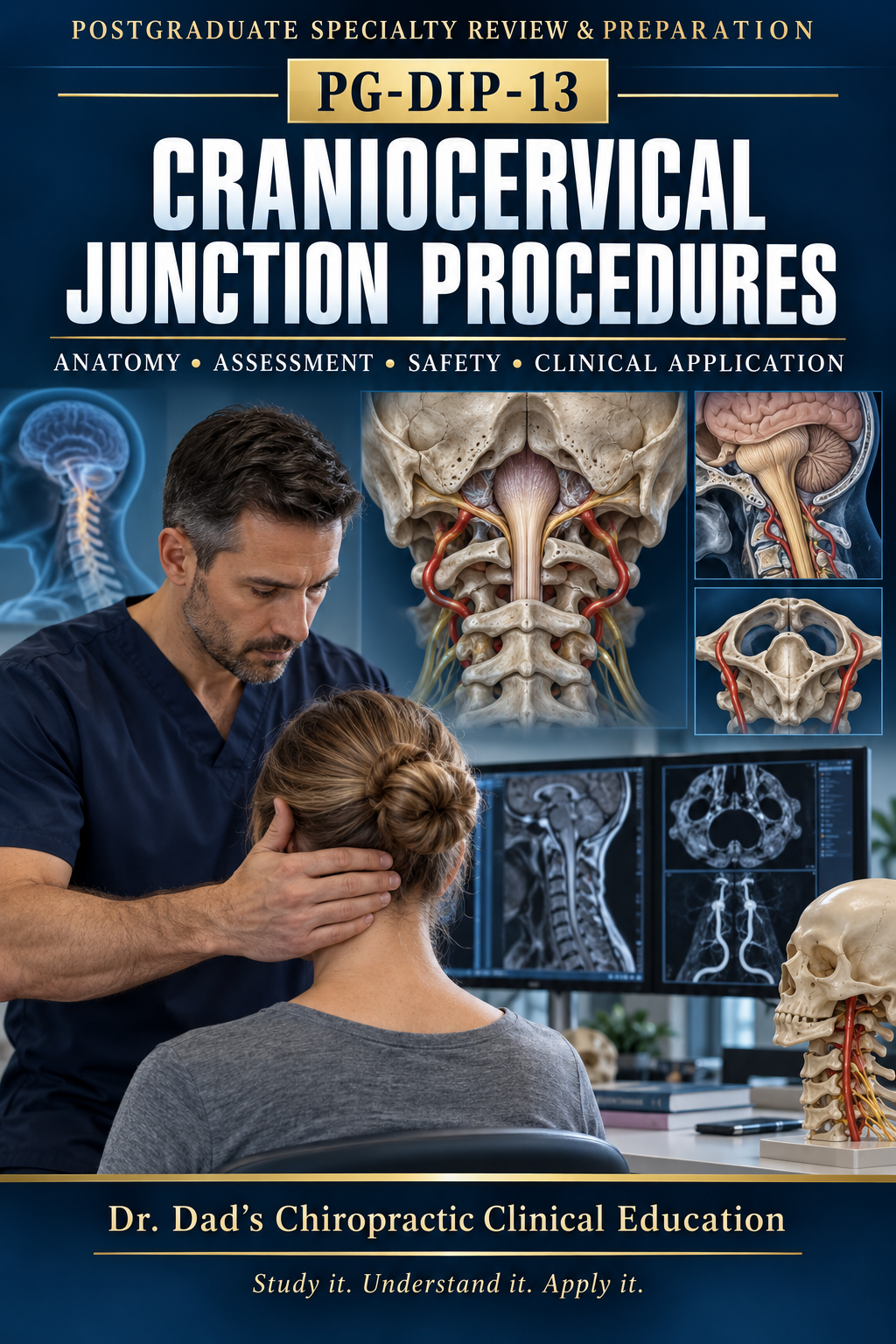
PG-DIP-13 CRANIOCERVICAL JUNCTION
On Sale
$29.95
$29.95
Added to cart

Anatomy, Assessment, Safety and Clinical Application

Develop a deeper understanding of one of the most anatomically complex and clinically sensitive regions encountered in chiropractic practice.

PG-DIP-13 | Craniocervical Junction Procedures examines the occiput, atlas, axis and surrounding neurological, vascular and ligamentous structures. It connects detailed regional anatomy with clinical assessment, imaging awareness, differential diagnosis, patient safety and carefully selected chiropractic procedures.

This guide emphasizes responsible clinical reasoning rather than allegiance to one technique system.

Topics include:

  • Functional anatomy of the occiput, atlas and axis
  • Foramen magnum and brainstem-spinal cord transition
  • Vertebral arteries and regional neurovascular relationships
  • Alar, transverse and accessory ligament considerations
  • Upper cervical biomechanics and movement
  • Craniocervical history and symptom evaluation
  • Neurological and orthopedic examination
  • Cranial-nerve and cerebellar screening
  • Headache, dizziness and cervicogenic presentations
  • Instability, inflammatory disease and connective-tissue concerns
  • Imaging selection and interpretation awareness
  • Vascular warning signs and clinical uncertainty
  • Contraindications, precautions and referral decisions
  • Procedure selection and risk-benefit reasoning
  • Low-force, manual and instrument-assisted concepts
  • Outcome measurement and reassessment
  • Documentation and informed consent
  • Case-based clinical applications
  • Rapid review and self-assessment
  • Professional-development roadmap and practitioner checklist

Designed for:

  • Chiropractors interested in craniocervical junction care
  • Clinicians seeking stronger upper-cervical safety skills
  • Practitioners reviewing headache, dizziness and cervical presentations
  • Educators teaching regional anatomy and clinical reasoning
  • Candidates exploring advanced craniocervical education

Study it. Understand it. Apply it.

This independent educational resource does not confer certification, establish eligibility for a specialty designation, replace supervised procedural education or authorize care beyond the practitioner’s education, competence, licensure or jurisdictional scope.

You will get a PDF (4MB) file
PG-DIP-14 UPPER CERVICAL TECHNIQUES
On Sale
$29.95
$29.95
Added to cart

Specialty Clinical Review and Professional Development

Explore the principles, assessment systems and procedural reasoning associated with upper-cervical and technique-specific chiropractic programs.

PG-DIP-14 | Upper Cervical and Technique-Specific Programs provides a comparative, clinically responsible overview of specialized chiropractic systems without promoting one proprietary approach as universally superior.

The guide helps readers evaluate how different programs organize examination, imaging, biomechanical analysis, patient selection, procedural application and outcome assessment.

Topics include:

  • History and development of specialized chiropractic systems
  • Upper-cervical anatomy and biomechanics
  • Technique classifications and clinical models
  • Structural, neurological and functional assessment approaches
  • Postural and radiographic analysis concepts
  • Leg-length and supine-prone assessment procedures
  • Palpation and motion-assessment systems
  • Manual, table-assisted and instrument-assisted procedures
  • Low-force and upper-cervical applications
  • Patient positioning and procedural precision
  • Contraindications and safety screening
  • Evidence appraisal and clinical uncertainty
  • Selecting techniques according to patient needs
  • Avoiding dogmatic or technique-centered reasoning
  • Informed consent and patient communication
  • Documentation and outcome measurement
  • Comparing education, certification and proficiency programs
  • Case-based applications
  • Rapid review and self-assessment
  • Professional-development roadmap and checklist

Designed for:

  • Chiropractors exploring upper-cervical systems
  • Practitioners comparing technique-specific programs
  • Students and graduates seeking technique orientation
  • Clinicians evaluating additional postgraduate training
  • Educators teaching chiropractic procedures and professional reasoning

A comparative approach

This guide does not reproduce proprietary course material or claim that one named system is appropriate for every patient. Technique selection should remain subordinate to diagnosis, safety, patient preference, clinical response and professional scope.

Study it. Understand it. Apply it.

This independent educational resource does not award technique certification, establish proficiency, replace approved hands-on instruction or imply endorsement by any technique organization.

You will get a PDF (4MB) file
PG-DIP-15 CHIROPRACTIC PHILOSOPHY
On Sale
$29.95
$29.95
Added to cart

Historical Foundations, Professional Identity and Contemporary Application

Examine the ideas that influenced chiropractic’s development—and consider how those ideas relate to modern evidence, ethics, clinical reasoning and professional identity.

PG-DIP-15 | Chiropractic Philosophy presents chiropractic philosophy as a field for disciplined study rather than unquestioned doctrine. It explores historical concepts, competing professional models and the continuing relationship between philosophy, science and patient-centered healthcare.

Topics include:

  • Origins and development of chiropractic
  • Foundational chiropractic terminology
  • Historical concepts of subluxation
  • Vitalism, mechanism and holism
  • Deductive and inductive reasoning
  • Philosophy of science and clinical knowledge
  • Evidence, uncertainty and professional judgment
  • Competing models of chiropractic identity
  • Wellness, prevention and health promotion
  • Patient-centered and biopsychosocial care
  • Scope of practice and portal-of-entry responsibility
  • Ethical limits of philosophical claims
  • Communicating chiropractic concepts responsibly
  • Avoiding fear-based and unsupported explanations
  • Philosophy in education and clinical practice
  • Interprofessional relationships
  • Professional identity and cultural development
  • Case-based ethical applications
  • Rapid review and self-assessment
  • Twelve-month professional-development roadmap

Designed for:

  • Chiropractors exploring the profession’s foundations
  • Educators teaching chiropractic history and philosophy
  • Students developing a professional identity
  • Practitioners reassessing traditional terminology
  • Clinicians seeking to integrate philosophy with evidence-informed care

Study it. Understand it. Apply it.

This guide encourages critical study and respectful discussion. It does not require adherence to a particular philosophical school, confer a philosophical credential or justify claims unsupported by credible clinical evidence.

You will get a PDF (159KB) file
PG-DIP-16 PAIN MANAGEMENT
On Sale
$29.95
$29.95
Added to cart

Clinical Reasoning, Function and Collaborative Care

Develop a more complete approach to evaluating and managing patients with acute, persistent and complex pain.

PG-DIP-16 | Pain Management integrates pain science, differential diagnosis, functional assessment, conservative care, communication, outcome measurement and interdisciplinary co-management.

The guide moves beyond pain intensity alone by examining how biological, psychological, occupational and social factors influence pain, recovery and participation.

Topics include:

  • Acute, subacute and persistent pain
  • Nociceptive, neuropathic and nociplastic mechanisms
  • Peripheral and central sensitization
  • Pain-related neurological examination
  • Serious pathology and red-flag screening
  • Psychosocial and recovery barriers
  • Fear, catastrophizing and avoidance
  • Sleep, stress and behavioral contributors
  • Medication and substance-use awareness
  • Manual therapy and therapeutic exercise
  • Graded activity and exposure
  • Pain neuroscience education
  • Self-management and shared decision-making
  • Outcome measures and functional goals
  • Multimorbidity and complex pain presentations
  • Opioid-related clinical awareness
  • Referral and interdisciplinary care
  • Documentation and reassessment
  • Case-based clinical applications
  • Rapid review, self-assessment and preparation roadmap

Designed for:

  • Chiropractors managing persistent or complex pain
  • Clinicians seeking stronger pain-science foundations
  • New graduates developing communication skills
  • Experienced practitioners reviewing multidisciplinary care
  • Educators teaching pain assessment and management

Study it. Understand it. Apply it.

This guide does not authorize medication prescribing, interventional pain procedures or psychological treatment outside professional scope. It does not replace formal pain-specialty education or interdisciplinary consultation.

You will get a PDF (160KB) file
PG-DIP-17 ANIMAL CHIROPRACTIC PATHWAYS
On Sale
$29.95
$29.95
Added to cart

Professional Preparation, Safety and Comparative Clinical Foundations

Explore the educational, professional and regulatory considerations involved in animal chiropractic practice.

PG-DIP-17 | Animal Chiropractic Certification Pathways provides an independent orientation to animal-chiropractic education, certification pathways, interprofessional collaboration and foundational clinical responsibilities.

The guide emphasizes that requirements vary substantially by jurisdiction and may involve veterinary referral, supervision, certification or limitations on who may provide animal chiropractic services.

Topics include:

  • Animal chiropractic professional pathways
  • Chiropractic and veterinary roles
  • Jurisdictional and regulatory differences
  • Education and certification-program evaluation
  • Comparative anatomy and biomechanics
  • Equine and canine clinical foundations
  • Gait, posture and movement observation
  • History from owners, handlers and trainers
  • Neurological and musculoskeletal screening
  • Recognition of veterinary red flags
  • Contraindications and safety considerations
  • Manual and low-force procedural concepts
  • Animal behavior and practitioner safety
  • Informed consent and owner communication
  • Veterinary referral and co-management
  • Documentation and outcome assessment
  • Ethical marketing and title use
  • Case-based animal applications
  • Rapid review and self-assessment
  • Candidate roadmap and pathway checklist

Designed for:

  • Chiropractors exploring animal chiropractic
  • Veterinarians considering manual-care education
  • Prospective animal-chiropractic program candidates
  • Practitioners reviewing equine and canine foundations
  • Educators teaching interprofessional animal care

Study it. Understand it. Apply it.

This independent guide does not award animal-chiropractic certification, establish program eligibility, authorize veterinary diagnosis or treatment, or replace approved postgraduate and supervised hands-on education. Current requirements must be confirmed with the relevant program, veterinary authority and chiropractic licensing body.

You will get a PDF (160KB) file
PG-DIP-18 PREGNANCY, PERINATAL AND FAMILY PRACTICE
On Sale
$29.95
$29.95
Added to cart

PG-DIP-18 | Pregnancy, Perinatal and Family Practice

Safe, Patient-Centered Care Across Changing Life Stages

Strengthen your preparation for caring for pregnant and postpartum patients while developing a broader family-practice approach.

PG-DIP-18 | Pregnancy, Perinatal and Family Practice integrates maternal physiology, musculoskeletal assessment, clinical safety, conservative management, communication and interdisciplinary collaboration.

The guide emphasizes respectful, evidence-informed care without presenting chiropractic treatment as a substitute for obstetric, midwifery, pediatric or emergency services.

Topics include:

  • Physiological changes during pregnancy
  • Pregnancy-related spinal and pelvic complaints
  • Pelvic-girdle and low-back pain
  • Rib, thoracic and postural presentations
  • Headache and extremity complaints
  • Trimester-specific examination considerations
  • Positioning and procedural modification
  • Pregnancy-related contraindications and precautions
  • Obstetric warning signs and urgent referral
  • Postpartum recovery and rehabilitation
  • Abdominal-wall and pelvic-floor awareness
  • Lactation-related postural and musculoskeletal concerns
  • Return to activity and exercise
  • Family-practice communication
  • Trauma-informed and culturally responsive care
  • Collaboration with obstetricians, midwives and other professionals
  • Documentation and informed consent
  • Case-based clinical applications
  • Rapid review and self-assessment
  • Professional-development roadmap and checklist

Designed for:

  • Chiropractors caring for pregnant patients
  • Clinicians developing perinatal services
  • Practitioners interested in family-centered care
  • New graduates strengthening safety and referral skills
  • Educators teaching pregnancy-related clinical care

Study it. Understand it. Apply it.

This independent educational resource does not confer certification, replace approved pregnancy or perinatal training, authorize obstetric care or support claims that chiropractic treatment changes fetal position or guarantees labor, delivery or pediatric outcomes.

You will get a PDF (161KB) file
PG-DIP-19 ADVANCED EMERGING CREDENTIALS
On Sale
$29.95
$29.95
Added to cart

Evaluating New Pathways, Expanded Roles and Professional Opportunities

Navigate the changing landscape of advanced chiropractic education without confusing new opportunities with established professional authority.

PG-DIP-19 | Advanced Practice and Emerging Credentials helps chiropractors evaluate developing certifications, postgraduate programs, advanced-practice proposals and interdisciplinary roles.

The guide provides a structured method for examining legitimacy, educational depth, regulatory recognition, clinical relevance, cost, professional risk and long-term value.

Topics include:

  • Advanced-practice concepts in chiropractic
  • Emerging certificates and specialty designations
  • Credential, certification, diplomate and degree distinctions
  • Program recognition and accreditation questions
  • Legal scope versus educational competence
  • Evaluating curriculum quality
  • Faculty qualifications and clinical supervision
  • Examination and competency assessment
  • Interprofessional and collaborative roles
  • Diagnostic and procedural expansion proposals
  • Telehealth and digital clinical practice
  • Artificial intelligence and clinical decision support
  • Point-of-care technology and emerging assessment tools
  • Evidence appraisal for new procedures
  • Ethics, advertising and title use
  • Professional liability and risk management
  • Career planning and return on investment
  • Building a documented professional portfolio
  • Case-based program-evaluation exercises
  • Twelve-month professional-development roadmap

Designed for:

  • Chiropractors considering advanced education
  • Practitioners comparing postgraduate credentials
  • Educators and professional leaders
  • New graduates planning long-term development
  • Clinicians evaluating emerging technologies or expanded roles

Evaluate before enrolling

A new designation may be educationally useful without being recognized by a licensing board, insurer, employer, accreditor or credentialing organization. Recognition, authority and portability should be independently verified before enrollment.

Study it. Understand it. Apply it.

This independent educational resource does not endorse a particular program, confer an advanced credential, expand legal scope or guarantee professional recognition, reimbursement, employment or practice privileges.

You will get a PDF (160KB) file