

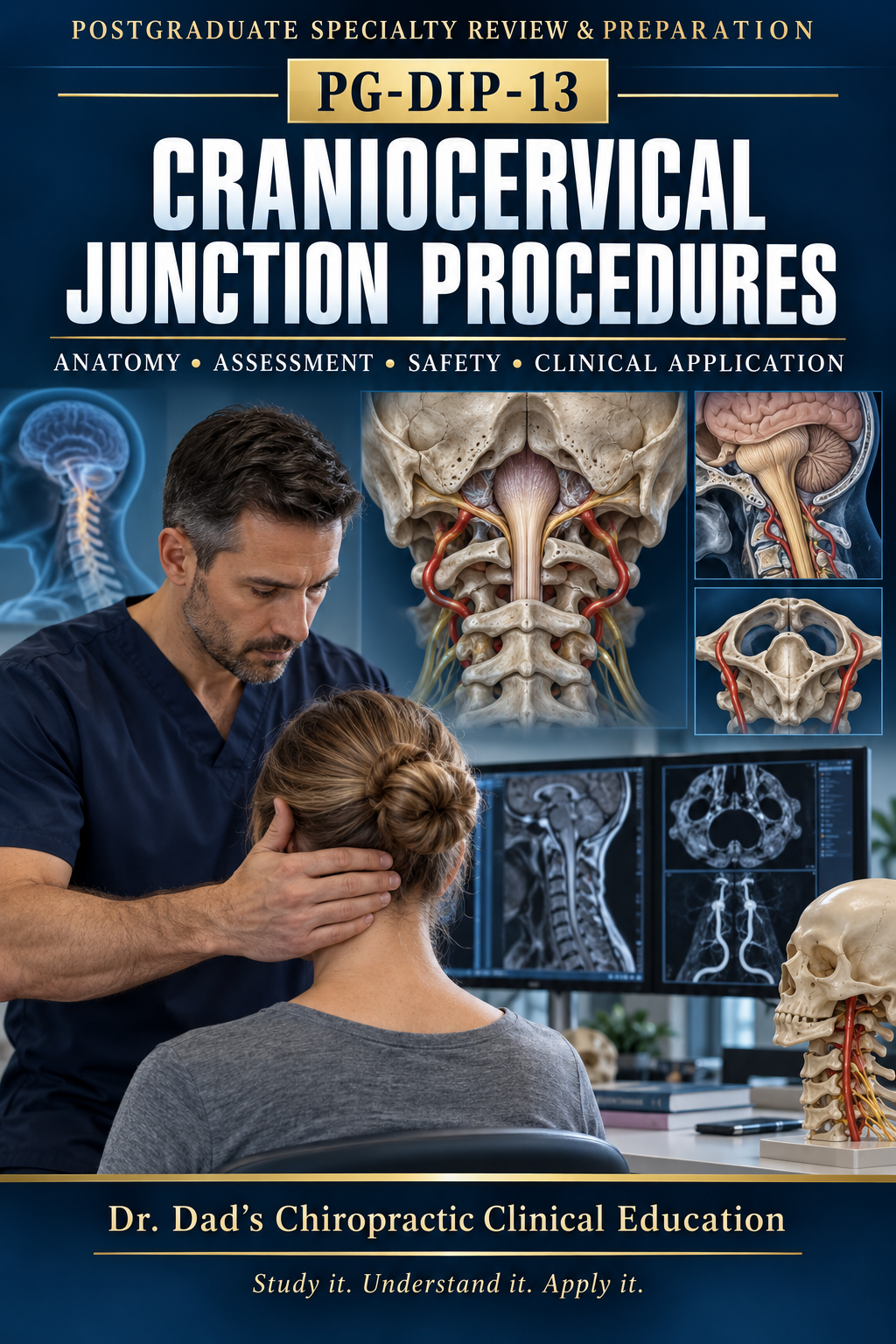
PG-DIP-13 CRANIOCERVICAL JUNCTION
Anatomy, Assessment, Safety and Clinical Application
Develop a deeper understanding of one of the most anatomically complex and clinically sensitive regions encountered in chiropractic practice.
PG-DIP-13 | Craniocervical Junction Procedures examines the occiput, atlas, axis and surrounding neurological, vascular and ligamentous structures. It connects detailed regional anatomy with clinical assessment, imaging awareness, differential diagnosis, patient safety and carefully selected chiropractic procedures.
This guide emphasizes responsible clinical reasoning rather than allegiance to one technique system.
Topics include:
- Functional anatomy of the occiput, atlas and axis
- Foramen magnum and brainstem-spinal cord transition
- Vertebral arteries and regional neurovascular relationships
- Alar, transverse and accessory ligament considerations
- Upper cervical biomechanics and movement
- Craniocervical history and symptom evaluation
- Neurological and orthopedic examination
- Cranial-nerve and cerebellar screening
- Headache, dizziness and cervicogenic presentations
- Instability, inflammatory disease and connective-tissue concerns
- Imaging selection and interpretation awareness
- Vascular warning signs and clinical uncertainty
- Contraindications, precautions and referral decisions
- Procedure selection and risk-benefit reasoning
- Low-force, manual and instrument-assisted concepts
- Outcome measurement and reassessment
- Documentation and informed consent
- Case-based clinical applications
- Rapid review and self-assessment
- Professional-development roadmap and practitioner checklist
Designed for:
- Chiropractors interested in craniocervical junction care
- Clinicians seeking stronger upper-cervical safety skills
- Practitioners reviewing headache, dizziness and cervical presentations
- Educators teaching regional anatomy and clinical reasoning
- Candidates exploring advanced craniocervical education
Study it. Understand it. Apply it.
This independent educational resource does not confer certification, establish eligibility for a specialty designation, replace supervised procedural education or authorize care beyond the practitioner’s education, competence, licensure or jurisdictional scope.