
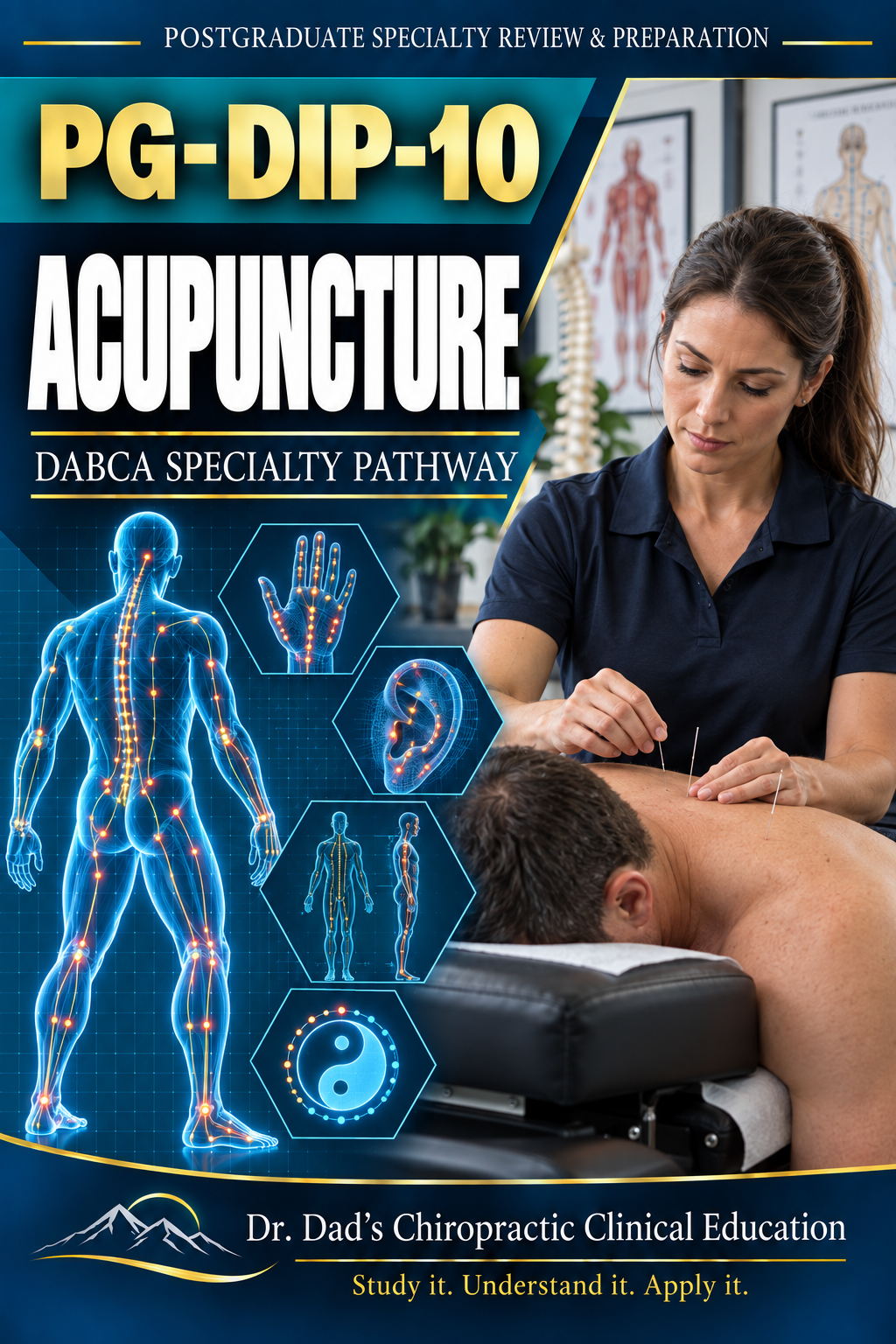
PG-DIP-10 ACUPUNCTURE
DABCA Specialty Pathway
Expand your understanding of chiropractic acupuncture with a comprehensive review of acupuncture theory, point location, clinical reasoning, procedural safety, patient selection, and the pathway toward the Diplomate of the American Board of Chiropractic Acupuncture (DABCA) credential.
PG-DIP-10 | Acupuncture is designed for chiropractors exploring advanced acupuncture education, preparing for the DABCA specialty pathway, or seeking a structured review of acupuncture principles relevant to chiropractic practice.
The guide connects traditional acupuncture concepts with contemporary clinical assessment, patient safety, documentation, and responsible integration into musculoskeletal practice.
Topics include:
- Overview of the DABCA specialty pathway
- Candidate planning and credential-preparation considerations
- Foundations of acupuncture theory
- Yin-Yang and Five Element concepts
- Qi, Blood, Jing, Shen, and body-fluid principles
- Zang-Fu organ-system relationships
- Meridians, channels, collaterals, and extraordinary vessels
- Anatomical landmarks and proportional point measurement
- Major acupuncture-point categories and functions
- Frequently used points and clinically relevant combinations
- Point indications, precautions, depth, and anatomical safety
- Traditional diagnostic concepts and pattern recognition
- Observation, questioning, palpation, tongue, and pulse assessment
- Integration with chiropractic history and physical examination
- Differential diagnosis and recognition of non-musculoskeletal disease
- Clean-needle technique and infection-control principles
- Needle selection, insertion, manipulation, retention, and removal
- Patient positioning, consent, monitoring, and documentation
- Contraindications, precautions, adverse reactions, and emergency procedures
- Acupuncture considerations during pregnancy
- Bleeding risk, anticoagulant use, immune compromise, and medical complexity
- Electroacupuncture principles and electrical-safety considerations
- Auricular, scalp, trigger-point, and related acupuncture approaches
- Moxibustion, cupping, gua sha, and other adjunctive procedures
- Acupuncture applications for common neuromusculoskeletal presentations
- Evidence, limitations, and responsible communication of expected outcomes
- Referral and interdisciplinary co-management
- Case-based clinical applications
- Practical and oral-examination preparation concepts
- Rapid-review material and self-assessment questions
- A structured 12-month specialty-preparation roadmap
- Candidate planning and pathway checklist
- Selected professional and regulatory resources
Designed for:
- Chiropractors considering postgraduate acupuncture education
- DABCA pathway candidates
- Practitioners reviewing acupuncture theory and point location
- Clinicians seeking stronger procedural-safety knowledge
- Chiropractors integrating acupuncture with musculoskeletal care
- Educators teaching chiropractic acupuncture principles
- Experienced practitioners preparing for specialty reassessment
More than a point-location guide
This resource emphasizes the complete clinical process: determining whether acupuncture is appropriate, recognizing contraindications, selecting defensible treatment strategies, applying procedures safely, monitoring patient response, documenting care, and referring when the patient’s needs exceed the clinician’s competence or legal authority.
A clinically responsible approach
The guide emphasizes patient safety, clean-needle technique, informed consent, differential diagnosis, appropriate referral, evidence-informed practice, and compliance with jurisdiction-specific regulations.
Acupuncture laws vary substantially between jurisdictions. Completion of acupuncture coursework or purchase of this guide does not independently authorize a chiropractor to perform acupuncture.
Study it. Understand it. Apply it.
This is an independent educational and credential-preparation resource. It is not issued, approved, sponsored, or endorsed by the American Board of Chiropractic Acupuncture, the Council of Chiropractic Acupuncture, the American Chiropractic Association, or any acupuncture education provider.
This guide does not award DABCA status, establish examination eligibility, replace required postgraduate acupuncture education, certify clean-needle competency, reproduce confidential examination content, expand professional scope, or confer legal authority to practice acupuncture. Current educational requirements, examination procedures, credential-maintenance obligations, and scope-of-practice regulations should always be confirmed with the appropriate certifying organization and licensing authority.