MS: NGSS - Synthetic Materials Lab Bundle
Synthetic Materials Lab Bundle | 3 Hands-On Bonus Labs | NGSS MS-PS1-3 | Grades 6–8
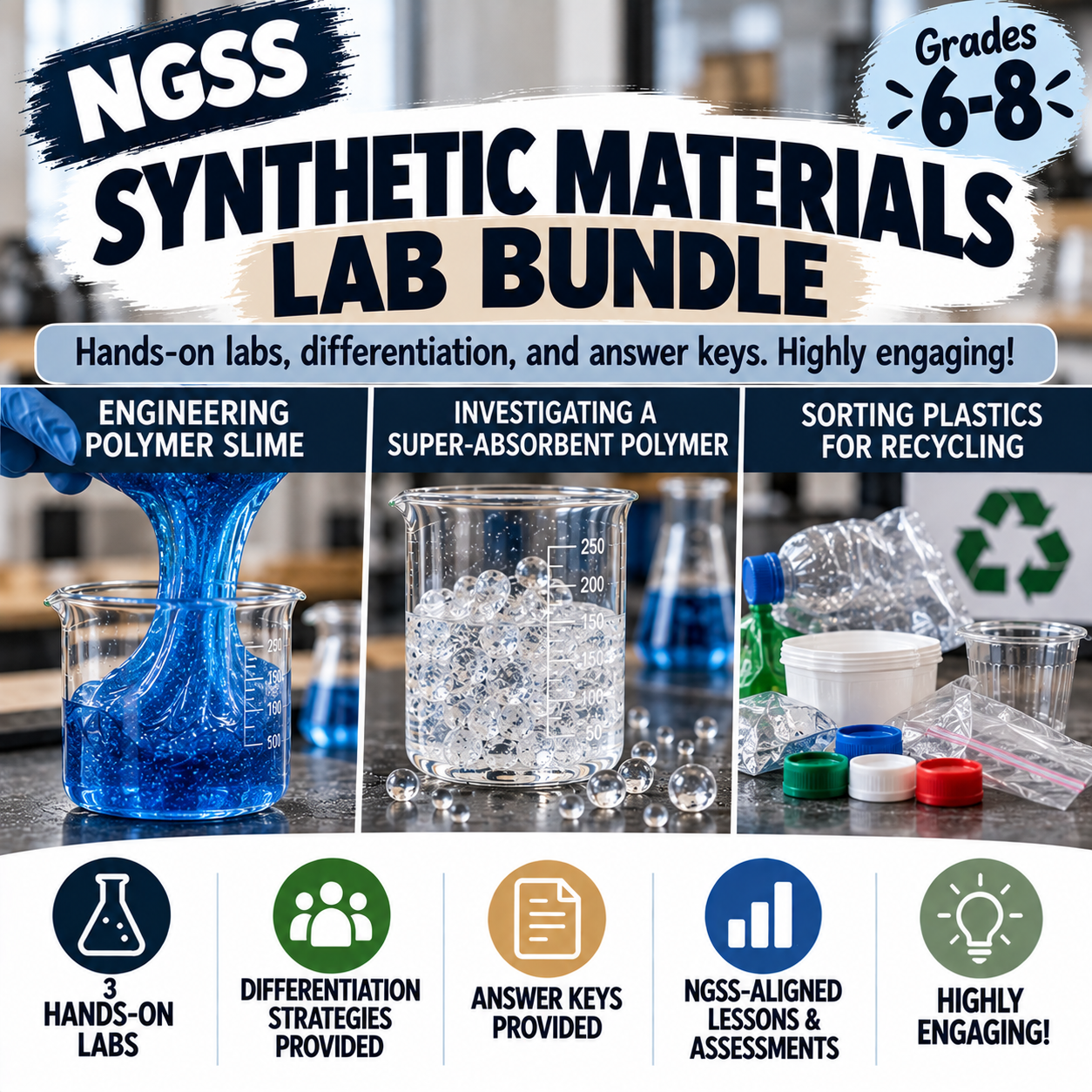
How does glue turn into slime? What makes a diaper hold so much water? How do recycling plants sort a mountain of mixed plastic? This bundle of three hands-on labs helps students see that synthetic materials come from natural resources, have properties designed for a purpose, and affect the world around them.
Each lab builds a different skill, so students get something new from every investigation:
- Engineering Polymer Slime
Students become materials engineers. They make three batches of slime, changing only the amount of activator. Then they test each batch for stretch, flow, bounce, and stickiness to find out how linking polymer chains creates a brand-new material. They model linked and unlinked chains and use their data to explain why car tires need to be more like stiff slime than gooey slime.
Focus: making a synthetic material and engineering its properties.
- Investigating a Super-Absorbent Polymer
What's really inside a diaper? Students compare 1 gram of this synthetic powder with 1 gram each of cotton and paper towel and find that it holds far more water. Then a pinch of salt makes the gel release the water it was holding. Students weigh the trade-offs for parents, hospitals, farmers, and landfills, and compare disposable diapers with cloth diapers.
Focus: comparing a synthetic product with natural materials and weighing its impact on society.
- Sorting Plastics for Recycling
Students identify four common plastics (#1, #2, #5, and #6) and a mystery sample using float-and-sink tests in water and salt water, plus a bend test. Then they design a sorting flowchart like the float-sink tanks used in real recycling plants. They also explore why towns accept different plastics for recycling.
Focus: identifying materials by their characteristic properties.
Each lab includes:
- Teacher Guide (4 pages):
- lesson flow with timings
- materials and prep list
- "Listen for" student talk and common misconceptions with quick fixes
- differentiation for ELL/multilingual, neurodivergent, and advanced learners
- a CER scoring guide
- standards alignment
- Student Lab Sheet (5 pages):
- background and vocabulary
- prediction
- fair-test procedure with sketch boxes
- data tables and analysis questions
- higher-order thinking with an optional challenge
- CER and exit ticket
- Answer Key (3 pages): sample data and answers, plus CER examples at three levels (Meets, Approaching, Needs Development), each with ready-to-use student feedback
Each lab takes about 50 minutes and uses inexpensive, easy-to-find materials like school glue, contact lens solution, diapers, cotton balls, and plastic containers from home.
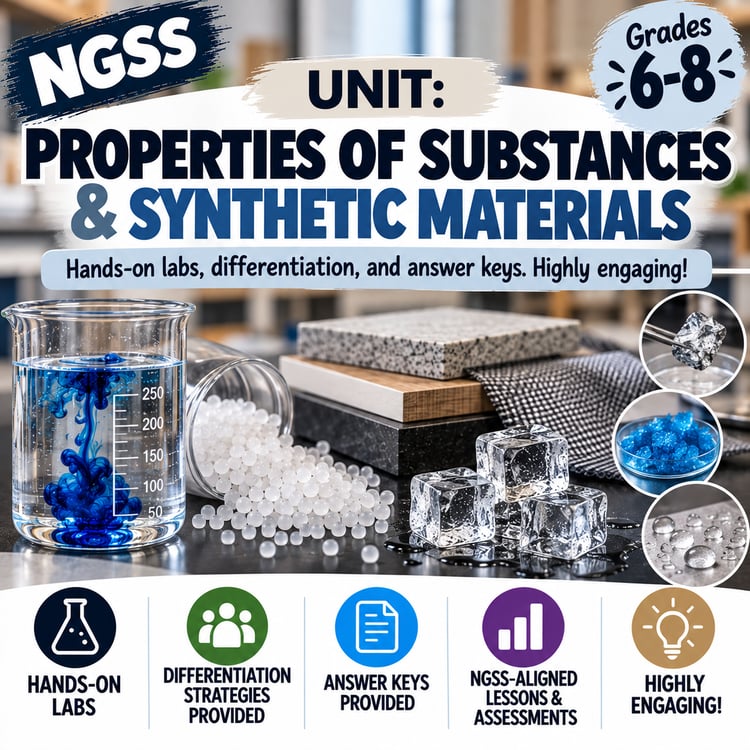
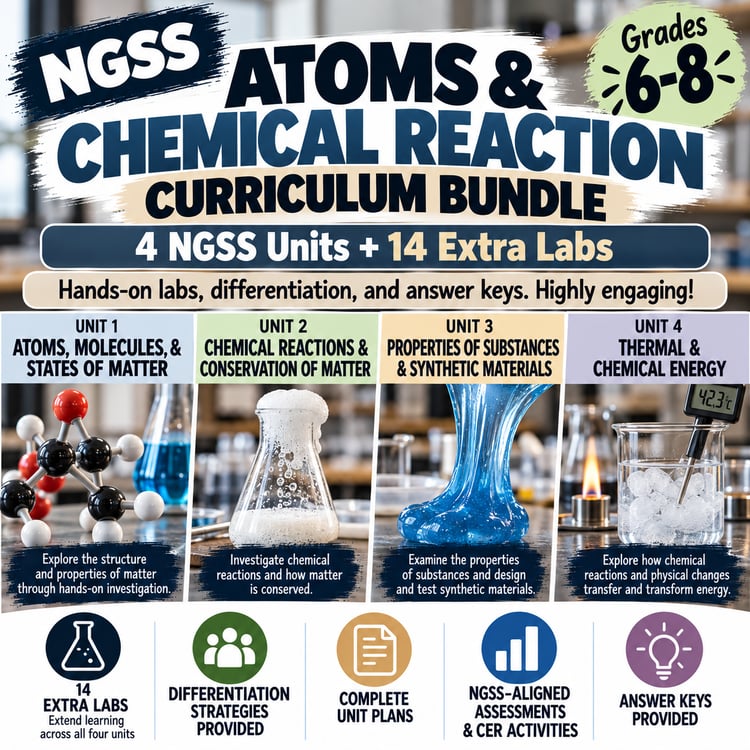
Pairs Perfectly With the Properties of Substances & Synthetic Material Unit!
These labs were designed as extensions for the 7-lesson Properties of Substances & Synthetic Material Unit. In that unit, students:
- identify mystery powders by their characteristic properties
- find evidence of chemical reactions
- trace products back to natural resources and turn milk into plastic
- judge sources for credibility and bias
- weigh the impact of synthetic materials on society
- finish with a Synthetic Material Profile performance task
Each bonus lab's Teacher Guide shows exactly where it fits:
- Polymer Slime: after Lesson 4
- Super-Absorbent Polymer: after Lesson 3 or before Lesson 6
- Sorting Plastics: after Lesson 1, and it connects to Lesson 6
The labs also work on their own for any middle school chemistry or materials science lesson.
Terms of Use
This purchase is for single-classroom use only. Please do not share, post, or distribute this resource. If colleagues would like to use it, additional licenses are available at a discount. See the included Terms of Use for full details.
Questions or Concerns?
I want you to love this resource! If you have any questions, run into an issue, or need support, please contact me at nextwavescience@gmail.com before leaving a review. I'm happy to help.