
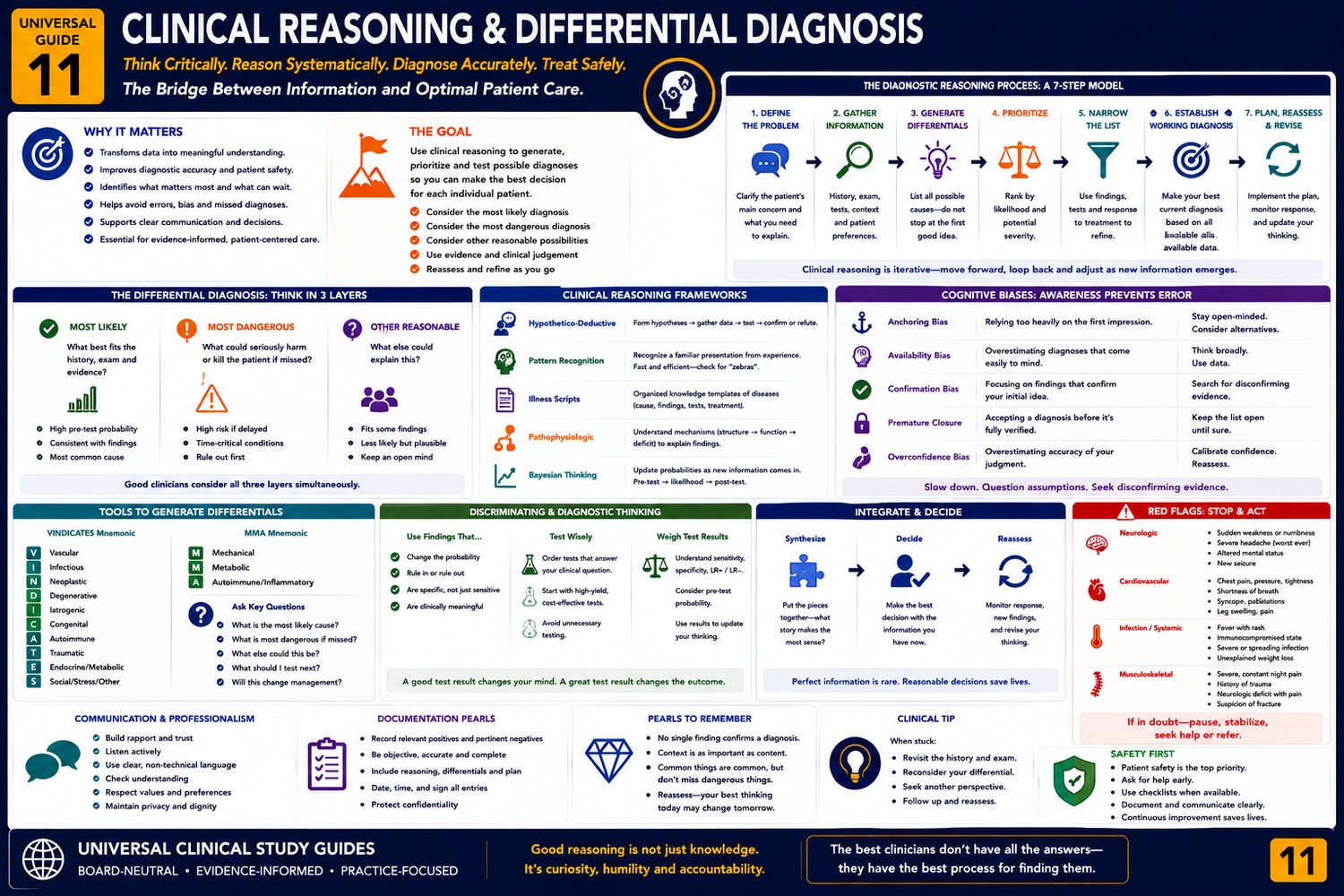
ST-USG-G011 CLINICAL REASONING and DIFFERENTIAL DIAGNOSIS
On Sale
$6.95
$6.95
Learn how clinicians move from symptoms and examination findings to a prioritized differential diagnosis.
The guide explores pattern recognition, hypothesis generation, probability, diagnostic weighting, competing diagnoses, red flags, and the distinction between possible, probable, and must-not-miss conditions.
Its central objective is to develop a disciplined answer to the question:
“What could this be—and what evidence supports or weakens each possibility?”