MS: NGSS - Invisible Forces Lab Bundle
Invisible Forces Lab Bundle | 3 Hands-On Electricity & Magnetism Labs | NGSS Middle School (MS-PS2-3, MS-PS2-5)
Can a force act without touching? Students find out with these three ready-to-teach labs for grades 6–8. Each lab uses inexpensive, everyday materials and builds the same skills: planning a fair test, collecting data across repeated trials, analyzing patterns, and writing a Claim–Evidence–Reasoning (CER) explanation. Every lab fits in a single class period.
What's Inside
- Static Electricity Distance Lab: How Far Can an Electric Force Act? (about 45 minutes)
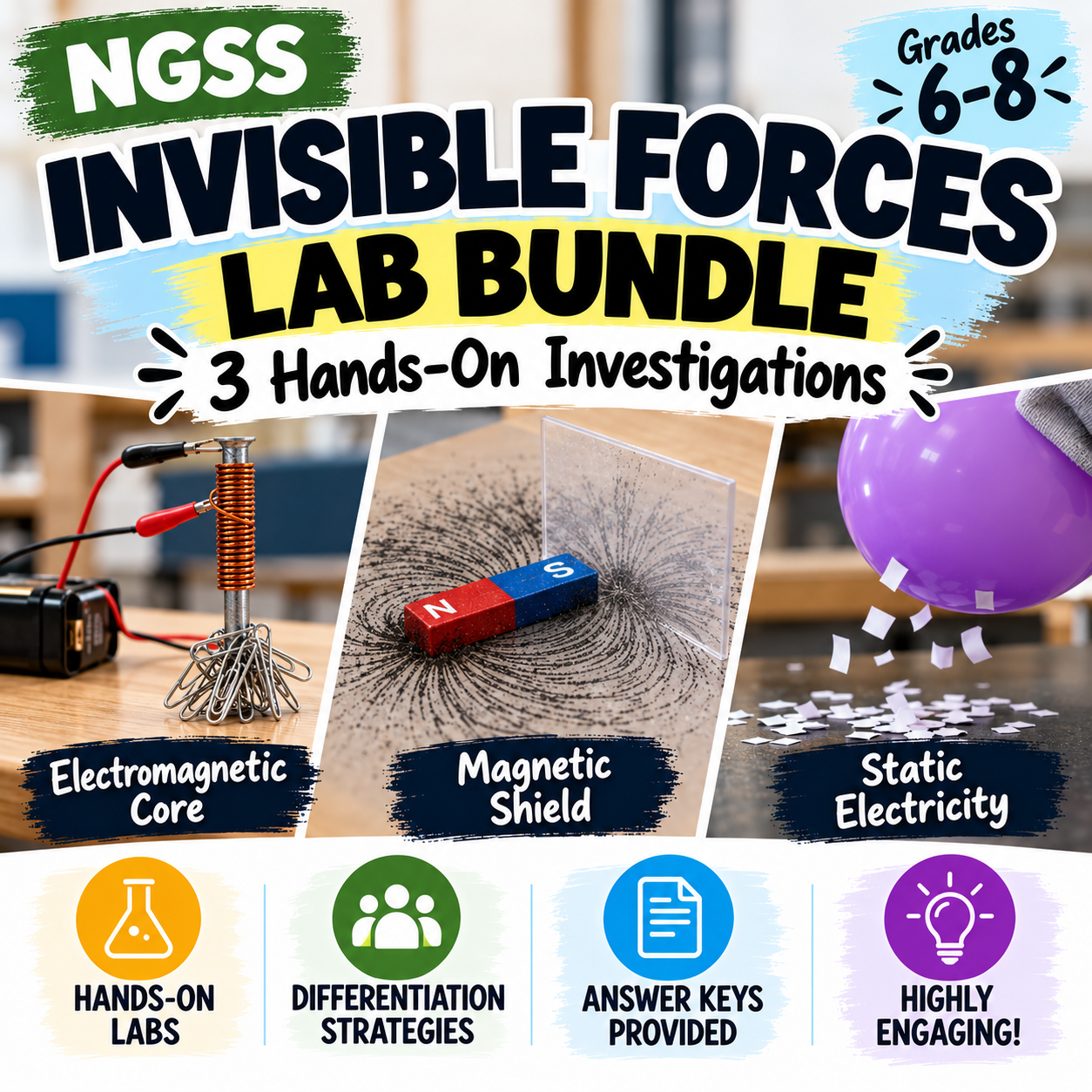
Students charge a balloon and count how many tissue paper bits it lifts from different heights. Then they test how the amount of rubbing changes the result. They discover that the electric force gets stronger when objects are closer and when there is more charge.
- Magnetic Shielding Lab: Can Materials Block a Magnetic Field? (about 45 minutes)
A paperclip floats in midair below a magnet. Students slide paper, plastic, fabric, cardboard, aluminum foil, and a steel lid into the gap to see which ones make it fall. The surprise: the foil is a metal, but it doesn't change a thing.
- Electromagnet Core Lab: Does the Core Material Matter? (about 50 minutes)
Students build one electromagnet, then slide five different cores into the same coil and count the paperclips it lifts. They find that only one core makes a real difference, and they use their data to explain why.
Each Lab Includes
- Teacher Guide (4 pages): materials and prep, a timed lesson flow, "Listen for" signs of understanding, "Watch for" common misconceptions with quick fixes, a differentiation menu, a CER scoring guide, and a full NGSS alignment page
- Student Lab Sheet: safety, background, a setup diagram, prediction, Plan a Fair Test, procedure, data tables, analysis questions, a CER with sentence starters, and an optional Honors Extension
- Answer Key: sample data, answers, and CER examples at three levels (Meets, Approaching, and Needs Development)
Differentiation Built In
- ELL / multilingual learners: pre-teaching with real objects, labeled diagrams, sentence frames, and oral rehearsal
- Neurodivergent learners: role cards, visual step cards, simplified data recording, and typed or dictated CERs
- Advanced / gifted & honors students: Honors Extensions with graphing, evaluating flawed conclusions, modeling fields, and designing new tests
Aligned to NGSS
- MS-PS2-3: factors that affect the strength of electric and magnetic forces
- MS-PS2-5: evidence that fields exist between objects that are not touching
- Practices and concepts: planning and carrying out investigations, analyzing data, engaging in argument from evidence, cause and effect
Simple Materials
Balloons, tissue paper, a strong magnet, paperclips, thread, insulated copper wire, a D battery, a steel nail, aluminum foil, and other classroom basics.
Pair It for a Complete Unit
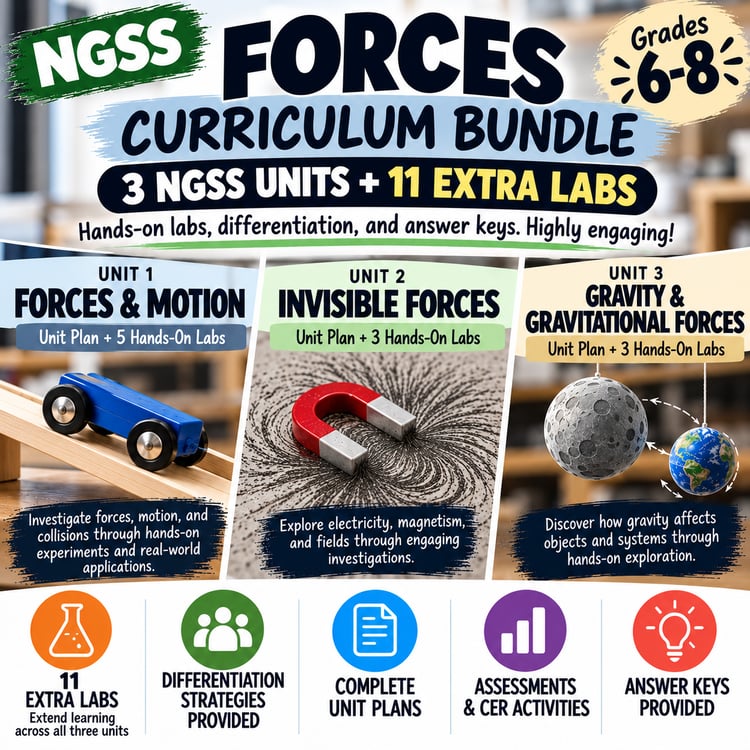
- Invisible Forces: Electricity, Magnetism & Fields Unit Plan. An 11-lesson NGSS unit with a teacher guide, student notes, station cards, exit tickets, an end-of-unit assessment, and answer keys. The labs slot right in:
- the Magnetic Shielding Lab with Lessons 2–3 (magnetic fields)
- the Static Electricity Lab with Lesson 4 (electric forces)
- the Electromagnet Core Lab with Lessons 6–7 (electromagnets)
- FREE Invisible Forces CER Practice. Four short scenarios that give students extra practice writing strong CERs about magnetism, electricity, and fields before they write their own lab conclusions.
Together, the unit plan, this lab bundle, and the free CER practice take students from noticing invisible forces, to testing what makes them stronger, to explaining their results with evidence.
Terms of Use: This resource is for single-classroom use. Please purchase additional licenses for colleagues.