


5 Linktree Alternatives to Consider in 2026
Linktree is one of the biggest link-in-bio tools in the world. However, lately, people have been abandoning their accounts and seeking Linktree alternatives to share links in their bios. Recently, Linktree announced changes to its Terms of Service, stating that it would use users’ content to train its AI. That, paired with other setbacks like Linktree stealing traffic from creators rather than directing people directly to users’ websites, is one of the many reasons people are desperate to find a new platform. In this post, we’ll share 5 alternatives to Linktree you might want to check out instead.
Key Takeaways
- Payhip is best for creators who want a complete online store, lower fees, and full ownership of their traffic and brand.
- Beacons is best for creators who want CRM functionality and built-in audience management tools.
- Stan Store is best for social-first creators selling digital products directly from their link-in-bio.
- Carrd is best for users who want a lightweight, customizable landing page with their own domain.
- Paage is best for creators selling a small number of products who want a simple storefront solution.
Why People Are Looking for Linktree Alternatives
1. Issues with Terms of Service
Linktree recently announced that, starting July 5th, 2026, there will be new terms and conditions users will need to agree to. One of the biggest issues with the changes is around AI. Linktree’s new terms suggest that when you share your content on their platform, they’re free to use the content and even your likeness to create works with it. They even have a Generative AI clause that admits they’ll process your content to improve their own AI features. Overall, that means they’ll be using your content to train AI. Some creators, such as authors, are actively opposed to these new terms, as they mean AI will be trained on their work. As a result, many creators are now leaving the platform to find a platform that won’t steal their life’s work.
2. Linktree’s menu size
Linktree has gotten some backlash over its menu. For example, you can add too many links to your link-in-bio, which requires your audience to dig around to find the link you’re actively trying to promote. Plus, the amount of space to label your link is limited, so people often aren’t able to put the right description in to help people know what link they’re clicking on. For example, it might say something like “30% off” but people don’t know what that discount is for. Having fewer link options allows people to find exactly what they’re looking for.
3. Linktree steals traffic from creators
Linktree hosts your landing page. As a result, creators aren’t getting their websites promoted as the clicks count towards Linktree rather than their website. Many creators would prefer to get traffic directly to their site, so every impression and click is tracked under their own analytics. People don’t want a third-party tool to host their brand’s content when they already have a website.
4. Key features are paywalled
While Linktree has a free plan, most of its essential features are paywalled under paid subscriptions. For example, to get custom themes, you’ll need to be on the Starter plan. To get more analytics insights, you’ll need to be on the Pro plan. To completely eliminate seller fees, you’ll need to be on the most expensive Premium plan. Unlike some Linktree alternatives that include all features on even the free plan, you’ll find yourself constantly chasing the next subscription tier to get access to the features your business needs.
5. Creators want to build custom websites
More creators are choosing to use link-in-bio tools to promote their own websites directly, rather than through third-party platforms like Linktree. That way, they can own all the traffic and better understand their true data. Many ecommerce platforms now offer link-in-bio features that let creators promote their own websites in their bio links.
6. High seller fees
Two of Linktree’s paid plans have 9% seller fees: Starter and Pro. Overall, these fees are quite high for sellers, as they take a large percentage of each sale and add a subscription fee. There are platforms that only charge a 5% fee on their free plan, making other Linktree alternatives a more affordable option for sellers.
Comparing Linktree Alternatives
| Platform | Best For | Pricing | Key Pros | Key Cons | Why Choose It |
|---|---|---|---|---|---|
| Payhip | Creators and businesses wanting a custom online store to sell digital and physical products, services, and memberships | Free: 5% fee Plus: $29/mo (2%) Pro: $99/mo (0%) |
Custom website, unlimited products, instant payouts, affiliate marketing, bundles, blog, marketplace, custom domain support | No AI features | Choose Payhip if you want traffic to go directly to your own website while selling products, memberships, coaching, and courses from one place. |
| Beacons | Creators who want CRM tools and built-in selling features | Free: 9% fee Creator: $10/mo + 9% fee Creator Plus: $30/mo Creator Max: $90/mo |
Built-in CRM, email collection, digital and physical product selling | High fees, feature gating, limited payment gateways | Choose Beacons if you want creator-focused tools and CRM features built into your link page. |
| Stan Store | Social media creators selling digital products | Creator: $29/mo Creator Pro: $99/mo |
One-tap checkout, digital product hosting, social selling focus | No free plan, no custom domain, no physical products, limited customization | Choose Stan Store if most of your sales come directly from Instagram, TikTok, or other social platforms. |
| Carrd | Users who want a lightweight website builder with custom domains | Pro Lite: $9/yr Pro Standard: $19/yr Pro Plus: $49/yr |
No watermarks, custom domains, flexible page design | Limited analytics, no native ecommerce tools, steeper learning curve | Choose Carrd if you want a simple custom landing page without paying for unnecessary creator features. |
| Paage | Creators selling a small number of digital products | Free: 9% fee $4/mo: 9% fee $14/mo: 3% fee $21/mo: 1% fee |
Accepts direct payments, can sell products on free plan | No marketplace, transaction fees on all plans, no physical products | Choose Paage if you need a simple creator storefront and only sell a small number of products. |
5 Linktree Alternatives to Consider in 2026
1. Payhip
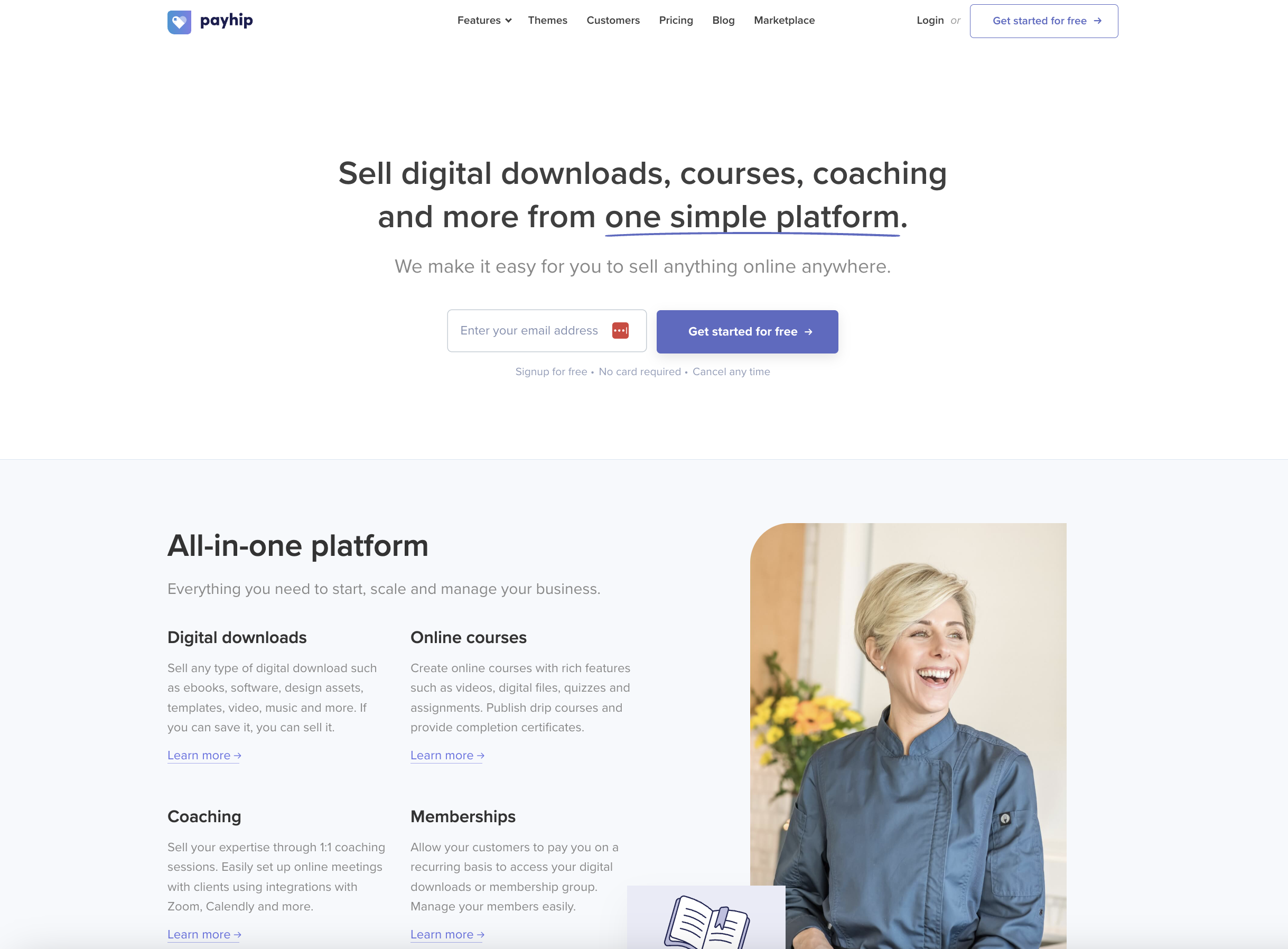
Payhip is the best Linktree alternative because of its low seller fees, custom websites, and countless features for selling digital and physical products, courses, memberships, and coaching services.
PRICING
Payhip offers simple pricing that lets you keep more of your profits as your business scales. Their Free Forever plan has no monthly subscription and takes a 5% transaction fee only after you’ve made a sale. This tier is beginner-friendly, allowing people who make occasional sales to avoid monthly fees. The Plus plan costs $29 per month, and the transaction fee is reduced to 2%. The Pro plan costs $99 monthly and has no transaction fees. All plans, including the free plan, include all features, allow you to sell unlimited products, earn unlimited revenue, and access unlimited bandwidth.
PROS
- Cheaper alternative with only 5% transaction fee on the free plan, 2% transaction fee on the Plus plan, and no transaction fees on the Pro plan
- Can add your store as a bio link with all of your products in one place
- Traffic goes directly to your website instead of a third-party tool
- All features are included on all plans, including the free one
- No AI is trained on your content
- Access marketing tools, such as an affiliate program, coupons, upsells, bundles, and more
- Get VAT and sales tax handled in the EU and UK automatically
- Get paid instantly via PayPal and Stripe
- Select payment methods with over 100 choices across 13 payment gateways
- Securely share files with PDF stamping, download limits, and license keys
- Build a brand around your product with a built-in blog to grow your web traffic
- Sell digital and physical products, memberships, and coaching services all in one place
- Reach new customers via Payhip Marketplace, where you can promote your products
CONS
- No AI features
Sell Digital Products with Payhip
No monthly fees. No tech headaches.
2. Beacons
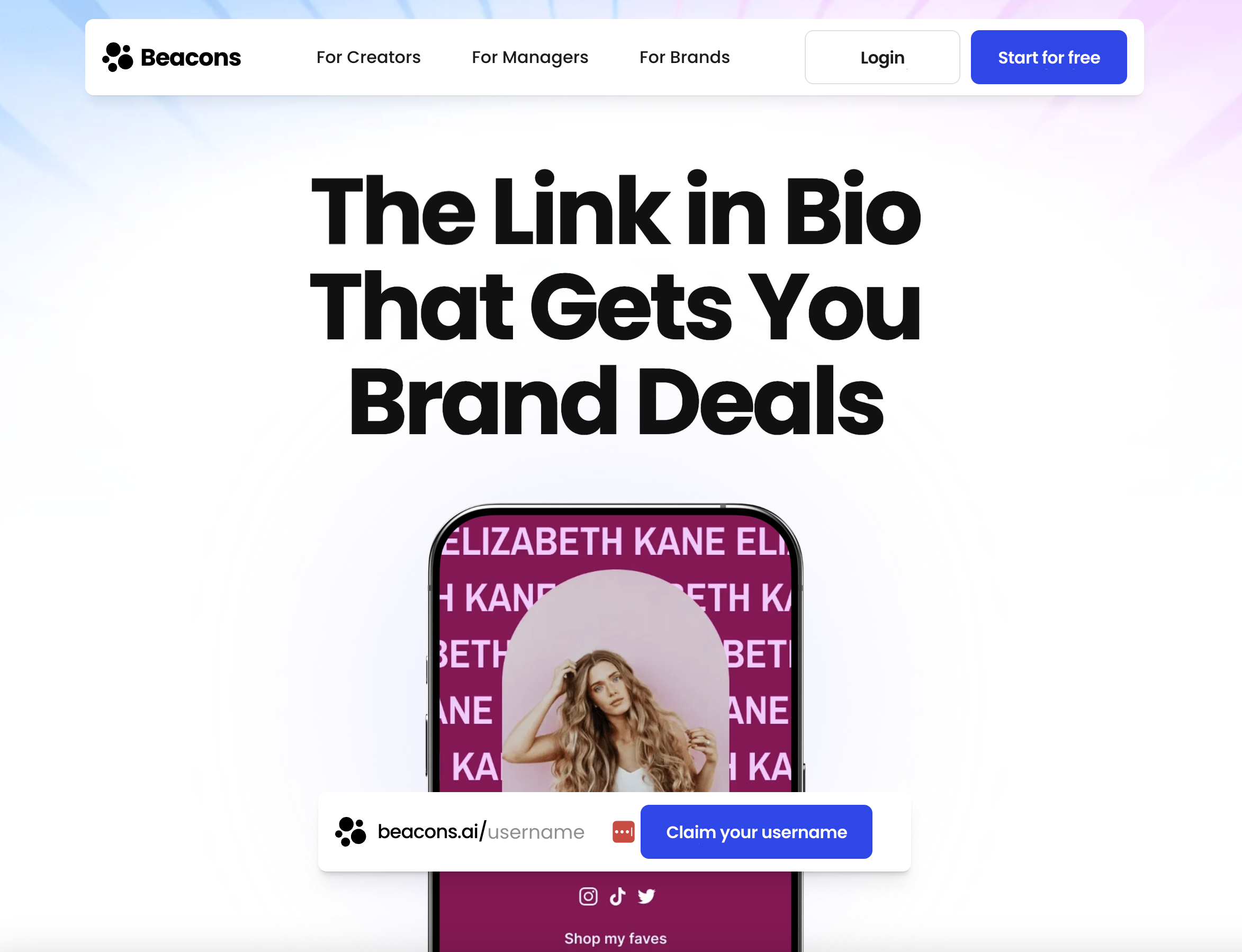
Beacons charges roughly the same seller fees as Linktree, though some may find them high. They also have built-in functionality for selling products online.
PRICING
Beacons has four pricing plans. The free plan has a 9% seller fee on every sale. The Creator plan costs $10 per month and continues to have the 9% seller fees. The Creator Plus will cost users $30 per month. The Creator Max plan costs $90 per month. You need to upgrade to the highest-tier subscription to access all the features Beacons offers.
PROS
- Has a built-in CRM to collect and send emails
- Features built-in tools to help you sell digital and physical products
CONS
- More complicated to set up than Linktree
- Has high transaction fees on the free plan
- Many creators notice that their followers view content directly in Beacons instead of through their website
- Limited payment gateway options
- Less suited for businesses or large brands
3. Stan Store
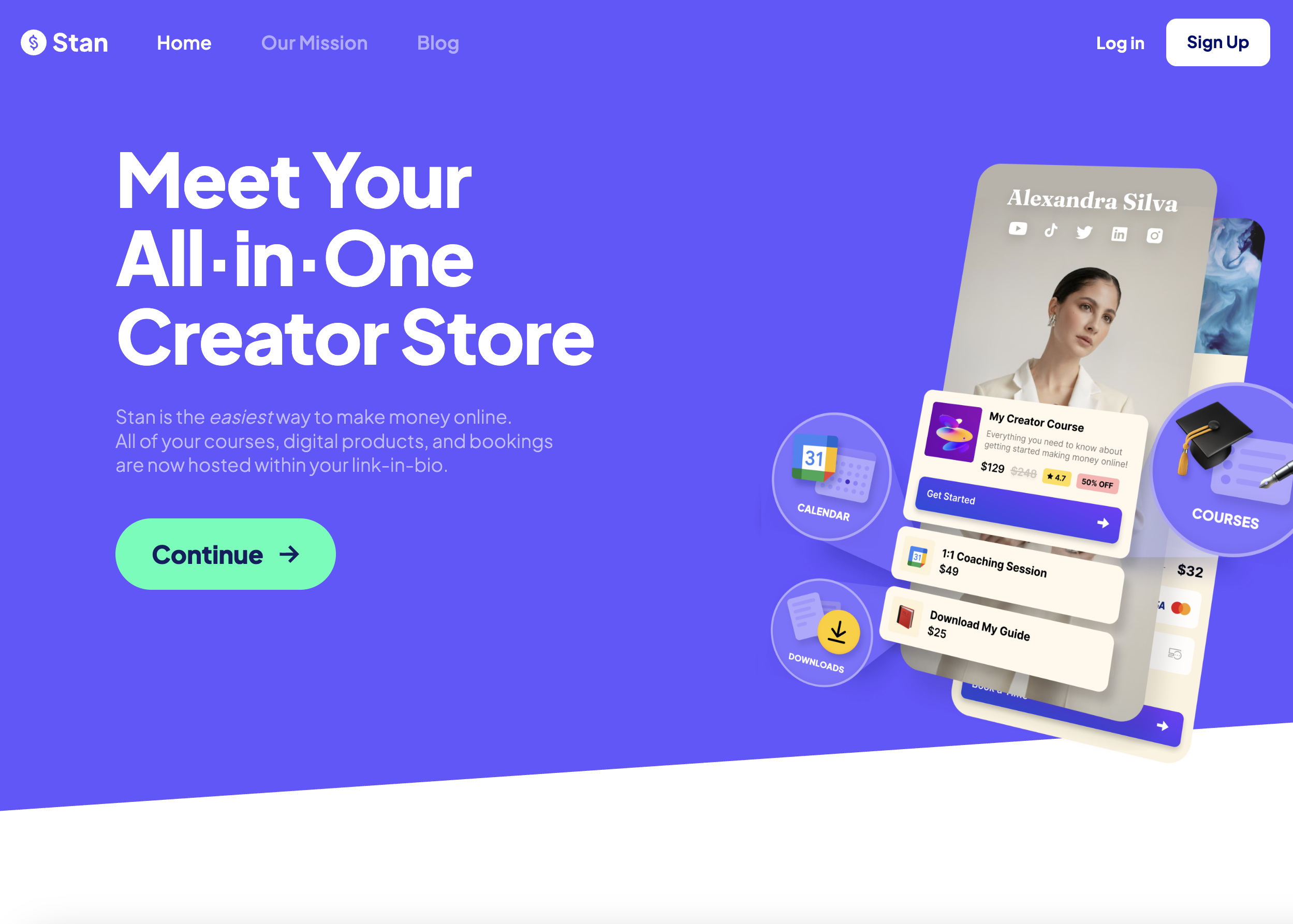
Stan Store is a platform with upfront costs. Without a free plan, you’ll be forced to pay even if you haven’t made any sales yet. The platform also isn’t ideal for selling physical goods. However, it does host your digital products.
PRICING
Stan Store has two pricing plans. The Creator plan costs $29 per month. The Creator Pro plan costs $99 per month. Unfortunately, Stan Store doesn’t offer any free plans.
PROS
- One-tap checkout
- Can host your digital products
CONS
- No free plan, therefore, higher upfront costs
- Rigid designs and themes
- Unable to add a custom domain
- Less ideal for housing links to articles, videos, or news
- Can’t sell physical products on the platform
- Fewer third-party integrations
- Lacks QR code generators
4. Carrd
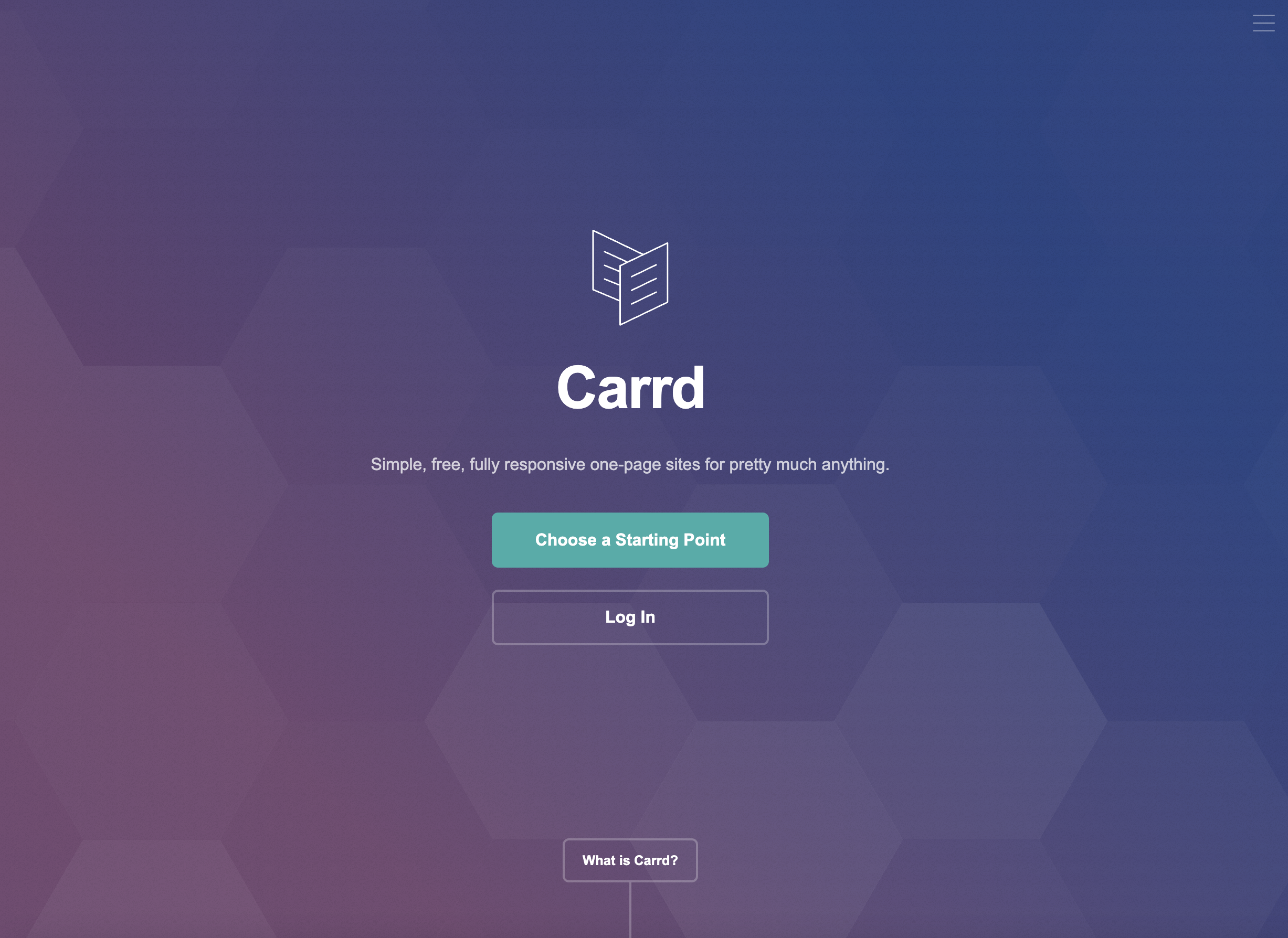
Carrd
Carrd is a platform that doesn’t add watermarks on even its lowest plans. However, it’s missing some key features, like analytics, a scheduling tool, and a QR code generator, which may turn off some creators.
PRICING
Carrd offers three pricing tiers. The Pro Lite plan costs $9, the Pro Standard plan costs $19, and the Pro Plus plan costs $49. The Pro Plus plan is more catered to people who want business features and custom domains.
PROS
- No watermarks on even the lowest tiers
- Allows you to add a custom domain
CONS
- Lacks built-in analytics
- Missing a link scheduling feature
- Doesn’t allow natively adding videos or audio without embeds
- Steeper learning curve
- You need to upgrade to sell products
- Lacks direct messaging and SMS
- No Native QR code generator
5. Paage
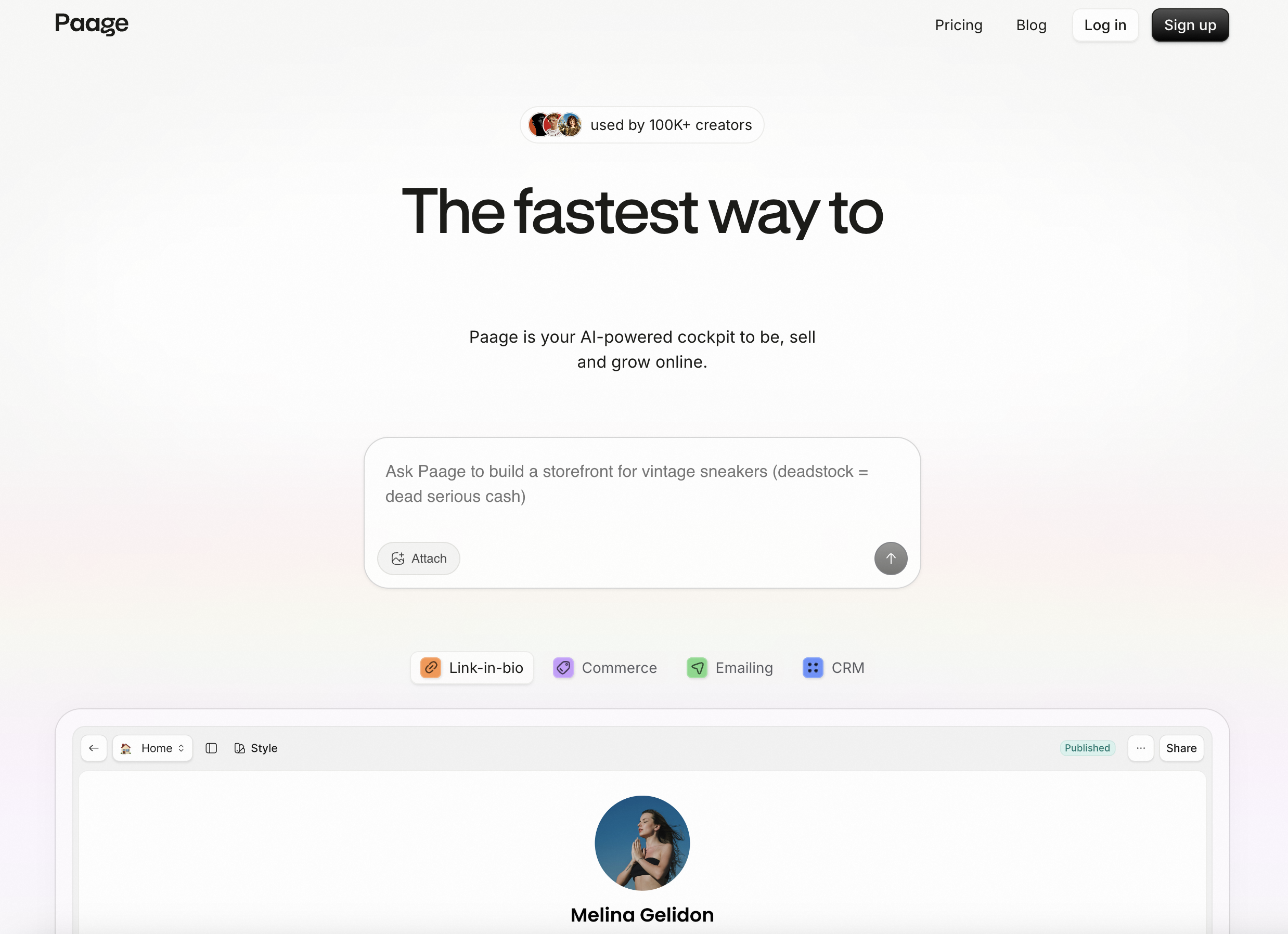
Paage allows you to sell one product on its free tier. However, it lacks a marketplace where you can sell your goods to reach a larger audience. Unfortunately, there’s no plan that completely eliminates transaction fees.
PRICING
There are four pricing tiers for Paage users. The free plan has 9% transaction fees but only allows you to sell one product. The $4 per month plan also has 9% transaction fees, but only allows you to sell 3 products. The $14 per month plan has a 3% transaction fee, and the $21 per month plan has a 1% transaction fee. There are no plans with zero transaction fees for the products you sell, which eats into your profit margins.
PROS
- Accepts direct payments
- Free tier allows you to sell a digital product
CONS
- Lacks a marketplace where you can sell your products
- Transaction fees show up on all plans
- Doesn’t support physical goods sales
- Fewer third-party integrations compared to Linktree
- Harder to manage multiple stores as you can’t switch spaces
Frequently Asked Questions
What is the best alternative to Linktree?
The best alternative to Linktree is Payhip because it has lower fees, doesn’t train AI on your content, lets you build a custom site, offers features for selling digital products like courses and ebooks, coaching services, and physical goods, and more.
Why should I consider a Linktree alternative?
You should consider a Linktree alternative because you’ve invested so many hours in your content and products. You shouldn’t have to have your proprietary data used for training another business’s AI models when all you’re using them for is hosting your links. Overall, it’s a bad business practice for businesses to train models off of their own hard work.
What features should I look for in a Linktree alternative?
There are many features you should look for in a Linktree alternative, such as a custom domain, specialized product-selling features, and better pricing.
Are there free alternatives to Linktree?
Yes, Payhip is a free alternative to Linktree that charges only a 5% transaction fee per sale, unlike Linktree’s 9% seller fee. All features are included in this free plan, allowing you to upgrade only if you’d like to reduce your fees to 0% rather than because you need a feature.
Can I use a custom domain with a Linktree alternative?
Yes, you can use a custom domain with the Linktree alternative Payhip. You can get a custom domain from one of the many popular domain name registrars and connect that domain to your Payhip store. Payhip automatically generates the SSL certificates for you once you’ve connected your domain.
How long does it take to switch from Linktree?
You can switch from Linktree in just a few minutes. Simply choose another platform, like Payhip, and upload your products to create a link for your bio.
Which Linktree alternative offers the most customization?
The Linktree alternative that offers the most customization is Payhip. Payhip lets you customize themes, images, copy, your domain, checkout questions, your favicon, and more. Overall, you’ll be free to customize your website however you like.
Can I sell products directly from a Linktree alternative?
Yes, you can sell products directly from a LInktree alternative like Payhip. Payhip has all the features you need to create and sell coaching services, physical goods, and digital products, like ebooks, courses, and software. You’ll have access to 13 payment gateways and over 100 payment methods. You can upload your products directly to the platform and use security features such as PDF stamping, download limits, and license keys to protect them.
Are any Linktree alternatives good for SEO?
Yes, Linktree alternatives like Payhip are good for SEO. Payhip allows you to build custom pages, collection pages, and blogs on the platform to help you build your own brand. Plus, you can connect your own custom domain so that your website gets the traffic attributed to you. Beyond this, you can also add alt tags to product images and include a sitemap even if you’re on a custom domain.


Payhip
Join over 130,000 creators who have launched their businesses selling digital products, online courses, memberships, coaching, and physical products.
Get started for free today
Comments
2 Comments
nice story, thanks for the heads up.
Thank you! We’re glad you enjoyed it.
Leave a Comment