


4 OpenCart Alternatives That Offer Security And Better Features
Last updated: May 13, 2026
OpenCart is a popular open-source ecommerce platform that developers often use to build online stores. However, some are looking for OpenCart alternatives as they find the learning curve a bit too steep, the platform requires too many extensions, the cost of running an online store from an open-source platform is too high despite OpenCart’s free product, and there are more security risks to running an online store on this site. With modern closed-source platforms offering all-in-one functionality, some sellers are looking for ecommerce solutions that can handle more on their behalf, rather than manually managing their own site.
Key Takeaways
- Payhip is the best OpenCart alternative for those looking for an all-in-one platform that allows you to sell digital and physical products
- WooCommerce is best for those who want to keep their website on an open-source platform
- Shopify is best for enterprise businesses
- Wix is best for those looking to build simple websites
Why People Are Looking for OpenCart Alternatives
1. Steep learning curve
Many are looking to OpenCart alternatives due to the steep learning curve. Since OpenCart is an open-source ecommerce platform, users need to manage their own hosting and site maintenance. Open-source platforms are ideal for technical users. However, today most ecommerce platforms are no-code-friendly, allowing anyone to create their own online store. However, OpenCart isn’t no-code friendly and can be hard to use for someone who isn’t very technically savvy.
2. Too many extensions required
While open-source platforms like OpenCart are free, they often require too many third-party extensions or tools, which can quickly add up and skyrocket your bill. Creators of extensions often charge their own monthly subscriptions or fees to allow you to add specific features or elements to your website. For example, you’ll need an extension for themes, payment gateways, checkout, translation, integrations with platforms like Amazon, and so much more. Overall, each element you want for your website needs an extension.
3. Hard to customize
Some are leaning towards choosing an OpenCart alternative because the platform is hard to customize. To change themes, you need to know how to code in Twig. Since it’s open source, updating the website isn’t straightforward. Plus, there’s little support as it’s typically just documentation that you need to follow. On top of that, there are fewer theme options than other ecommerce store builders. The small selection of themes prevents you from creating a website in the exact style or aesthetic you actually want.
4. Security Risks
All open-source platforms have the highest risk of security breaches. That’s because they’re easier targets of SQL injection attacks. A closed-source e-commerce platform will have its own in-house security team. They’ll automatically include SSL certificates and other up-to-date security features. However, when you use a platform like OpenCart, you’re responsible for your site’s security. You need to be knowledgeable about all the security features you need to install on your site, which can be complicated for someone who’s more of a seller than a security expert.
| Platform | Best For | Pricing | Key Pros | Key Cons | Best Overall Verdict |
|---|---|---|---|---|---|
| Payhip | Creators wanting an all-in-one ecommerce platform | Free: 5% fee Plus: $29/mo (2%) Pro: $99/mo (0%) |
No coding required, built-in features, hosting + security included, supports digital & physical products, automatic VAT handling | Not open-source (limited backend control) | Best overall OpenCart alternative for ease and features |
| WooCommerce | WordPress users wanting full control | Free plugin + hosting, domain, plugins | Open-source, strong SEO capabilities, large plugin ecosystem | High maintenance, hidden costs, requires technical setup | Best for developers |
| Shopify | Businesses scaling ecommerce stores | $29–$2,300+/month + fees | Fully hosted, scalable, large app ecosystem | Expensive, requires apps, limited backend control | Best for ecommerce brands |
| Wix | Beginners building simple websites | $17–$159/month | Easy drag-and-drop builder, all-in-one platform, many themes | Limited ecommerce features, not ideal for large stores | Best for beginners |
4 OpenCart Alternatives That Offer Security, Better Features, And More
1. Payhip
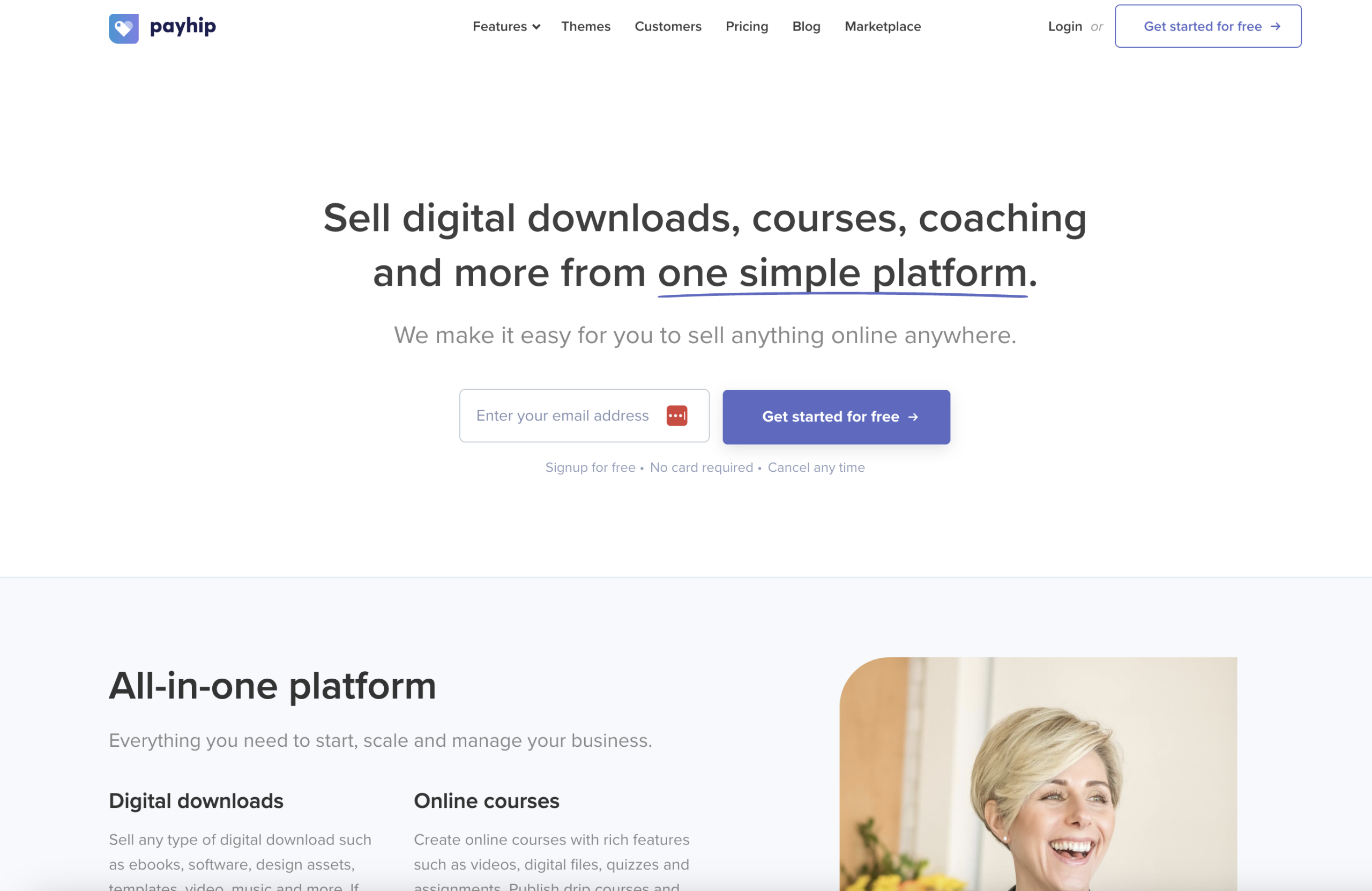
Payhip is one of the best OpenCart alternatives. While it’s not open-source, it offers all the functionality you’d need in one place, and for free. On the free plan, you’ll get access to security, hosting, payment integrations, and more. You don’t need to manually join them together on your platform; they’re already built in.
Plus, you can sell more than just physical products; you can also sell digital ones. Each product type comes loaded with its own unique features, such as Calendly and Zoom integrations for coaching or PDF stamping and download limits for selling digital downloads like ebooks.
PRICING
Payhip has a free plan with a 5% transaction fee. Once you end up on paid plans, you’ll start seeing a reduction in transaction fees. The $29 monthly plan will reduce your transaction fees to 2%. However, if you want no transaction fees, you’ll need to pay $99 each month. This OpenCart alternative is set up to give beginners the time they need to generate sales as they learn to sell, without paying any monthly subscription fees. The paid plans help you reduce costs as you scale your business, so you can pocket more of your profit.
PROS
- Easy to build a website in only a few minutes, no coding skills required
- Built-in features for selling digital and physical products, like upsells, cross-selling, affiliate marketing program, a video player, PDF stamping, license keys, and more
- SSL certificate included
- Subdomain included
- Automatic VAT and sales tax compliance
- Automatic site maintenance
- Over 100 payment gateways to choose from
- Download limits on digital products to prevent piracy
- Unique features for selling online courses like quizzes, certificates, drip content, and more
- Built-in audience with Payhip Marketplace, where you can sell your products
CONS
- Can’t modify the source code as it’s not an open-source platform
Sell Digital Products with Payhip
No monthly fees. No tech headaches.
2. WooCommerce
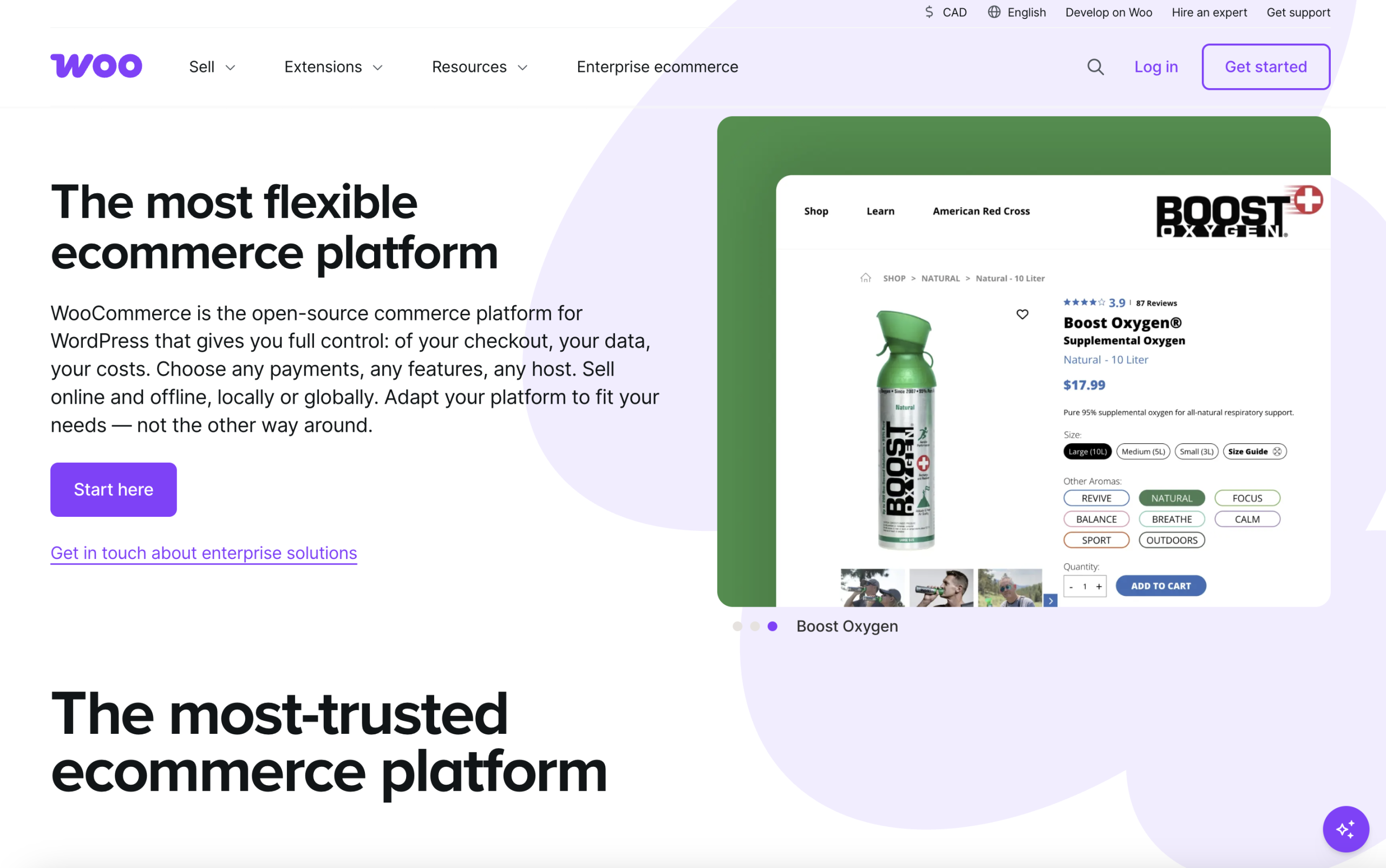
WooCommerce is another free, open-source alternative to OpenCart. However, if you’re trying to move away from open-source platforms, you’ll still have to deal with your own site maintenance, hosting, security, and more on your own.
While being on WordPress allows you to have advanced SEO capabilities on your website, your site can get bloated due to WooCommerce’s plug-in or the wide range of plugins you can choose from. This might slow response times, thereby negatively impacting sales conversions.
PRICING
While WooCommerce itself is free, it’s part of an open-source platform. Thus, you’ll need to pay for your own hosting, which can cost about $250 a year, depending on the size of your website files. You’ll need to register a domain, which costs about $15 annually. Website owners need to pay an upfront cost for a theme, which can cost up to $150. You may need to hire a designer, developer, or website manager, which can cost tens of thousands of dollars. You’ll also need to pay about 3% per transaction, depending on the payment gateway you choose for your online store. There are also other subscription fees or memberships you may need to pay to run an online store in your niche.
PROS
- More options than OpenCart for third-party plugins
- Superior blog and SEO capabilities due to WordPress back-end
CONS
- The site can get bloated quickly with multiple plug-ins
- A manual, maintenance-heavy platform
- Can get expensive quickly with all the third-party integrations
- Open-source, technical coding knowledge required
- Need to handle website security yourself
- Not the best platform for large catalogs
- Depending on the hosting provider chosen, the site may encounter slow response times
3. Shopify

Shopify is an OpenCart alternative that also requires many third-party tools to create a functioning online store. Unfortunately, it isn’t a free platform. It’s actually rather expensive when you add in all the costs associated with subscriptions related to Shopify, its apps, transaction fees, and other expenses.
Since it’s closed source, you won’t be able to fully customize your website in the same way you would with OpenCart. You’ll never truly own your backend. This makes it harder to migrate to another platform. It also makes it harder to own your site. You could get kicked off the platform for violating the Terms of Service.
PRICING
Shopify offers four pricing plans with different features, credit card fees, and cashback. Their Basic plan costs $29 monthly with 2.9% + $0.30 per credit card transaction. The Grow plan costs $79 per month with a 2.7% + $0.30 fee. The Advanced plan costs $299 monthly, which is much steeper than the other plans, and card rates still cost 2.5% + $0.30. The most expensive plan is for enterprises, with prices starting at $2,300 per month but scaling to much higher amounts.
PROS
- No technical setup required on this fully hosted platform
- Has over 16,000 apps compared to OpenCart’s 13,000 extensions
CONS
- No free plan
- Expensive platform when adding app fees, transaction fees, paid themes, and a monthly subscription
- Unable to fully control the back-end of the platform
- Harder to modify and customize your website
- A few built-in features require sellers to add apps to their store for basic functionality
- Limited flexibility in URL naming for SEO
- Some features are gated under more expensive pricing plans
- Hard to migrate your site to another platform in the future
4. Wix
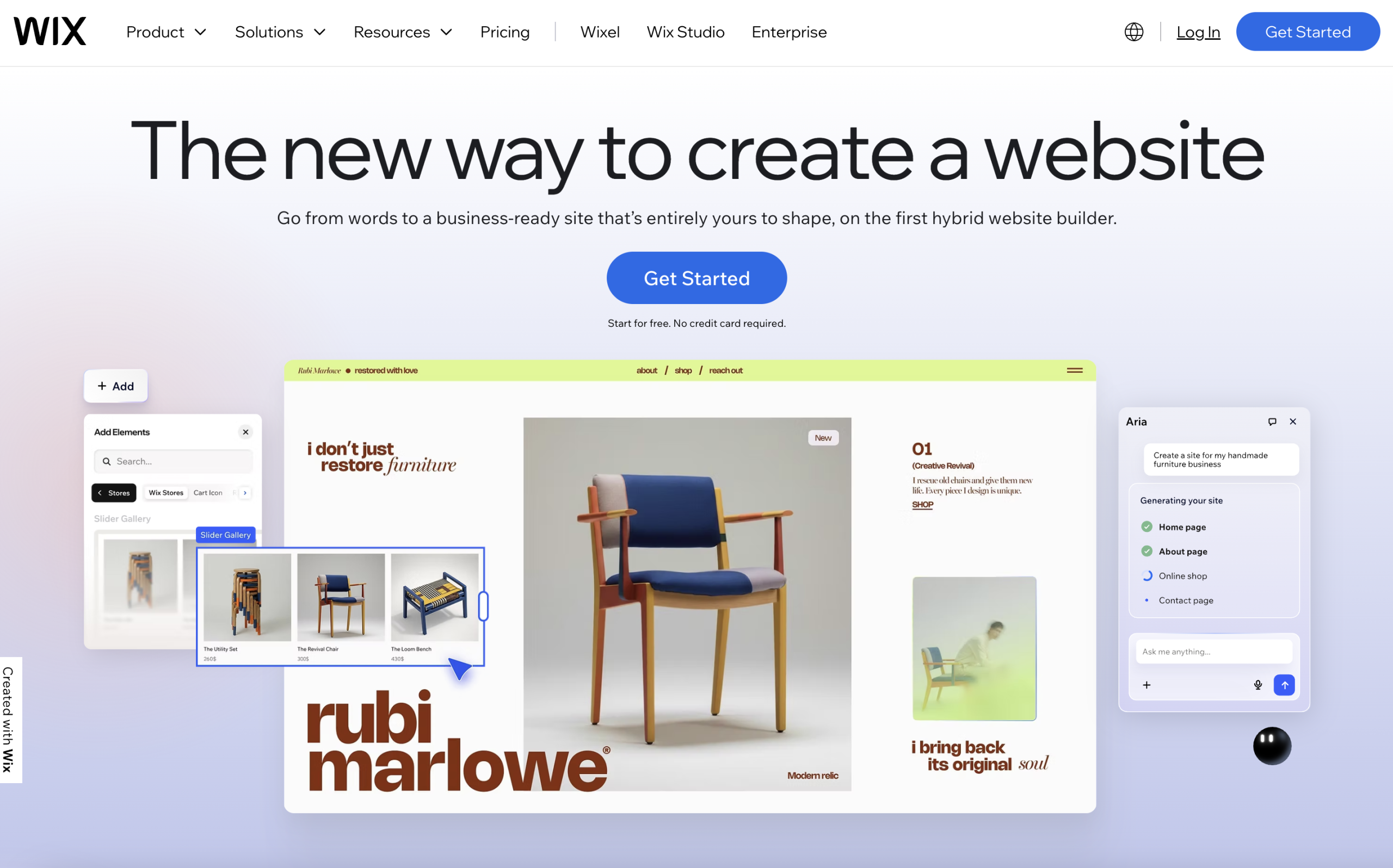
Wix is one of the OpenCart alternatives that acts as an all-in-one platform. It offers a wide variety of themes for you to customize your website. While this closed-source platform allows some customization, you won’t have access to editing the backend code the same way you would an open-source platform.
Wix is one of the most popular website builders on the market. However, its e-commerce functionality isn’t as advanced as some other OpenCart alternatives on this list. You also need to pay for a higher-tier subscription to access better ecommerce functionality.
PRICING
Wix costs $17 per month on its Light plan, which offers only 2GB of storage and doesn’t support ecommerce. However, its Core plan costs $29 per month and allows you to run basic ecommerce, including 50 GB of storage. You’ll get 100 GB of storage and be able to do standard ecommerce on its $39-per-month plan. The most expensive plan costs $159 and offers unlimited storage space and advanced ecommerce.
PROS
- Easy set-up process with a drag-and-drop builder and no coding knowledge needed
- An all-in-one platform offering hosting, security, updates, and backups
- Hundreds of themes to choose from
CONS
- Fewer third-party extensions than OpenCart
- Not well-suited for large catalogs
- Limited access to backend code
- Limited control over technical SEO
- Forced onto more expensive plans as your site grows
- No free plan
- Hard to migrate to another platform
- Challenging to export site data
- Not ideal for ecommerce stores
FAQ
What is the best OpenCart alternative?
The best OpenCart alternative is Payhip. On this alternative, you’ll access all the features you can’t get on an open source platform, such as security, hosting, automatic site maintenance, and more. Plus, you can sell both digital and physical products, with specialized features for each.
Why should I consider an alternative to OpenCart?
You should consider an alternative to OpenCart that handles maintenance, requires less technical expertise, and eliminates the need for excessive extensions or plugins. Many closed-source platforms like Payhip offer all the features you’d need in one place.
Which OpenCart alternative is easiest to use?
The easiest OpenCart alternative is Payhip, which lets you build an online store in just a few minutes. On your store, you can customize any element with no coding knowledge required. Plus, you’ll have all the features you need in one place to make set-up an even easier process.
Are there free alternatives to OpenCart?
Yes, Payhip is a free alternative to OpenCart. However, since it’s not open-source, you’ll actually get security, hosting, and site maintenance included automatically. You’ll only pay a 5% transaction fee per sale, as there’s no monthly subscription on the free plan. The free plan includes all features for selling digital and physical products.
Which OpenCart alternative is best for scaling my business?
Payhip is the OpenCart alternative that’s best for scaling your business. All plans include all features, allowing you to grow at your own pace. Plus, you can sell unlimited products and earn unlimited revenue on all plans.
Do I need coding skills for OpenCart alternatives?
On modern platforms like Payhip or Shopify, you don’t need coding skills for OpenCart alternatives. You’ll find that closed-source platforms allow you to build your website with simple drag-and-drop functionality, easy-to-use themes, and user-friendly navigation. Platforms like WooCommerce or PrestaShop may require coding skills.
What is the best OpenCart alternative for digital products?
The best OpenCart alternative for digital products is Payhip. These platforms are built to help sellers sell digital products, with features that make selling online easier, prevent piracy and theft, and help them reach existing audiences through marketplace listings. Overall, you can sell digital products with all the marketing tools you need built in, such as an affiliate marketing program,
Is OpenCart still a good option in 2026?
OpenCart is still a good option in 2026 for those who want full control over their website, have technical skills, and have the time to manage hosting, website maintenance, and more. However, most sellers prefer more modern, closed-source, all-in-one platforms like Payhip, which simplify building an online store while providing all the features you need for free.


Payhip
Join over 130,000 creators who have launched their businesses selling digital products, online courses, memberships, coaching, and physical products.
Get started for free today
Comments
Leave a Comment