


5 Paddle Alternatives to Choose From in 2026
Last updated: August 3, 2026
Paddle is an established Merchant of Record, meaning they take the legal and financial liability of the transaction. Some sellers may prefer an alternative to Paddle due to their high transaction fees, issues with their Merchant of Record status, or delayed payouts. Overall, there can be some frustrations that occur which leave people looking for Paddle alternatives. In this post, we’re going to share some sites similar to Paddle that have better fees, faster payouts, and more features.
Key Takeaways
-
Payhip is best for creators who want instant payouts, the ability to eliminate transaction fees, and an all-in-one platform for selling digital products, software, courses, memberships, coaching, and
physical products. -
FastSpring is best for software businesses that specifically need Merchant of Record services and enterprise-focused selling tools.
-
Lemon Squeezy is best for software creators who want built-in license key generation and Merchant of Record support.
-
Dodo Payments is best for businesses looking for a lower-cost Merchant of Record with lower transaction fees than Paddle.
-
Gumroad is best for creators who value marketplace discovery and are willing to pay higher transaction fees in exchange for built-in exposure.
Why People Are Searching for Paddle Alternatives
1. High transaction fees
Paddle charges a 5% + $0.50 fee per checkout transaction. For beginners, this works great as they don’t need to pay a monthly subscription fee. However, for high-volume sellers, there’s no way to completely eliminate transaction fees. There are some Paddle alternatives that charge a monthly subscription for high-volume sellers that completely eliminate transaction fees, allowing the seller to pocket more profit. However, you won’t be able to completely get rid of your transaction fees on this platform.
2. Keeps fees even when refunded
When a customer refunds an order that you’ve sold to them, Paddle tends to keep its fee from the transaction, as they don’t refund it. Every refund you get costs you money as you permanently lose the 5% + $0.50 fee every time someone processes a refund. Plus, your account is also at risk of being
suspended if too many refunds take place on the platform.
3. Paddle brand name appears on invoices and bank statements
For those searching for Paddle alternatives, a common reason why people choose an alternative to Paddle is due to the fact that Paddle shows up on all invoices and bank statements. Most brands want their own brand to appear on the statement. It prevents customer confusion, chargebacks, and refunds
from people who don’t recognize the brand name that appeared on the statement. Most shoppers remember the name of the website they bought from instead of the Merchant of Record.
4. Payouts are delayed
By default, most sellers on Paddle will be paid on a monthly basis. If you’ve made $100 by the 1st of the month, you’ll be sent a wire transfer between the 2nd and 15th of the month. Considering how some Paddle alternatives offer instant payouts with PayPal or Stripe, it can be a bit frustrating to have to wait an entire month to receive your payment for the product you’ve sold.
Paddle Alternatives Compared
| Platform | Best For | Pricing | Key Pros | Key Cons | Why Choose It |
|---|---|---|---|---|---|
| Payhip | Creators selling digital products, software, memberships, courses, coaching, and physical products | Free: 5% fee Plus: $29/mo (2%) Pro: $99/mo (0%) |
Instant payouts, unlimited products, built-in affiliate program, bundles, upsells, complete storefront, no coding required | No custom-branded invoices | Choose Payhip if you want faster payouts, the option to eliminate transaction fees, and an all-in-one storefront for selling every type of product. |
| FastSpring | Software companies needing a Merchant of Record | Custom revenue-share pricing (typically around 6–7%) | Merchant of Record, upsells, cross-sells, bundles | No transparent pricing, dated interface, limited documentation, separate products required for variants | Choose FastSpring if Merchant of Record services are essential and you don’t mind requesting custom pricing. |
| Lemon Squeezy | Software creators who need license key management | 5% + $0.50 per transaction | Merchant of Record, software licensing, easy storefront setup | Delayed payouts, limited integrations, no multi-currency support, customers see Lemon Squeezy on statements | Choose Lemon Squeezy if your primary focus is selling software with built-in license key support. |
| Dodo Payments | Businesses wanting a lower-cost Merchant of Record | 4% + $0.40 +1.5% international +0.5% subscriptions |
Lower transaction fees than Paddle, Merchant of Record | Delayed payouts, currency conversion costs, limited documentation, account suspension concerns | Choose Dodo Payments if keeping transaction fees lower is more important than advanced platform features. |
| Gumroad | Creators wanting marketplace exposure | 10% + $0.50 direct sales 30% marketplace sales |
Built-in marketplace, software license keys, beginner-friendly | High fees, $100 payout threshold, limited integrations, customer migration challenges | Choose Gumroad if marketplace discovery is worth paying higher transaction fees. |
5 Best Paddle Alternatives in 2026
1. Payhip

Payhip is a Paddle alternative that allows you to reduce and eliminate transaction fees depending on the plan you select. You can also create a complete website in under five minutes with all the features you need for selling digital downloads, courses, coaching services, memberships, software, and physical goods.
PRICING
You can choose from three plans, based on varying transaction and subscription fees. All plans include all features, as the platform doesn’t feature-gate based on subscription. The Free Forever plan has no monthly fee but carries a 5% transaction fee, whereas the Plus plan costs $29 per month and has a 2% transaction fee, and the Pro plan has a $99 per month fee with no transaction fees.
PROS
-
Get a complete storefront for selling your digital and physical products, software, memberships, courses, and coaching services
-
Set up a website in only a few minutes
-
No coding experience required for getting started
-
Generous free plan with all the features available
-
Sell unlimited products, earn unlimited revenue, and access unlimited bandwidth on all plans
-
Built-in course builder with beautiful video player, variety of lesson types, completion certificates, and more
-
Easily bundle products together to increase average order value
-
Built-in affiliate program where you can allow affiliates to sell your products for a commission of your choosing
-
Marketing tools, such as upsell, cross-sell, discounts, and more
-
Get instant payouts via Stripe and PayPal
CONS
-
Lacks custom-branded invoices, though you can issue receipts on the platform
Sell Digital Products with Payhip
No monthly fees. No tech headaches.
2. FastSpring

FastSpring is a Paddle alternative that also acts as a Merchant of Record, but it tends to have an older aesthetic. Some of the functionality of the platform is a little bit janky, such as having to create a separate product for each product variant instead of listing them all on a single page.
PRICING
FastSpring doesn’t publicly disclose its fee on its website. Instead, each seller will be given a custom, flat-rate, revenue-sharing model based on their sales volume. The platform doesn’t have monthly fees when you make a sale. Some say that their fee is around 6% to 7% per transaction.
PROS
-
Acts as a Merchant of Record (MoR)
-
Offers marketing tools like upsell, cross-sells, and bundles
CONS
-
Back-end doesn’t feel as modern as Paddle
-
User interface isn’t as intuitive as Paddle
-
Requires a third-party integration for an affiliate program
-
Lacks transparent pricing, need to contact for more information
-
Lacks extensive documentation or knowledge base
-
API restricts key functions, causing frustration
-
Can’t add variable products, each variant must be a separate product
3. Lemon Squeezy
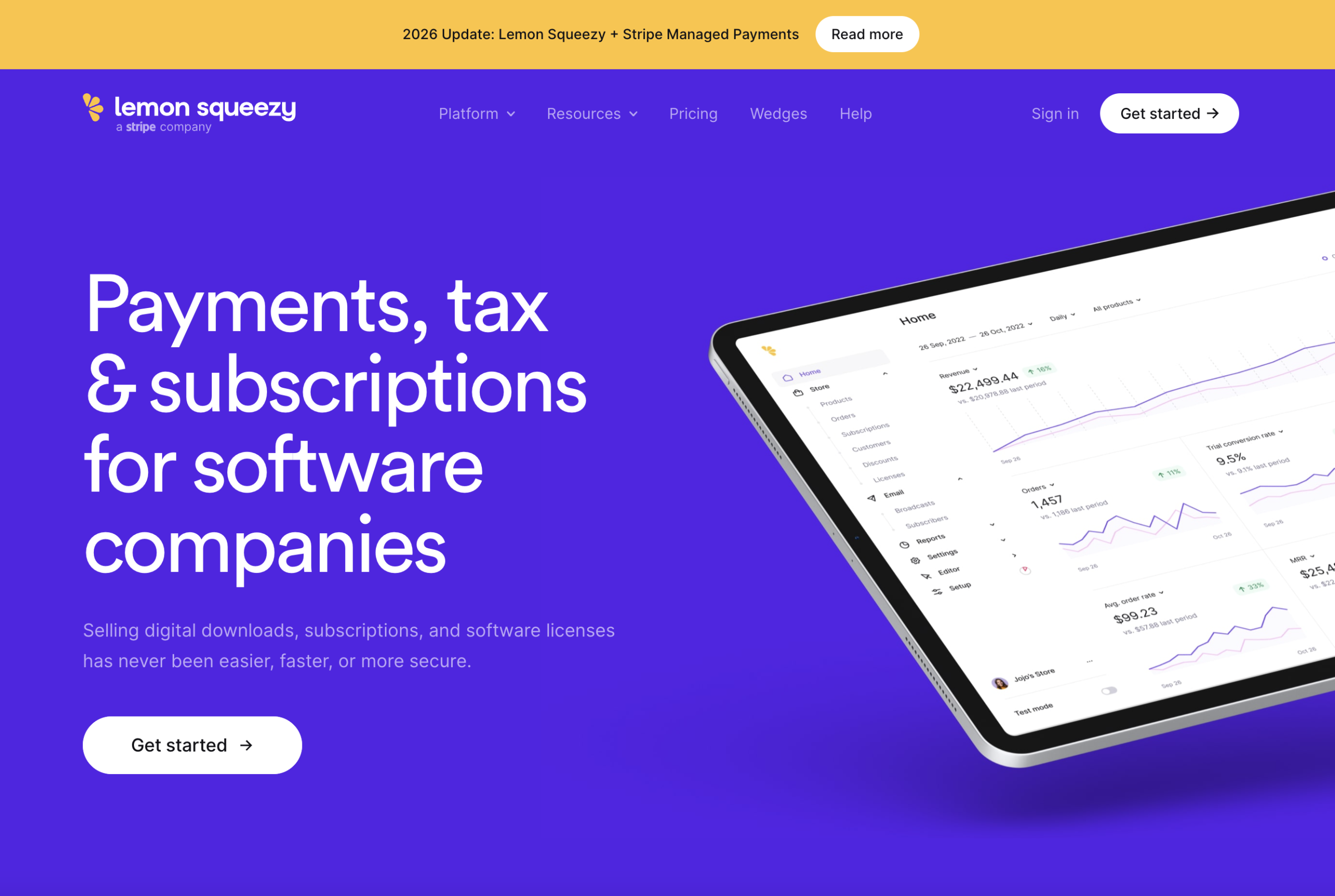
Lemon Squeezy is an alternative to Paddle that charges the same transaction fee. Since they’re also a Merchant of Record, you’ll be limited by your payout schedule as you can only get paid twice per month.
PRICING
Lemon Squeezy charges a 5% transaction fee plus $0.50 per transaction. If you end up selling higher volumes of products, you can contact support about their volume-based pricing.
PROS
-
Includes license key generation
-
Allows you to create an online storefront without coding experience
CONS
-
Lacks multi-currency support which results in additional fees for exchange rate across non-US sellers
-
Has limited integrations with third-party tools
-
Less fraud screening, which sometimes leads to fund freezes and account suspensions
-
Payouts are only twice monthly as net sales are held for 13 days
-
Customers see Lemon Squeezy on bank statements instead of your brand name
4. Dodo Payments
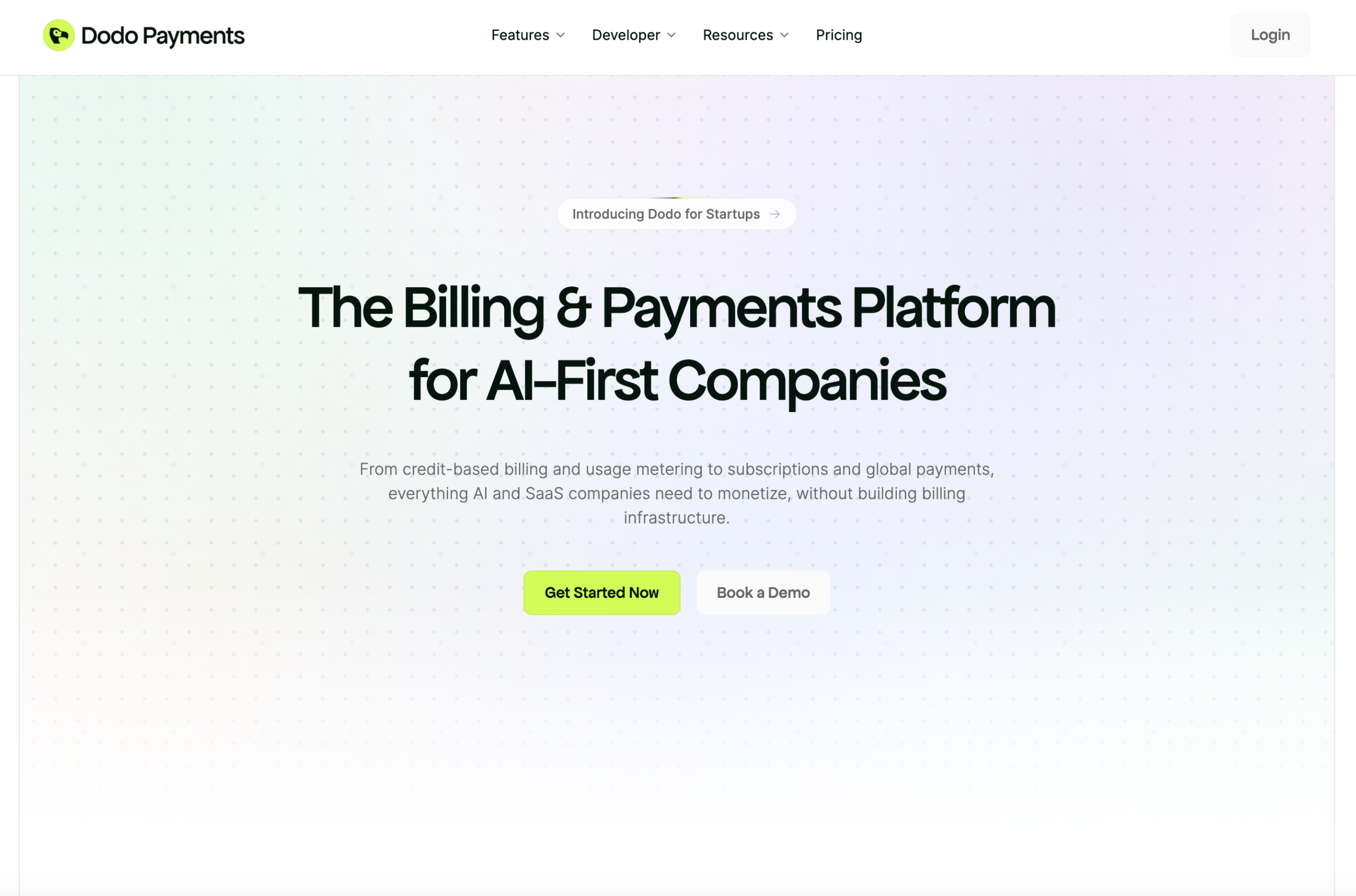
Dodo Payments is a more affordable Paddle alternative; however, you can’t reduce or eliminate your transaction fees. The platform has three options for payout schedules to choose from. If you’re outside of the US, you might find the currency conversion fees eat into your profit margins.
PRICING
Dodo Payments charges a 4% + $0.40 transaction fee for domestic US, an additional 1.5% fee for international, and an additional 0.5% fee for subscriptions.
PROS
-
Charges a lower rate than Paddle
-
Acts as a Merchant of Record
CONS
-
Payouts are only available on either a bi-monthly, weekly, or monthly basis
-
Some users report account suspensions just before payout periods
-
Hard to reverse a ban when it occurs
-
Currency conversions sometimes reduce your payouts
-
Tool lacks documentation that makes it easier to learn how all the features work
-
Lacks built-in AI tools
5. Gumroad
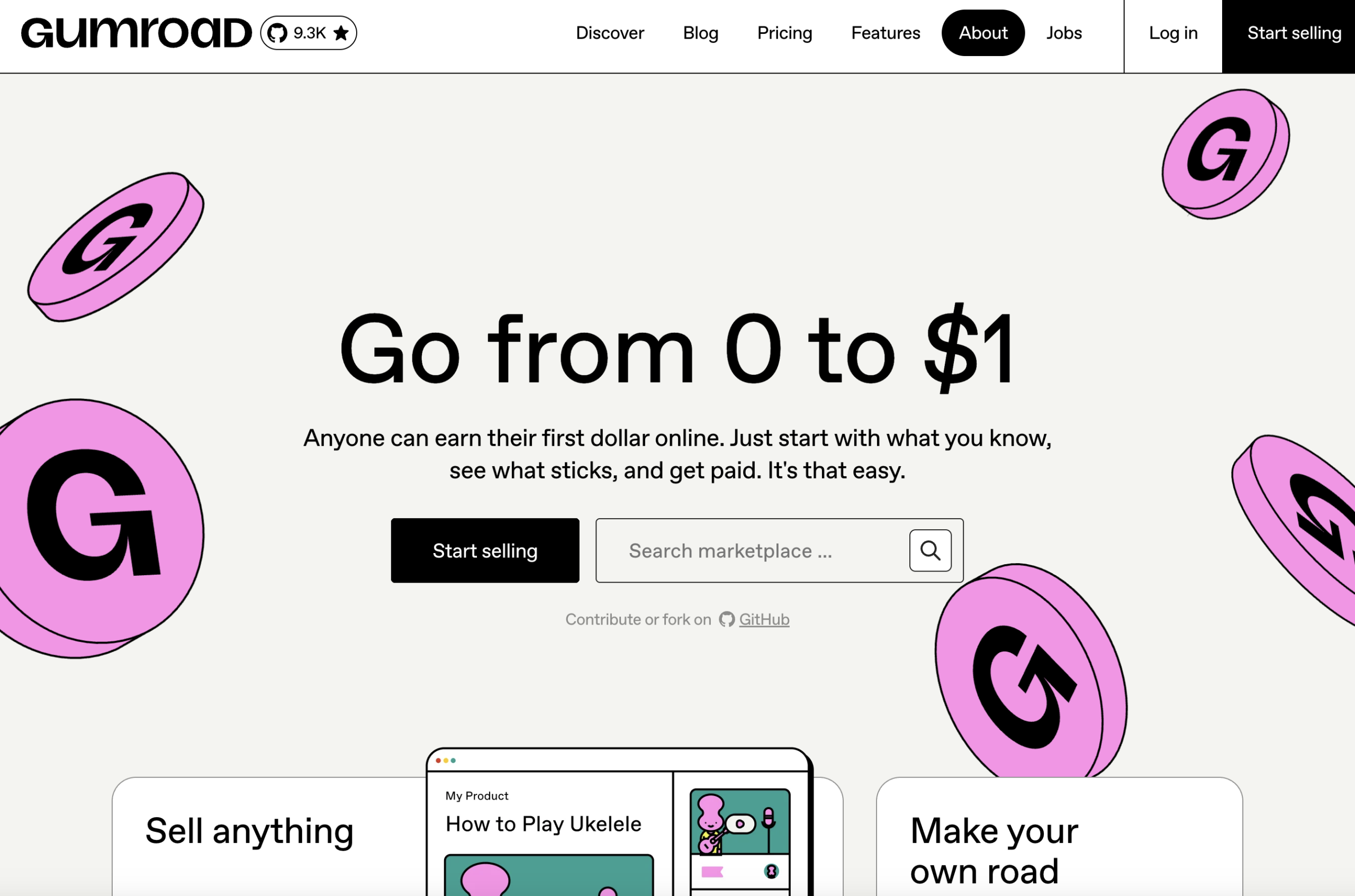
Gumroad is one of the most expensive sites like Paddle. The platform is popular due to its marketplace, where you can promote your products to an existing audience. However, they take a steep fee of 10% per sale, which can hurt the bank account.
PRICING
Gumroad has two core prices per transaction. Its standard fee is 10% + $0.50 per transaction for any sales you get directly from your customers. If you end up generating a sale from Gumroad’s Marketplace, you’ll need to pay a 30% transaction fee per sale.
PROS
-
Built-in marketplace to get products discovered
-
Automatically generate license keys for selling software
CONS
-
High fee of 10% of every sale
-
Requires a $100 minimum threshold to get paid out
-
Doesn’t take full liability for international sales tax and VAT compliance, unlike Paddle
-
Hard to move customer lists and data to other platforms
-
Few third-party integrations
Frequently Asked Questions
What is the best Paddle alternative?
The best Paddle alternative is Payhip, which allows you to reduce and eliminate transaction fees if you choose to. Payhip also enables you to build a complete storefront, allowing you to sell a wide range of products, from digital products to services to physical goods. Payhip also has various built-in marketing tools, like an affiliate marketing program, upsells, cross-sells, bundles, and more. You can also choose to get instant payouts when using Stripe and PayPal.
Why are businesses looking for Paddle alternatives?
Businesses look for Paddle alternatives because the transaction fees can be steep, particularly when you’re a high-volume seller, as they don’t have paid plans that eliminate transaction fees altogether. Paddle also keeps its platform fee even if a customer gets a refund, which causes them to lose revenue in the event of a refund. The payout schedule is often delayed for Paddle as well, whereas some Paddle alternatives offer instant payouts. Also, Paddle’s brand name shows up on bank statements, which can cause confusion for buyers who only recognized your brand name when they bought from you.
Which Paddle alternative is best for selling digital products?
The Paddle alternative that’s best for selling digital products is Payhip. Payhip includes a range of features depending on which digital product you sell. For example, if you sell ebooks or PDF files, you can add PDF stamping and buyer download limits to prevent piracy.
Which Paddle alternative is easiest to set up?
The Paddle alternative that is easiest to set up is Payhip. Payhip is a no-code friendly platform that enables you to create a complete storefront in only a few minutes. You can start selling your products online the day you launch your website. Payhip’s onboarding process is easy to follow, providing you with step-by-step guidance on how to upload your products, allowing anyone to build a website, even if it’s their first time.
Which Paddle alternatives handle VAT and sales tax automatically?
Payhip is a Paddle alternative that handles VAT and sales tax automatically.
Which Paddle alternatives offer built-in tax compliance?
Payhip is a Paddle alternative that offers built-in tax compliance. For example, you can have your EU and UK VAT and sales tax automatically handled by Payhip, alleviating you from the stress of managing taxes in those regions yourself.
Is there a cheaper alternative to Paddle?
Yes, Payhip is a cheaper alternative to Paddle. While Payhip also has a 5% transaction fee on its free plan, like Paddle, you can reduce your transaction fees to 2% or wipe them out completely by choosing a paid plan. Typically, high-volume sellers choose to pay no transaction fees, allowing them to pocket more of their profit than they would on Paddle.
Which Paddle alternative has the lowest transaction fees?
Payhip has one of the lowest transaction fees of all Paddle alternatives, as it only charges a 5% transaction fee. Unlike Paddle, you can actually choose a paid plan to completely eliminate your transaction fees without ever needing to get custom pricing or talk to a sales team.
Are there Paddle alternatives with no monthly subscription?
Yes, there are Paddle alternatives like Payhip that have no monthly subscription. On Payhip’s free plan, you’ll only pay a 5% transaction fee once you make a sale. In the event that you want to reduce or eliminate your transaction fee, you can then choose a paid monthly subscription. However, you can stay on the free plan with no pressure to ever switch over to a paid plan.
Can I sell digital downloads without Paddle?
Yes, you can sell digital downloads without Paddle by using Payhip instead. Payhip enables sellers to sell digital downloads like ebooks, courses, memberships, software, and more. Each digital product comes with its own set of features. For example, you can PDF stamp your ebooks to prevent piracy. You can also generate your own license keys or upload your own when selling software. Selling courses also comes with a wide range of features, such as lesson types, certificates, drip content, and more.
Which Paddle alternative offers subscription billing?
Payhip is a Paddle alternative that enables you to sell memberships or subscriptions to your customers. You can charge clients on a recurring basis, allowing you to earn income more predictably.


Payhip
Join over 130,000 creators who have launched their businesses selling digital products, online courses, memberships, coaching, and physical products.
Get started for free today
Comments
Leave a Comment