


6 Selar Alternatives to Consider for Better Features
Last updated: May 13, 2026
Selar is an ecommerce platform that allows you to sell digital products, ebooks, courses and memberships, event tickets and training, services, and physical goods. The platform only serves 14 countries, mostly based in Africa. Some people are looking to switch from Selar and are seeking Selar alternatives due to a lack of ownership, payment delays, increased competition, or simply outgrowing the platform.
Key Takeaways
- Payhip is best for those looking for an all-in-one solution to sell digital and physical products
- Nestuge is best for community management
- Shoprocket is best for those looking for an embedding tool
- Gumroad is best for those looking to sell on a marketplace
- Thinkific is best for course creators
- Beacons is best for those who only want a link-in-bio
Why People Are Looking for Selar Alternatives
1. Lack of ownership
One of the challenges people run into on Selar is that you don’t own your customer list, store, or platform. People sometimes find that their accounts are restricted, causing them to lose their entire business. People looking for Selar alternatives often seek platforms that let them run their own business, such as having their own website. That way, they can retain customer data to remarket to customers and increase overall sales.
2. Payment delays
Selar is a platform known for payment delays. Some Selar alternatives offer instant payouts via PayPal and Stripe. However, Selar doesn’t offer instant payouts. If you are receiving Naira, you can receive payment within 24 hours. Yet, if you’re hoping to receive US or British pounds, you’ll need to wait ten days for funds to enter your account. Most African currencies take about four days to become available.
3. Better alternatives
Selar was originally a platform for selling simple digital products. You’d upload your products, get a checkout link, and start selling. However, sellers now want more than that. There are other platforms that offer all-in-one services, such as a complete website with advanced marketing features, an affiliate marketing program, and the ability to sell products. With platforms that allow you to create upsells and cross-sells or funnels, you can increase your average order value better. People are looking for Selar alternatives to create websites, build a business, and get the functionality to run a successful business.
4. User outgrowing the platform
Sellers want to do more with their products. They want to build a website with more customization. They want to scale from a side hustle into a complete brand and business. Sellers also want tools, such as a referral system, funnels, or advanced functionality for the specific tools they sell. They might want PDF stamping to prevent piracy or license keys to sell software.
Comparing Selar Alternatives
| Platform | Best For | Pricing | Key Pros | Key Cons | Best Overall Verdict |
|---|---|---|---|---|---|
| Payhip | Creators building full online stores (digital + physical products) | Free: 5% fee Plus: $29/mo (2%) Pro: $99/mo (0%) |
All-in-one platform, instant payouts, advanced marketing tools, supports many product types, marketplace access | No built-in email marketing | Best overall Selar alternative for scaling a business |
| Nestuge | Community monetization and automation | Free + fees $20–$45/month plans |
Workflow automation, community-focused tools | Limited branding, requires third-party tools, fewer selling features | Best for community builders |
| Shoprocket | Sellers embedding checkout into existing websites | $29–$199/month | Works with your own site, instant payouts | Not all-in-one, requires technical setup, limited features | Best for embedded selling |
| Gumroad | Creators using marketplaces | 10% + $0.50 +30% marketplace fee |
No monthly fees, built-in audience | High fees, delayed payouts, limited customization | Best for marketplace exposure |
| Thinkific | Online course creators | $49–$199/month | Advanced course features (quizzes, assignments, curriculum) | Expensive, limited to courses, fewer marketing tools | Best for courses |
| Beacons | Creators needing a link-in-bio storefront | Free + 9% fee Paid plans remove fees |
Simple setup, email marketing included | High fees, limited customization, not a full ecommerce platform | Best for creators/influencers |
6 Selar Alternatives to Consider for Better Features
1. Payhip
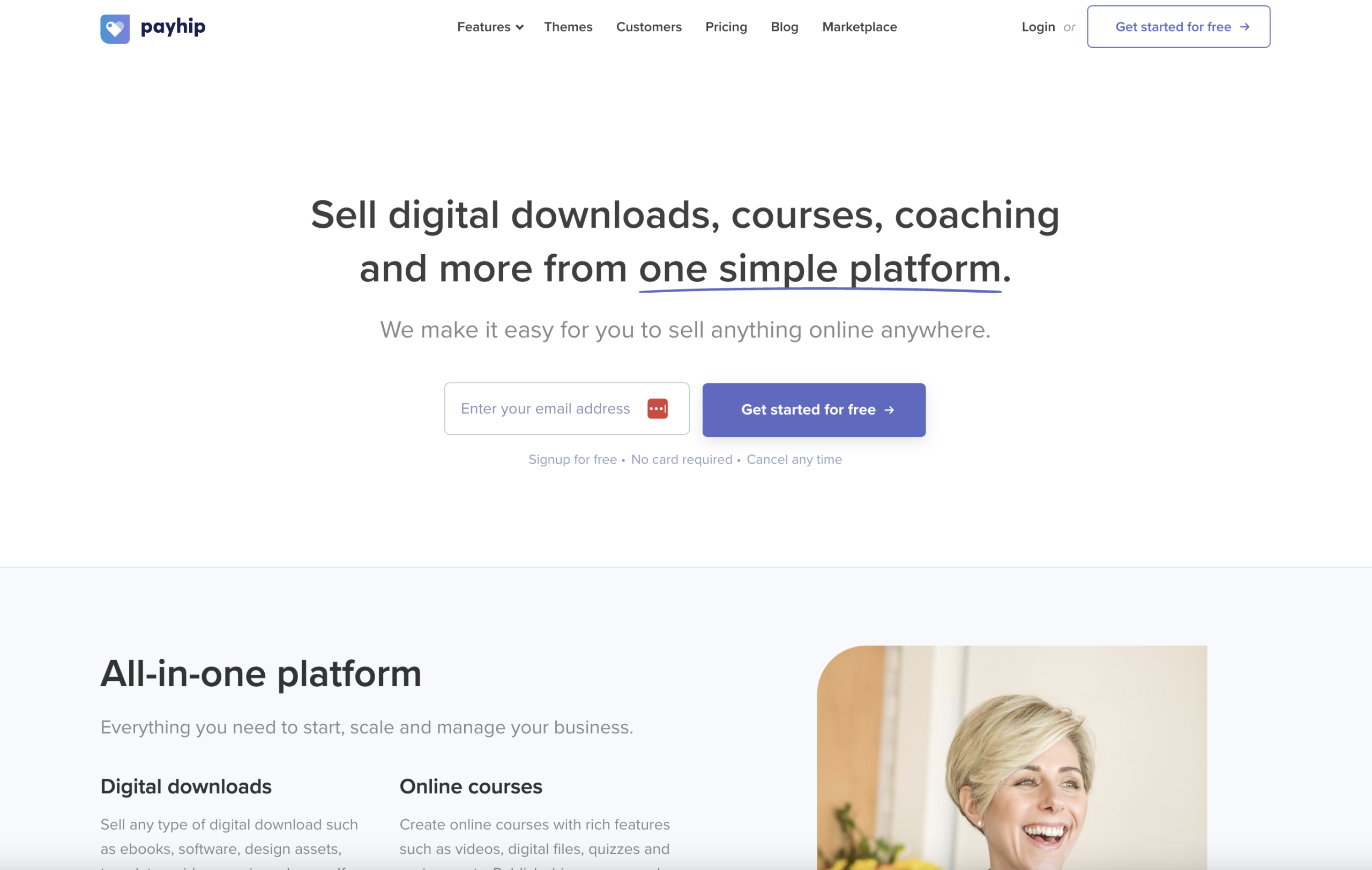
The best Selar alternatives, like Payhip, offer sellers an all-in-one platform for building an online store. You’ll access a wide-range of features for individualized product types. You can sell digital downloads, courses, coaching services, memberships, software, and physical products on this Selar alternative. For example, online courses allow you to give quizzes, drip content, provide completion certificates, and much more. Digital downloads allow you to set download limits and PDF-stamp your documents to prevent piracy.
This Selar alternative is also a cost-effective option, as you can reduce your transaction fees with a paid plan as your business starts making significant revenue. All plans come loaded with all features.
You can also find advanced marketing tools for selling online with this Selar alternative. For instance, you can promote your products for no added fee on Payhip Marketplace. Also, you can access tools like an affiliate marketing program, upsells, and more to help you earn as much money as possible with your digital or physical product.
PRICING
Free Forever
- $0/month
- 5% transaction fee
Plus
- $29/month
- 2% transaction fee
Pro
- $99/month
- No transaction fee
PROS
- All-in-one platform for you to build an ecommerce business
- Beginner-friendly platform, no coding skills required
- Reduced transaction fees with a subscription
- Handles VAT and sales tax
- Sell both digital and physical products with specialized features for each product type
- All features are available on all plans, including the free plan
- Easy to build and customize a website
- Built-in marketing tools, such as upsells, cross-sells, an affiliate marketing program, referral system
- Instant payouts with Stripe and PayPal
- Access to Payhip Marketplace where you can sell your products to an audience
CONS
- Email marketing isn’t built-in and requires email integrations
Sell Digital Products with Payhip
No monthly fees. No tech headaches.
2. Nestuge
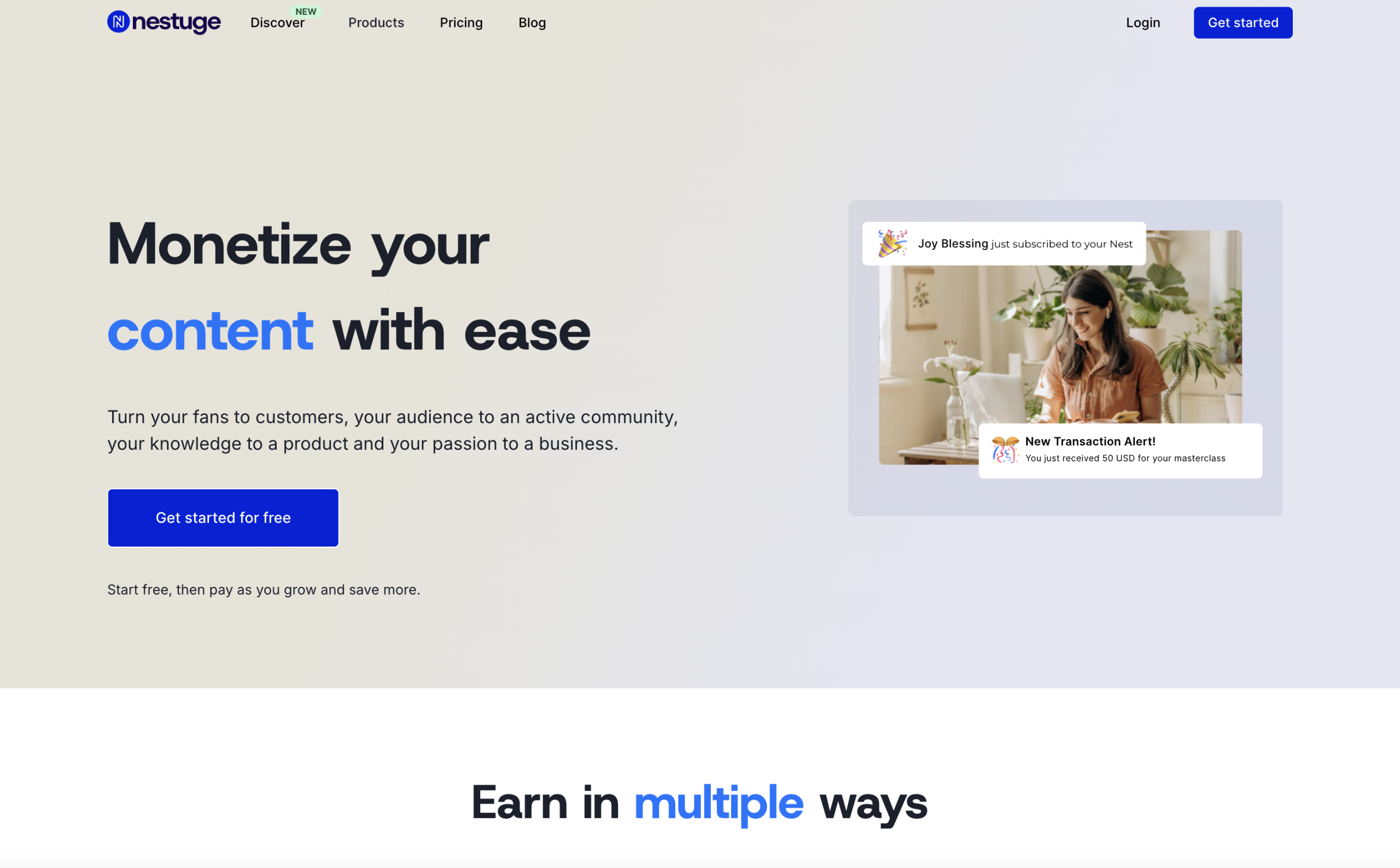
Nestuge is a Selar alternative with a free plan. Primarily known for simplifying the process of automating workflows and monetizing communities, this platform is ideal for community builders rather than traditional selling.
Since Nestuge isn’t as well-known or established as Selar, it offers limited website-style branding. Most users of this platform find that they need to use third-party platforms or integrations, such as Telegram, WhatsApp, or payment gateways, to make their ability to sell functional.
PRICING
Pay As You Go
- Free
- 1.5% extra fee for sales via Stripe
- 6.5% USD transaction fee
- 7.5% international transaction fee
Ultra
- $20/month
- Zero Stripe fees
- 6.5% USD transaction fee
- 7.5% international transaction fee
Business
- $45/month
- 6.5% USD transaction fee
- 7.5% international transaction fee
PROS
- Easy to automate business workflows
- Designed for monetizing communities
CONS
- A less established and less well-known platform
- Mostly focused on communities instead of selling
- Limited website-style branding
- Requires third-party platforms, such as WhatsApp
- Lack of control over your business
- Fewer marketing tools than other Selar alternatives
3. Shoprocket
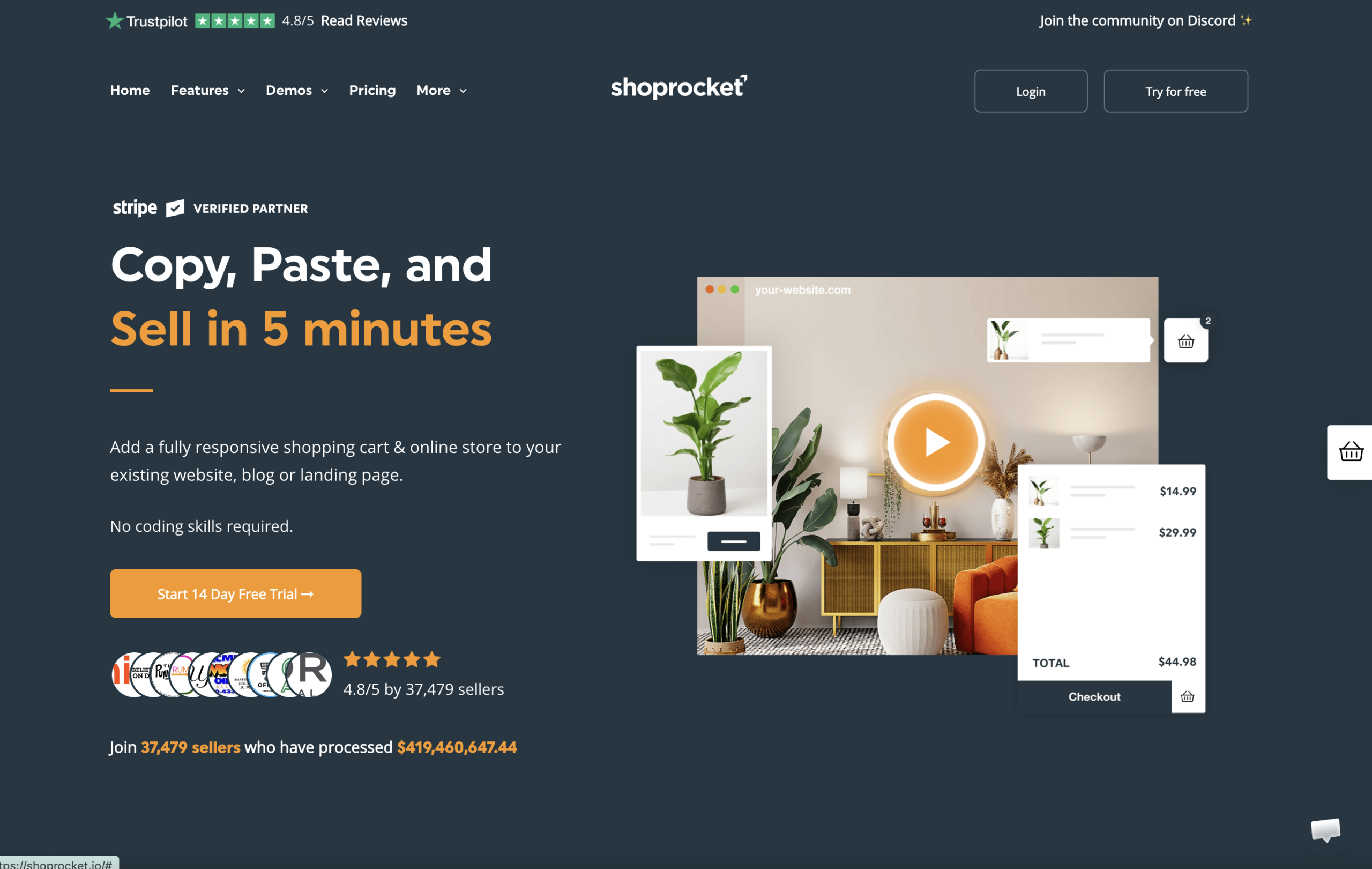
Shoprocket is an embed code you can add to your website. Unfortunately, this Selar alternative doesn’t act as a website builder, so you’ll need to pay fees to access and build a website. Since it’s not an all-in-one solution, you’ll still have control over your own website, depending on the website builder you use.
Shoprocket is best suited for sellers with small catalogs and requiring minimal integrations, analytics, or design changes.
PRICING
Starter
- $29/month
Business
- $79/month
Plus
- $199/month
PROS
- You still have control over your website
- Instant payouts via Stripe and PayPal
CONS
- Not an all-in-one solution
- Requires an existing website, as it’s mostly an embedded code
- Requires technical knowledge to make design changes
- Limited dashboard and analytics
- Less ideal for large catalogs and at scale
- Lacks many integrations
4. Gumroad
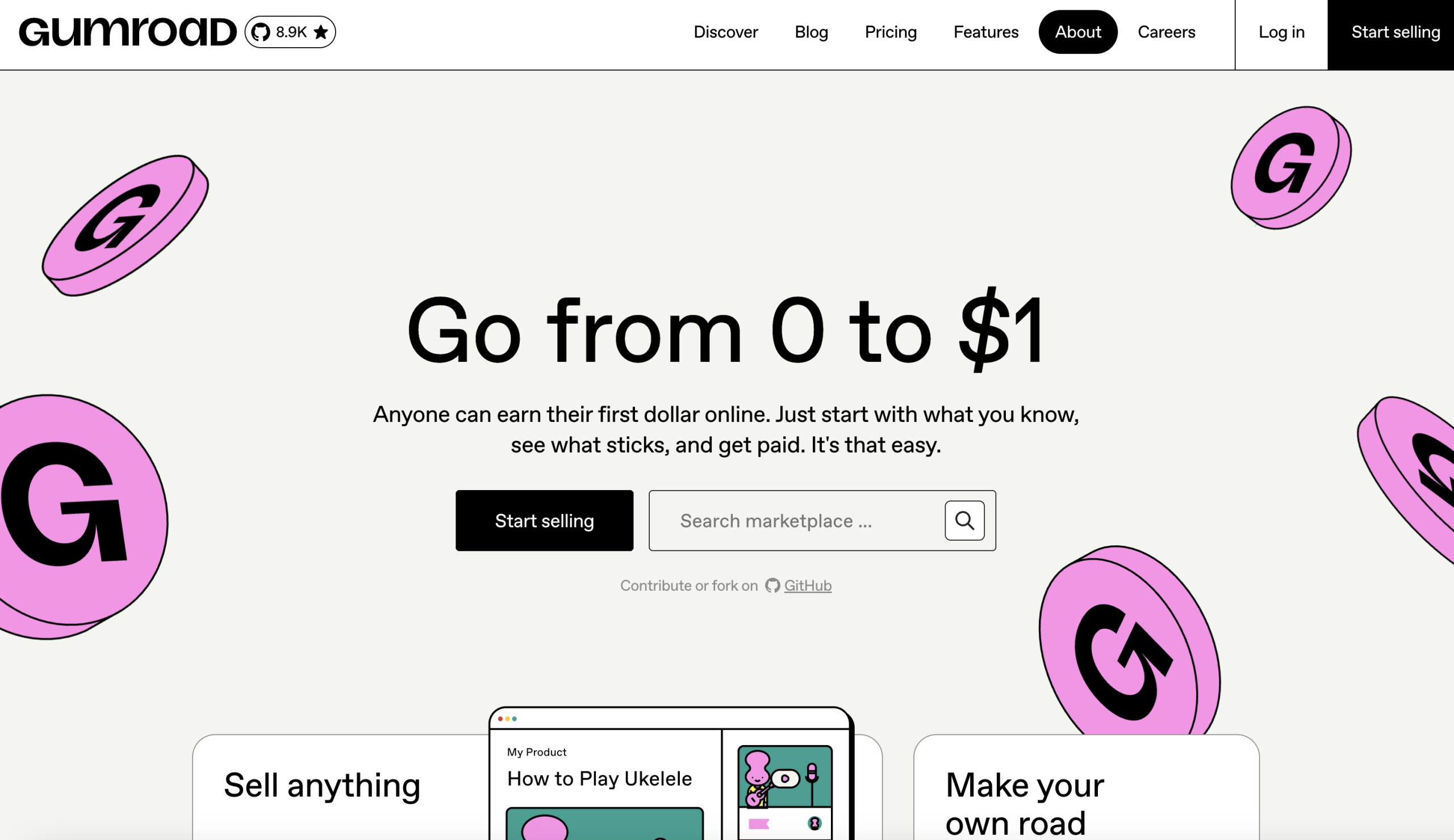
Gumroad is one of the more expensive Selar alternatives. They charge high transaction fees that don’t decrease as your business grows. The lack of paid plans to reduce transaction fees to zero makes this an expensive platform for high-volume sellers.
While Gumroad has a marketplace where you can sell your products, it unfortunately takes an even larger cut of sales made there, at 30%.
Gumroad is also known for delayed payouts. While some Selar alternatives have instant payouts, Gumroad can take up to seven days to payout. If you wanted an instant payout, you’d need to pay an additional 3%. You’ll also have to wait until you’ve earned $100 to make your payout.
PRICING
Gumroad Pricing
- 10% + $0.50 per transaction
- 30% per transaction via the marketplace
PROS
- No monthly subscriptions
- Built-in marketplace to promote your products
CONS
- High transaction fees with no reduction at scale
- Limited storefront and branded design
- Lacks upsells and other marketing tools
- Delayed payouts
- Not as beginner-friendly
- Lacks proper product organization for large catalogs
- Best suited for side hustles rather than businesses
5. Thinkific

Thinkific is a Selar alternative focused on course creation. Thinkific might not be well-suited for Selar sellers who want to sell ebooks, tickets, services, or physical goods. However, if you’re selling online courses, this alternative to Selar is packed with features for selling courses, such as quizzes, assignments, and more.
Despite allowing people to sell online courses, this platform isn’t best suited for those looking for community-rich features. There are fewer features for community-based course creators. It also lacks features in upselling, which some course creators may prefer.
PRICING
Basic
- $49/month
Start
- $99/month
Grow
- $199/month
Branded Mobile App
- $199/month
PROS
- Advanced functionality for online courses, such as course modules, quizzes, assignments, drip content, and curriculum
- Drag-and-drop functionality for building courses
CONS
- An expensive platform as you scale
- Difficult and complex setup process
- Removed its free plan
- Less suited to digital products outside of courses
- Lacks email, funnels, and upsells built in
- Restrictive branded design customization
- Limited community features
6. Beacons

Beacons is a Selar alternative that acts as a link-in-bio. Overall, this platform isn’t best suited for building an online store in the traditional sense. However, if an influencer or content creator wants a simple one-page landing page with links to their products, this could be the best Selar alternative.
This platform has high fees, with a 9% seller fee on the free and Creator plans. It’s the second-most-expensive fee on this Selar alternatives list. It tends to be better suited to creators than to people trying to build a sustainable, long-term business.
PRICING
Free
- $0/month
- 9% seller fees
Creator
- $10/month
- 9% seller fees
Creator Plus
- $30/month
- 0% seller fees
Creator Max
- $90/month
- 0% seller fees
PROS
- Allows influencers to put all their products and links on one page
- Built-in email marketing to send newsletters
CONS
- High transaction fees
- More of a link-in-bio tool than a true online store
- Limited customization for a branded experience
- More suited for influencers than building a business
- Some features are gated behind paid plans, such as unlimited email sends
FAQ
What are the best alternatives to Selar?
The best alternative to Selar is Payhip, an affordable online store builder that lets you sell both digital and physical products. The platform also offers over 100 payment gateways, enabling people in Africa to sell online with greater ease.
When should you switch from Selar?
You should switch from Selar when you find you’ve outgrown the platform and need more of an all-in-one platform with advanced marketing features, like upselling, cross-selling, an affiliate marketing program, and a marketplace to sell your products, like Payhip.
What are the limitations of Selar?
The limitations of Selar are that the online selling space is competitive, so there are many tools offering more features than Selar and delayed payouts for sellers. Some may choose Selar alternatives like Payhip for instant payouts and advanced features.
What should I look for in a Selar alternative?
When looking at a Selar alternative, you should look for a platform that allows you to sell in your region, so a platform with over 100 payment gateways that appeals to international sellers outside of the US, like Payhip.
Are there platforms with more features than Selar?
Yes, there are platforms like Payhip with more features than Selar. You’ll find advanced features for online courses, such as a beautiful video player, a variety of lesson types, a commenting system, drip content, completion certificates, and more. You’ll also find PDF stamping and download limits for digital downloads. Plus, you can generate or add your own license keys if selling software.
Which Selar alternative is best for beginners?
The Selar alternative best for beginners is Payhip. Payhip has a free plan with only a 5% transaction fee. However, as you scale, you can move to a paid plan to reduce or eliminate transaction fees. Plus, the platform requires no coding knowledge. You can build an online store in minutes to start selling immediately.
Do Selar alternatives support international payments?
Yes, Selar alternatives like Payhip support international payments. You can choose from over 100 payment gateways, including PayPal, Stripe, Apple Pay, Google Pay, Flutterwave, Paystack, and more.
What’s the best Selar alternative for scaling a business?
The best Selar alternative for scaling a business is Payhip, which has advanced features, tools, and functionality for selling physical and digital products. Plus, you can reduce transaction fees as you scale to lower your overall costs of running an online store by choosing a paid subscription as you start achieving high sales volumes.


Payhip
Join over 130,000 creators who have launched their businesses selling digital products, online courses, memberships, coaching, and physical products.
Get started for free today
Comments
Leave a Comment