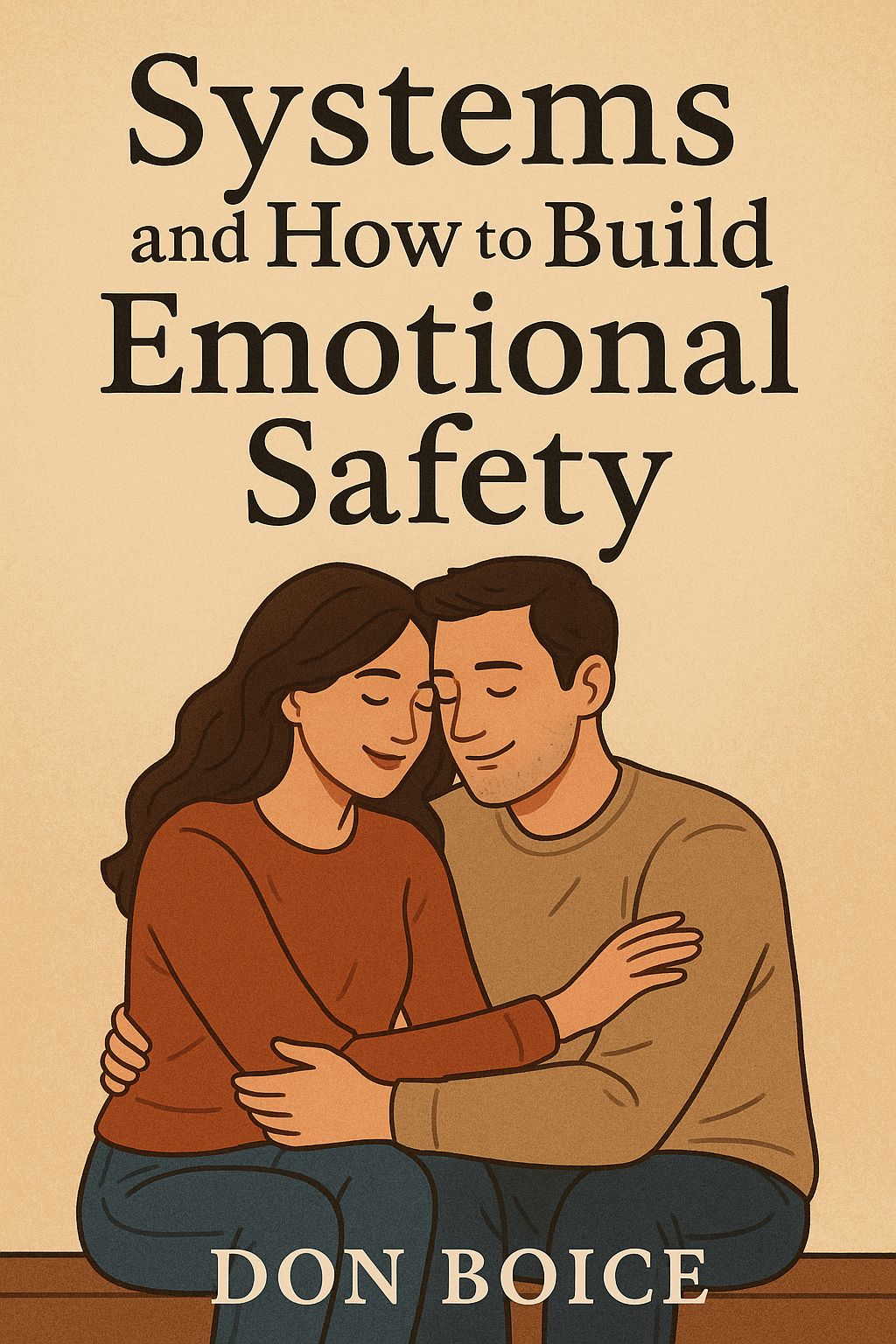
Relationship Is a System: Building Emotional Safety
In a system, almost every single thing I do affects my partner. It is not always to my advantage to know that. I would like to think I have more autonomy and can just go on my merry way and not affect someone else.
Systems confuse people at first, so we will explain how you use a system wisely and develop emotional safety.
Here is what is included:
From Me to We (how systems work- it is more complicated than you think and there are systems all around us that reveal themselves)
How to Build Emotional Safety (repetition, not grand gestures)
Paradox
Mature spirituality recognizes that reality is rarely tidy. Two seemingly opposing truths can both contain wisdom.
Love requires both tenderness and boundaries. Justice requires both accountability and mercy. Leadership requires both conviction and humility.
When we are spiritually immature—or afraid—we collapse paradox. We decide that only one side can be right, that tension must be resolved immediately, and that uncertainty equals danger. This rigidity gives rise to the false comfort of enemies. If “we” hold all the truth, then “they” must hold all the lies.
In systems theory (from family therapy and cybernetics), every behavior in a relationship is a message within a feedback loop.
Even something as simple as being late, turning away, or buying something impulsively is data that the other person’s nervous system interprets. Every single decision affects your partner in a two person system.
• When one person shifts, the whole system adapts.
• Even silence is a signal; it changes the emotional climate.
• So “independence” isn’t the absence of influence — it’s just influence we’re not acknowledging.
Helping people understand this starts with replacing the idea of two separate individuals with the image of a living emotional ecosystem.
When you breathe differently, the air changes for both of you. (10 pages)
This, of course, follows the concept in the first essay that every question is a statement and can be more direct and explicit if recognized as such. People who value direct communication will find a way to make it even more efficient and effective.
Part 3 is the State of the Union concept, with questions that might just help strengthen your system. This comes from a concept by John Gottman and I strongly encourage you to read his books and blogs.