
How to Use AI to Support Your Symptom Tracking
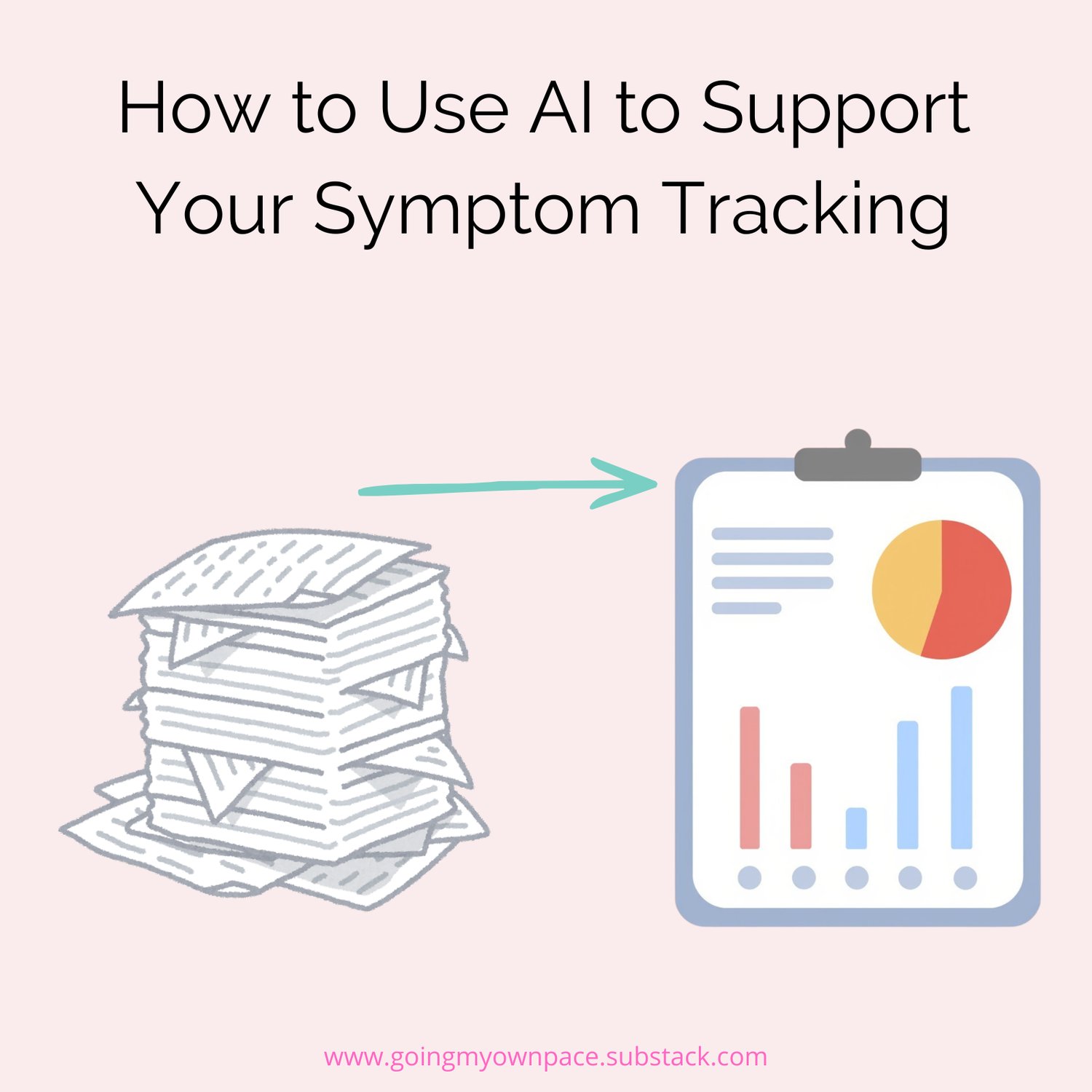
How to Use AI to Support Your Symptom Tracking
Analyse your data, find the patterns, and finally walk into appointments feeling prepared.
You've been tracking. Maybe for months, maybe for years. You have the app, the spreadsheet, the notebook — or some combination of all three. But when your doctor asks how you've been, you still find yourself fumbling to summarise weeks of data in two minutes, leaving out the things that actually matter.
Your data is valuable. You're just not sure what to do with it.
This is where AI changes things.
What if your tracking data could actually work for you?
AI tools like ChatGPT and Claude aren't just for writing emails. When you know how to use them, they become a genuinely powerful support for people managing chronic illness — helping you make sense of complex patterns, spot connections across weeks of data, and turn raw entries into something meaningful and shareable.
This 15-page guide walks you through exactly how to do that, step by step.
Inside this guide you'll learn how to:
- Upload and organise your symptom data so AI can actually read and use it
- Ask the right questions to pull out patterns you might have missed
- Compare data across time periods to track changes — for better or worse
- Build a one-page monthly summary you can re-upload each month for running pattern tracking
- Create a comparison table that evolves with you over time
- Generate a clear, concise summary ready to share with your medical team
- Communicate your experience more effectively at appointments — without the overwhelm of trying to remember everything on the spot
This isn't about replacing your doctor. It's about arriving prepared.
When you can hand over a clear summary of your last month's patterns, triggers, and notable changes, the conversation shifts. You stop trying to reconstruct your experience from memory and start having the kind of appointments that actually move things forward.
Practical. Plain-language. Written from lived experience.
No technical background required; some online competence is required. No complicated software. Just a thoughtful, guided walkthrough of how to use freely available AI tools to make your symptom data work harder for you.
16 pages. Immediate download. Start using it today.
Why I wrote this
I know AI isn't without its controversies — and I understand the hesitation, especially in a healthcare context where trust matters deeply.
But the research is increasingly clear that, when used well, AI has real potential to support people living with chronic illness. Not to replace care, not to diagnose, but to help us organise our experience, advocate for ourselves, and make the most of the limited time we have with our medical teams.
I've spent time working through what that actually looks like in practice — what prompts help, what pitfalls to avoid, and how to use these tools in a way that genuinely serves us rather than adding more noise to an already overwhelming experience.
This guide is the result of that work. I wrote it because I wanted something practical, honest, and grounded — a resource I'd want to have had myself. I hope it helps you walk into your next appointment feeling a little more prepared, a little more heard, and a lot more confident in the data you've worked so hard to collect.
— Melissa