


How to Sell Digital Products in 2026
Last updated: August 3, 2026
Have you been toying with the idea of making a digital product and selling it? Maybe your goal is to earn some extra income, or you just have a burning desire to build something. Either way, taking that first step is a fun leap forward into the world of entrepreneurship. It’s amazing to create something and see how people respond to it.
In this post, we’re going to share how to sell digital products so you can achieve your goals, whatever they may be.
How to Sell Digital Products in 2026
1. Determine which digital product you’ll sell
When creating a digital product to sell, choose a niche that you’ll still be excited to work in years from now. Success typically doesn’t happen with the launch of one product. Most brands and influencers dedicated years of their lives to their creations.
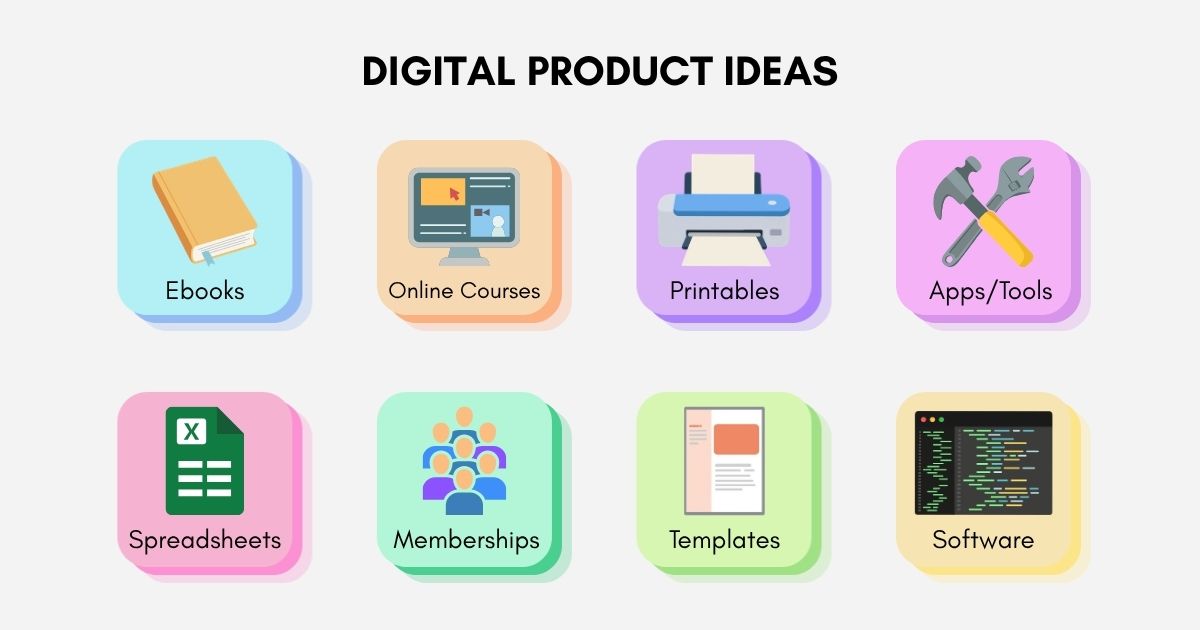
The types of digital products to sell will hugely depend on what niche you’re in. For example, if you’re in the finance space, you might create financial Notion templates, budget spreadsheets, debt payoff calculators, or investing guides. If you’re in the fitness niche, you might be involved in creating workout plans, meal plans, cookbooks, home workout videos, fitness apps, and more.
Having a niche focus will help you better position yourself. For instance, if you’re selling products, they should all be in one niche category. That way, people will keep coming back to you to get more of that type of content. When you’re creating products in various niches, hoping something will stick, you end up losing a lot of time. Devote enough time to researching which niche is most viable for you. Then, choose which products you’ll create for that niche.
The product you create should also align with your skills. To illustrate, if you’re an experienced writer, you could write e-books. If you’ve mastered AI tools, you could build software or a tool for your niche. For those of you with amazing presentation skills, you can try creating an online course. Overall, when choosing your product type, lean into your skills so you’ll naturally shine.
2. Research your target audience
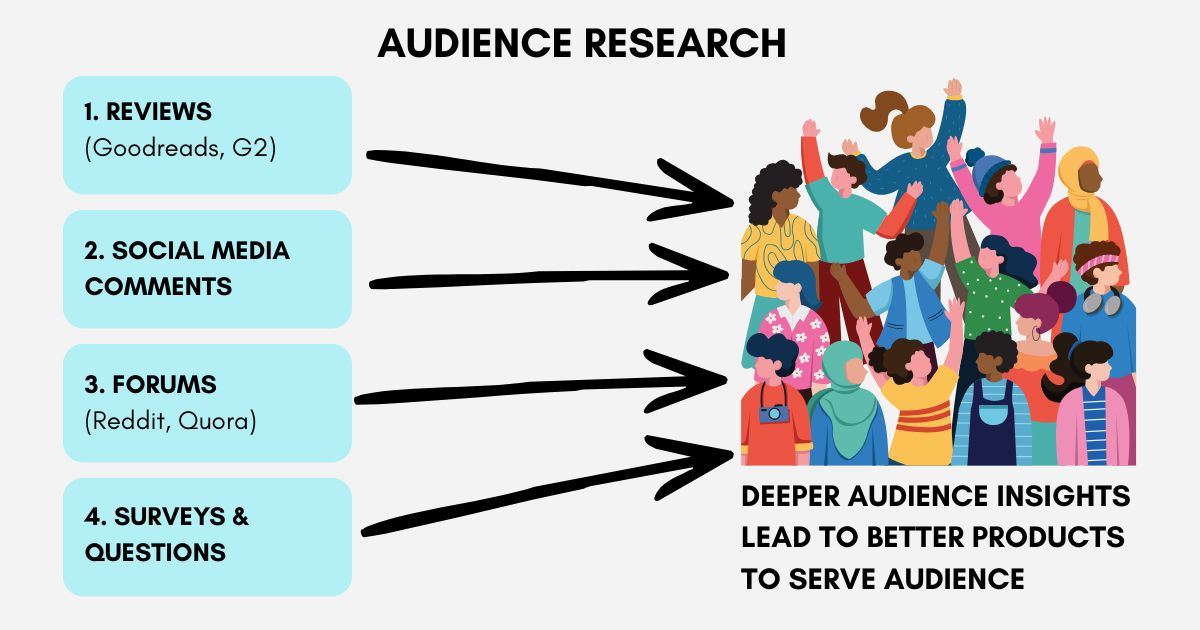
Once you know your niche and have an idea of what you’re going to sell, it’s time to do some market research. To sell your product successfully, you need to know the exact pain points people have. There are a few ways to approach this:
Read negative and neutral reviews
From Goodreads to G2, you can find negative reviews about digital products like ebooks or software to help you determine what people don’t like about a product. You can then use that as one of your starting points in creating something different. Looking at positive reviews will help you know what people like. Neutral comments will also tell you what you can do to lean more toward the positive to make a greater impression. Overall, review sites can be a great way to get feedback on what people want in your niche.
Scroll through comments on social media
There are so many influencers who post niche industry content. Search through Instagram or TikTok for people who create content in the niche you’re looking to serve. Then, read through their comments. Is anyone asking questions about a topic? You can incorporate those answers into your digital product. Are there any comments about people being skeptical about what a person says? If so, you might want to include data to back up your claims in your product to help build trust. Either way, seeing how people interact with influencers can help you narrow down how to provide value.
Ask questions on Reddit
Before doing market research on Reddit, make sure it’s not against the rules for that subreddit, as not all subreddits allow it. When asking questions on Reddit, aim to prompt engagement. Personally, I find questions that start with “Would you…” “Which..” or “How do you…” often get a ton of comments. Your question shouldn’t be “Would you buy a product that does this?” You won’t get the right kind of feedback. Instead, you can ask something, such as “What motivates you to work out?” or “Which books have helped you the most with your personal finances?” Those kinds of questions can give you clues about the resources people use or the challenges they may face. The goal is to get more insight into the person who would buy your product.
3. Validate your product idea
An important step in selling digital products is validating your idea. Validating your idea isn’t just about getting interest but also getting someone to pay you money. You could create an MVP or a mini version that is cheaper, and ask people to pay a small fee to test whether creating a more elaborate version of the product would increase your overall sales.
If you don’t create a mini product that charges a fee, you won’t know if you have interest or potential buyers until your launch. Many creators find that they’ll get a lot of interest from people who say they want something, but they never follow through and pay. Don’t make the mistake of thinking that just because someone signs up for your email list or tells you they’re interested means that you have a buyer once your product comes out. Always validate your product idea with a paid product to get the most accurate results.
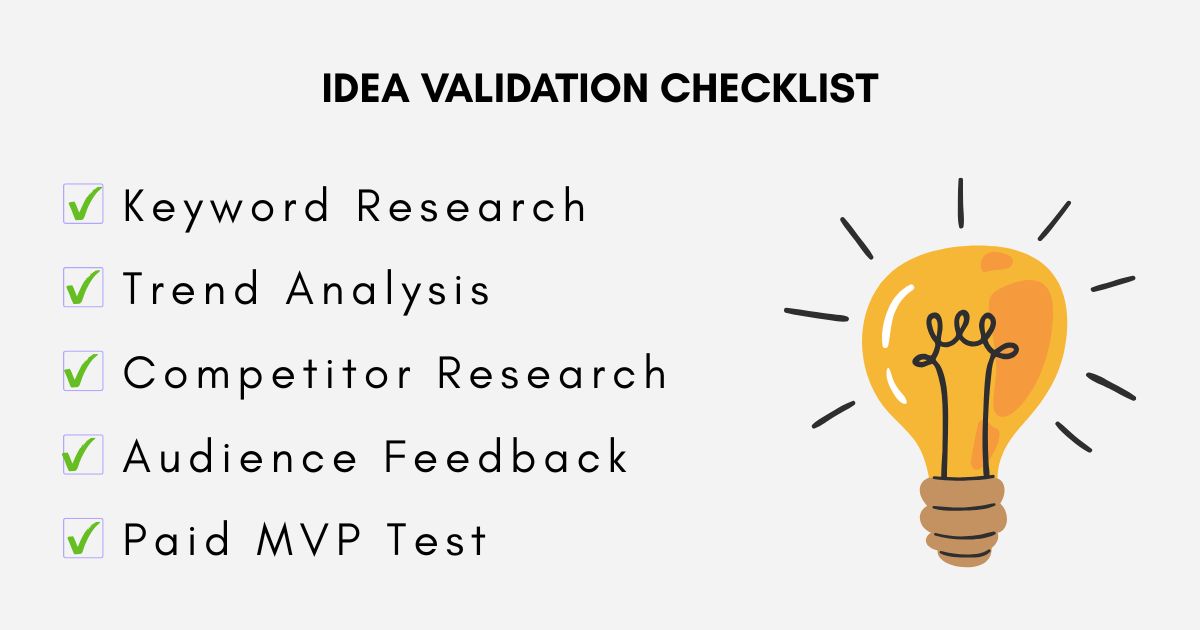
Use these 4 actions to validate any digital product ideas:
Keyword research
Use tools such as Google Keyword Planner to see how many people search for your topic. Search volume gives you a sense of opportunity size and helps you understand which ideas have stronger demand.
Trend analysis
Use Google Trends to check whether interest in your topic is rising, steady, or declining. You want to aim for ideas with clear upward momentum.
Competitor research
Study what others are already selling. Look at their product features, customer reviews, and pricing. This shows you what works, what is missing, and where you can provide a stronger or more focused solution.
Direct audience feedback
Join social media groups, Reddit threads, and niche forums. Read the questions people ask. Listen to their frustrations. These conversations reveal what your audience wants and what they cannot find elsewhere. When possible, talk to real people in your target niche. A short conversation often gives you insight that hours of online research cannot match.
4. Create your product
Once you have tested your niche and your idea, you can move into creating your digital product. Your goal is straightforward. Build something useful, release a minimum viable version, and refine it with real customer feedback.
Avoid perfection paralysis. The fastest way to create the right product for your audience is to put it in front of them as soon as possible. Early feedback gives you clarity, direction, and momentum. This approach speeds up your path to a strong final product. One of the biggest advantages of digital products is that they can evolve over time. You can improve them based on customer feedback, add new content or features, fix mistakes, and release updated versions whenever needed. This allows you to continue increasing the value of your product long after it has been launched.
Stay focused on value. Your product should solve a clear problem for your target market. Ask yourself whether it saves time, money, or effort, or helps your customers reach a specific goal.
Finally, treat your visuals, such as product photos, as a core part of your product. A striking eBook cover or a polished mockup can create trust in seconds and pull people in before they read a single word. Buyers make decisions fast, and strong visuals give your product the authority and presence it needs to stand out.
5. Set up your store
Once your digital product is ready, you need a reliable place to sell it. The most recommended choice is to sell digital products through your own online store. It gives you full control over your brand, your customer experience, and your profit margins. It also creates a home for your future products, helping you build repeat customers rather than one-time buyers.
Choosing the right eCommerce platform can make or break your business, as not all platforms are built for selling digital products. One of the best platforms to sell digital products is Payhip. You can start selling digital products without any monthly fees or upfront fees.
You choose how to pay. You can stay on the free plan and pay 5% per sale, or you can switch to a monthly plan at $29/month with a 2% fee, or $99/month with no extra fees. Every plan gives you full access to all Payhip features. Nothing stays locked behind higher pricing tiers.
How to sell digital products on Payhip:
- Sign up for a free Payhip account. Choose a name for your store (payhip.com/yourstorename).
- Set up your payout information so you can get paid when orders roll in. You can choose one or more payment processors that are available in your region.
- Upload your digital products.
- Customize your store design. You can create a stunning professional website within minutes. You won’t need any technical or design skills. Everything is easy, simple, and very beginner-friendly.
Payhip also gives you powerful features that make selling digital products easier and more profitable:
- High converting checkout so you can land more sales
- Automatic delivery of digital products
- Security tools such as PDF stamping and download limits
- Automatic sales tax and VAT handling for the US, Canada, UK and EU
- Marketing tools such as coupons, affiliate programs, cross-selling, etc
Payhip also gives you access to its online marketplace, where you can showcase your products next to other digital creators. It costs nothing, and it puts your offers in front of thousands of people already in a buying mood.
Sell Digital Products with Payhip
No monthly fees. No tech headaches.
6. Build your audience
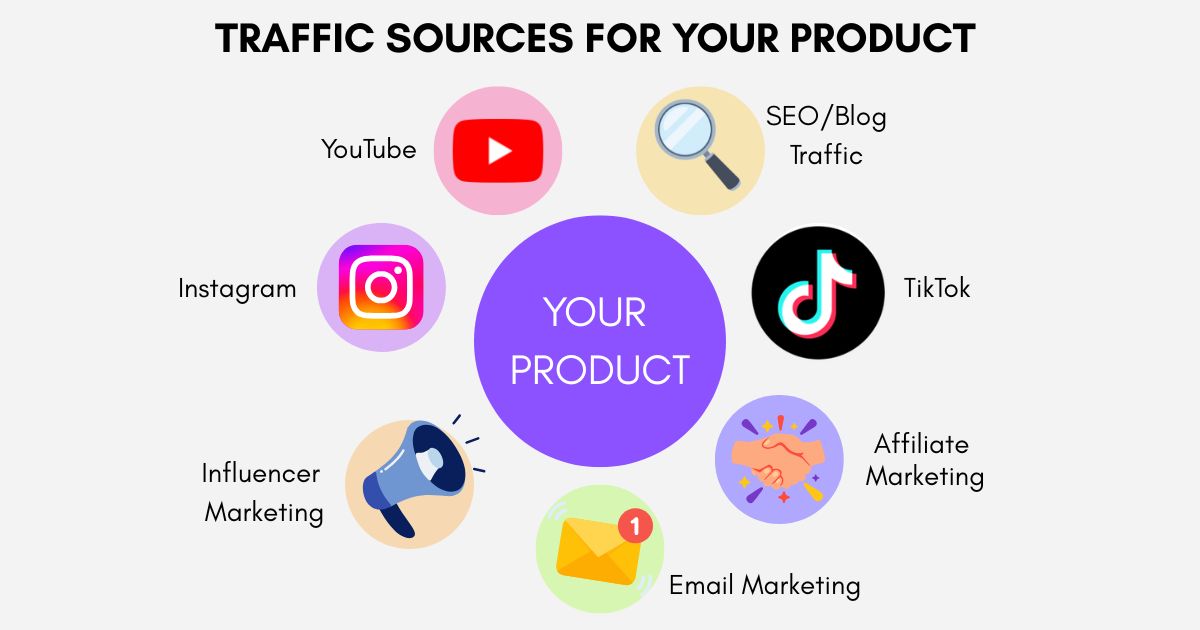
In a best-case scenario, you’ll be building an audience online before you launch your product to help ensure you generate the most sales possible. Here are a few proven methods to help you learn how to sell digital products and master how to market digital products.
Search engine optimization
The world of SEO is constantly changing, especially now that AI is in the picture. So don’t worry if you’re not an expert on the subject; you can still figure it out with a bit of patience. The important thing to remember when it comes to search is that you’re writing for humans, while also optimizing for specific keywords. You can use tools like Ahrefs to help you find what keywords are used and how much volume those keywords have to help you determine which landing pages and blog posts to start writing.
Content marketing
Creating content on a consistent, frequent schedule will drive the most traffic back to your site. Most people write many posts at once, then stop writing frequently. They don’t realize that writing content doesn’t stop at the first couple of posts. Success is achieved at volume. On Payhip, you can use the blog feature to help you craft blog posts.
Social media
Everything in marketing compounds. When you post on social media consistently, you’ll likely see better results than if you post sporadically or not at all. Every post is another opportunity to reach a new person, build trust, grow your audience, and learn what type of content resonates most with your niche. While most posts won’t go viral, consistent effort often leads to steady growth over time.
Focus on creating content that educates, entertains, or inspires your target audience. You can share tips, tutorials, behind-the-scenes content, common mistakes, success stories, case studies, and answers to frequently asked questions. Many successful digital products are created after noticing recurring questions in comments, direct messages, or community discussions.
When you’re active on a platform, pay attention to trends and viral elements that can help increase your reach. Certain content formats, hooks, editing styles, and trending audio tracks often perform better than others. While trends alone won’t build a business, incorporating them into valuable content can help more people discover you.
It’s also helpful to study creators who are already succeeding in your niche. Pay attention to how they structure their videos, write captions, craft hooks, and engage with their audience. Don’t copy their content directly. Instead, identify patterns and adapt successful strategies to your own voice and expertise.
Finally, remember that social media is a conversation, not a broadcasting channel. Respond to comments, answer questions, and engage with your audience regularly. The relationships you build today can become your first customers when it’s time to launch your digital product.
Email marketing
You can build an email list really fast if you have a lead magnet, such as an ebook people can download for free. This lead magnet helps attract more subscribers to your list so you can then serve your paid products, too. Email is a property that you own and can migrate to other platforms quite easily. However, spam scores matter. Be mindful of what words you use when writing emails to avoid spam filters.
Influencer marketing
You can learn how to sell digital products by looking at and partnering with influencers. For instance, you can pay for a sponsored post on an influencer’s page. You’ll then not only see sales from that influencer’s post, but you’ll also see how they positioned you to land those sales. Overall, you can both learn and profit from a partnership or an influencer.
Affiliate marketing
Affiliates help bring you paying customers while they take the burden and costs of marketing your product. You’ll need to pay them a commission on the sale. Higher commissions typically attract more affiliates. Payhip includes an affiliate marketing tool on all plans, including the free plan.
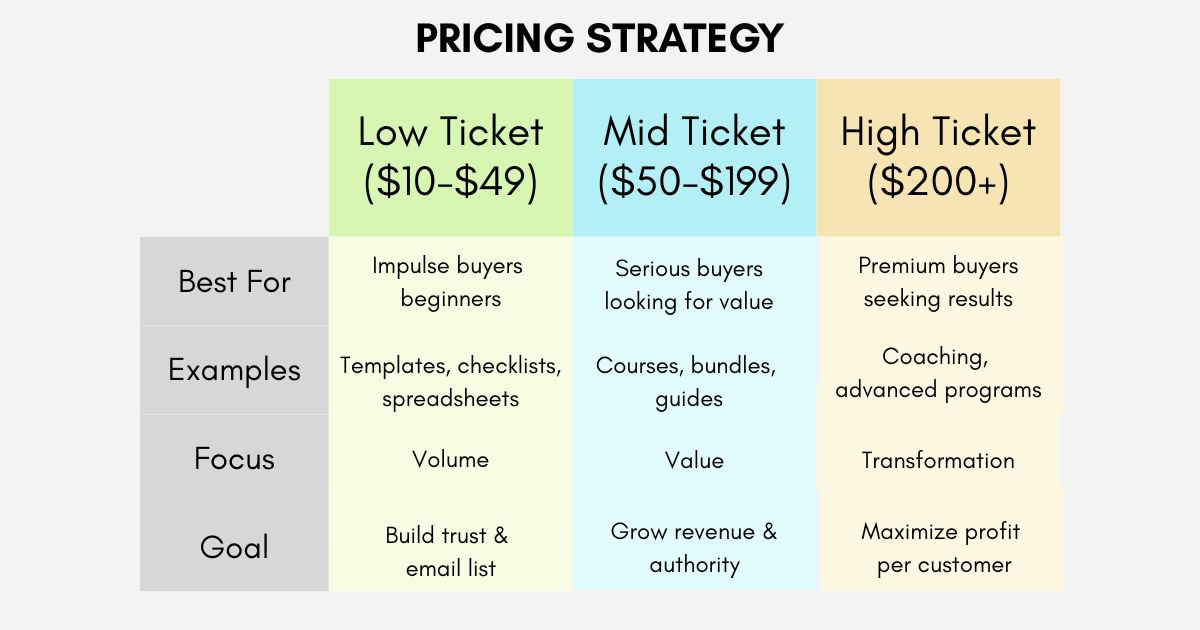
7. Set your product price
Your product price shouldn’t be an arbitrary number based on how much money you’d like to make. Instead, focus on the value your product delivers. If it helps people save time, make money, learn a skill, or solve a problem, those benefits should influence your pricing.
It’s also worth researching similar products in your niche to understand what customers expect to pay. If you’re launching your first product, consider offering an introductory price to generate early sales and feedback.
You also need to carefully understand your material, labor, marketing and advertising, third-party costs, and other factors. When you sell digital products, you still incur subscriptions or fees for tools you use, such as Canva, Payhip, asset library sites, Zoom, Facebook, Google Ads, and more, which will be spent either on creating your product or on selling your digital product. You also want to add in the time you spent creating your product.
Remember that pricing isn’t permanent. As you gather customer feedback and sales data, you can adjust your pricing over time to find what works best.
8. Create a funnel
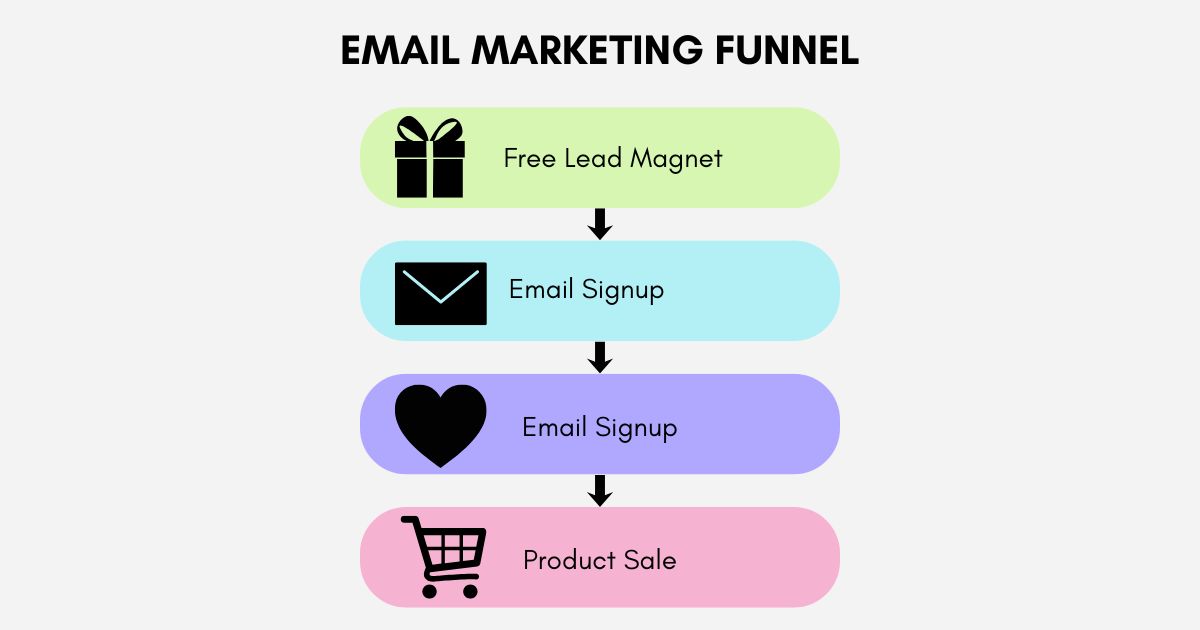
When it comes to selling digital products, having a funnel can yield favorable results. You can create a free ebook as a lead magnet to build your email list. That way, you have something to bring in warm leads when they’re either not ready to buy your product or they’re still waiting for its launch.
There are all sorts of lead magnets you could create. The time to create a lead magnet should be nowhere near as long as your actual product, but it still needs to be enticing or have a hook that leads to more subscribers. Lead magnets that work well for a digital product launch include:
- Checklist or cheat sheet
- Mini guide in niche
- Ebook, whitepaper, or industry report
- Template
- Webinar
- Email course
- One-page PDF
- Toolkit
- Workbook
- Trackers or spreadsheets
- Quizzes
- Action plan
- Prompt List
- Case studies
- Calculator
- Challenge
9. Launch your digital product
Congrats! You’re now ready to launch your digital product. The hard work of product creation is now out of the way. Your focus now should be on marketing to all your existing channels. Since you’ve been building an audience alongside your product’s creation, you can now promote on those channels. If you have an email list, you can send an email to your users to drive immediate, direct sales. Those active on social media can post stories with links to their product to get sales from that channel. Overall, the hard work of building an audience lets you get more sales sooner, so word-of-mouth marketing can spread organically.
10. Magnify your sales
After your big launch, you need to increase sales of your digital product. You can do this by creating product bundles to help you increase your average order value. People often want to feel like they get their money’s worth. With a bundle, you can add more products at a discounted rate to increase your order value.
Plus, after your launch, you can build an affiliate team to help drive even more sales to your products. Affiliates are paid a commission on sales while covering the upfront marketing costs of promoting your products. You can reduce your overall marketing costs by having affiliates handle the heavy lifting. As your sales grow, you’ll start to recognize your most profitable channels. You’ll want to optimize for these channels as you scale, so you can continue to earn money more profitably.
Common Mistakes to Avoid When You Sell Digital Products
1. Using AI exclusively for your product or marketing
Many creators look to sell digital products quickly. Unfortunately, that means some turn to using AI to create the entire product on their behalf. While AI is a helpful tool in making you more efficient in creating products or even in marketing them, using these tools exclusively will typically lead to higher refunds or lower sales. AI can help reduce workload, but it shouldn’t take over the entire process. The lowest-performing sellers typically rely too heavily on AI in their products, which negatively impacts sales. Adding a human touch to your products and marketing will make your product much better.
2. Spamming your product everywhere
Marketing isn’t about forcing your message everywhere and hoping it’ll drive sales. You need to be intentional about where you build your audience and where you promote your product. Adding links to your product in every Facebook or LinkedIn group won’t necessarily get you sales. Most of the time, groups underperform without prior visibility or relationship-building. A launch should typically be targeted to an audience you’ve been building. It’s not about sending links to your product in as many places as possible. You need to think about the strategy and intention of your post.
3. No landing pages
Landing pages are high-intent website pages that promote features or your core product. They typically have the highest conversion rates because they’re the pages most closely tied to the core product. You need to create landing pages for all your features, products, and keywords related to your product. These pages will help drive more targeted traffic to your website, encouraging people to either sign up for your product or buy it.
4. Spending more time creating than marketing
Many creators love creating products but hate the marketing aspect. Marketing should be done as you create the product, so you can have an existing audience by the time you launch. Creating a product without marketing won’t magically lead to sales. If your sales are underperforming, it’s likely because you didn’t invest enough in marketing. Some sellers spend months promoting their product before and after. It’s not just a couple of ads or posts on social media that’ll get you sales. You need to devote the time to building your authority and audience on the topic you’re creating products for.
5. Failing to consistently promote it
To successfully sell digital products, it’s important to know that marketing isn’t a one-time activity. Many creators will spend months promoting their products. For instance, an author will attend many podcasts over a few months to build hype for their release. Once they’ve released their book, they’ll run additional promotions, such as an email campaign, media interviews, and getting their book featured on book lists.
6. Failing to create more products in the niche
Most creators don’t achieve success on their first try. Your first of anything will always be your worst. As you keep creating, you’ll get better at attracting the right buyers and creating more products for them. Many successful authors achieve success from book series. The same goes for other products as well. Creating one social media post won’t make you famous. However, creating them multiple times a week for over a year will.
Creating one product won’t make you a record-breaking seller. In business, the art of compounding typically creates success. The more products you create, the better you get at finding sales. As you start figuring out what your money makers are, you can remove underperforming products, so only your best products are featured to drive the most sales to those items
Frequently Asked Questions
What are the best digital products to sell?
The best digital products to sell are online courses, templates, ebooks, spreadsheets, planners, printables, and more. You can choose to create digital products based on the industry you work in. For instance, if you’re in finance, budget spreadsheets tend to be popular.
How do beginners start selling digital products?
Beginners start selling digital products by researching niches and validating their ideas through an actual sale of a micro version of their product. Other beginners have large social media followings they’ve built that they now want to monetize. Since they’ve already done the upfront work of building an audience, they get direct and immediate sales, even if it’s the first product they’ve ever created.
Can you earn passive income by selling digital products?
Yes, you can earn passive income by selling digital products. If you have ads running, send out an email campaign, or post on social media, you can get sales while you sleep or even when you’re not actively working on your business. As long as the product is active, you can be found organically. There is typically a lot of upfront marketing work that needs to be done to become a passive income seller, such as creating blog content, building landing pages, building a social media following, and more. However, as your audience grows, you’ll find that it becomes much easier to earn true passive income with time.
How much money can you make selling digital products?
You can earn anywhere from $0 to hundreds of thousands of dollars selling digital products. Various factors come into play, such as the size of your audience, the profitability of your ads, the marketing effort you put in, and the conversion rate of your specific product. Beginners with no existing audience will typically earn less than influencers with millions of followers and bigger budgets for their launch.
What’s the best platform for selling digital products?
The best platform for selling digital products is Payhip, which offers a free plan and a wealth of features. If you’re selling courses, you’ll be able to drip content, give quizzes and assignments, and even award certificates for completion to your students. For ebooks, you can PDF-stamp your files and limit the number of downloads your customers can make to prevent piracy. Plus, you can generate license keys or upload your own if selling software. Overall, Payhip delivers everything you need while allowing you to sell digital products profitably.
Do I need an audience before launching a digital product?
You don’t need an audience before launching a digital product. However, it definitely helps to have one in place to ensure you get the sales volume you want early on. It’s recommended to start marketing your product as you’re still creating it, so you have an existing audience to promote to. When you choose to sell digital products on Payhip, you can sell on Payhip Marketplace to get even more sales.
Should I use AI for my digital products?
While AI is a helpful tool, you typically don’t want your entire product made with AI. Our data shows that sellers with AI products typically underperform those who create their own products. While AI may help offset some of the work, it shouldn’t be used for the entire process. Many buyers are already skeptical of AI products, referring to much AI-generated content as ‘AI slop.’
Where can I sell digital downloads?
You can sell digital downloads on your own website using Payhip. On Payhip, you can also sell digital downloads on Payhip Marketplace, where you won’t be charged additional fees beyond Payhip’s 5% fee on the free plan or the fee you pay for your monthly subscription.
Are digital products profitable in 2026?
Yes, digital products are still profitable in 2026. When creating products, you need to give a lot of value. Be generous with the information and insights you share. Don’t create a generic product that people can easily search for. Give compelling insights that make your product more valuable than learning on your own. The more golden nuggets you share, the more value people will get out of your course.


Payhip
Join over 130,000 creators who have launched their businesses selling digital products, online courses, memberships, coaching, and physical products.
Get started for free today
Comments
6 Comments
Thank you for this thorough info!
No problem at all. 🙂
Choosing a good server-based store, meaning the right application, is absolutely essential. Reaching potential customers, which isn’t easy these days, should also help… but that’s just theory 🙂 Thanks for your guide!
Great insight, Pawel. Thanks for sharing!
Selling digital products has never been more accessible, but success in 2026 is about much more than simply creating something and putting it online. The most successful creators focus on solving a specific problem, understanding their audience, and consistently delivering value. One of the biggest advantages of digital products is scalability.
Whether it’s an ebook, template, course, design asset, or software tool, you can create it once and sell it repeatedly. The challenge is standing out in an increasingly crowded marketplace.
I’ve found that clear communication and strong storytelling often make the difference between a product that gets ignored and one that attracts loyal customers.
Yes, creating the product is only part of the equation. Understanding your audience and clearly communicating how your product helps solve a problem can make a huge difference. 🙂
Leave a Comment