
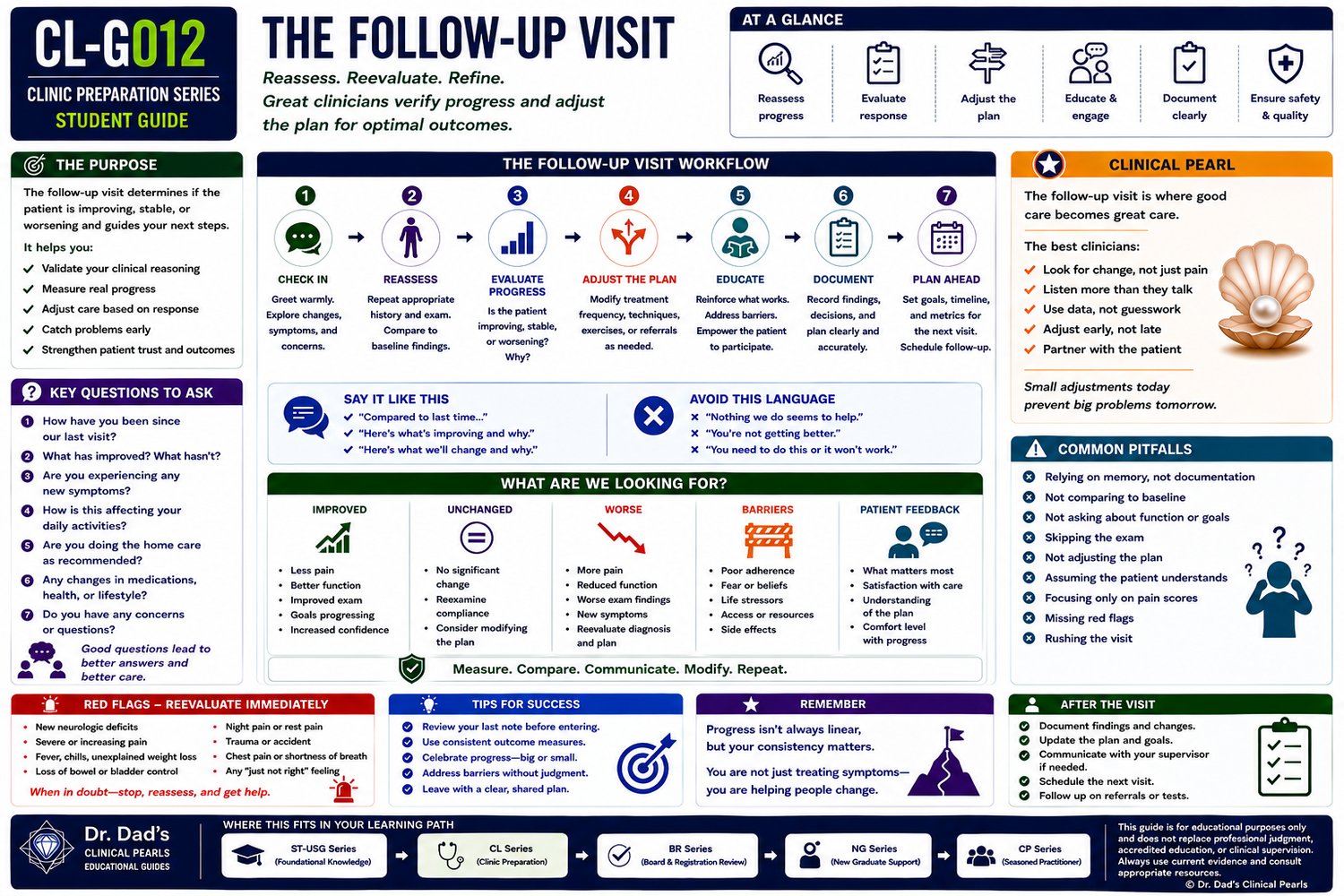
CL-G012 THE FOLLOW-UP VISIT
On Sale
$7.95
$7.95
Key Topics
- Establishing the purpose of the follow-up encounter
- Reviewing changes since the previous visit
- Reassessing the patient’s chief complaint and associated symptoms
- Evaluating changes in pain, function, activity tolerance, and daily activities
- Identifying new symptoms, concerns, or changes in the clinical presentation
- Determining whether the patient is improving as expected
- Comparing subjective progress with relevant objective findings
- Repeating clinically meaningful examination procedures when appropriate
- Using outcome measures to monitor patient progress
- Distinguishing improvement, temporary fluctuation, plateau, and deterioration
- Determining whether the original working diagnosis remains appropriate
- Recognizing findings that require modification of the differential diagnosis
- Assessing the patient’s response and tolerance to treatment
- Reviewing adherence and response to home-care recommendations
- Determining whether treatment should be continued, modified, reduced, or discontinued
- Recognizing when additional investigation, referral, or co-management is warranted
- Adjusting treatment goals and the management plan based on clinical progress
- Communicating progress and expectations clearly with the patient
- Establishing appropriate timing for formal reassessment
- Documenting changes, clinical decisions, and the rationale for ongoing care