
CL-G005 CHIEF COMPLAINT TO WORKING DIAGNOSIS
On Sale
$7.95
$7.95
Key Topics
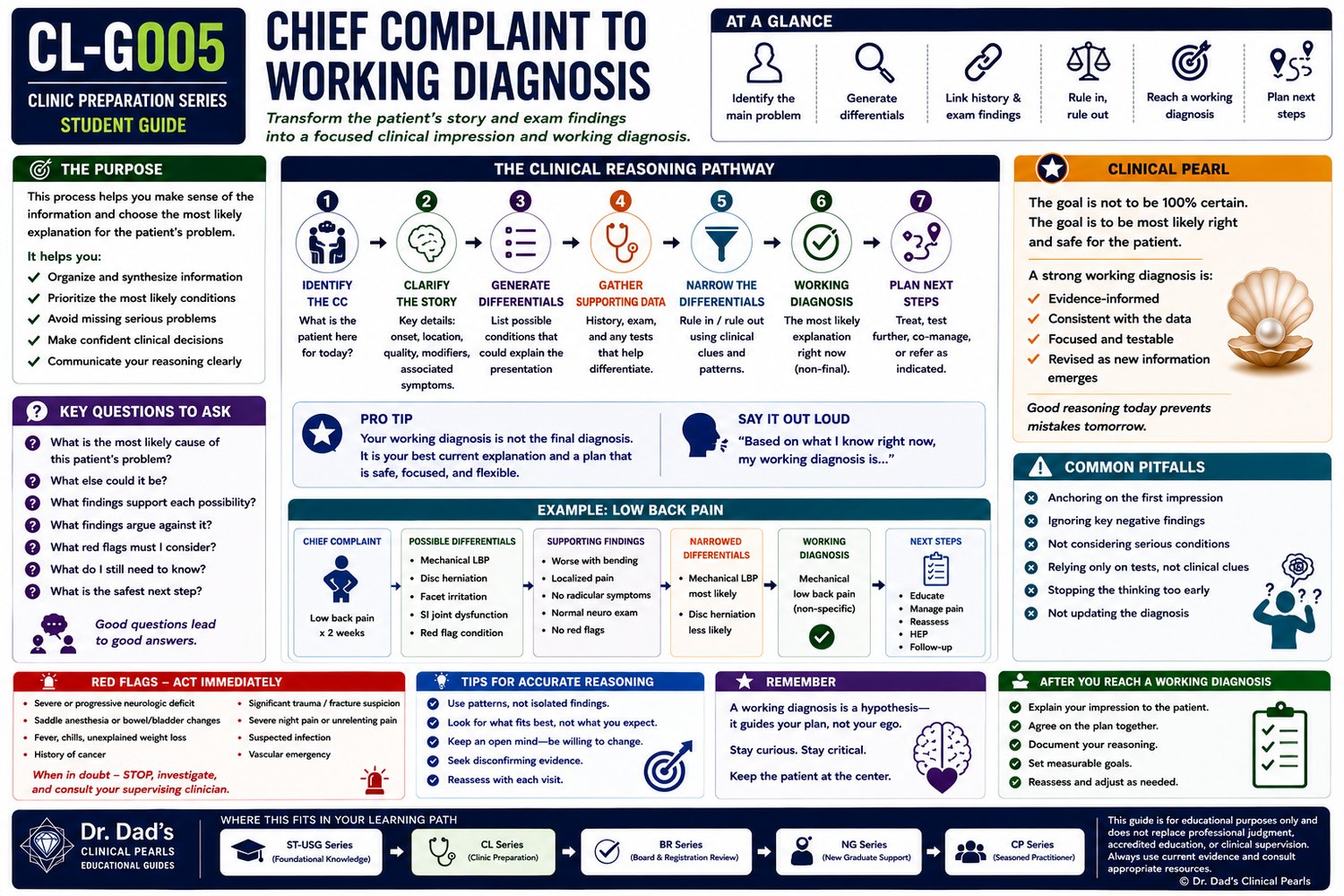
- Clarifying the patient’s primary chief complaint
- Identifying the onset, location, duration, character, and progression of symptoms
- Recognizing aggravating and relieving factors
- Identifying associated symptoms and clinically relevant historical information
- Distinguishing mechanical, neurologic, systemic, and referred presentations
- Recognizing red flags and diagnostic warning signs
- Using the history to generate initial diagnostic possibilities
- Selecting examination procedures based on the presenting complaint
- Correlating subjective symptoms with objective clinical findings
- Determining the significance of positive and negative examination findings
- Developing an appropriate differential diagnosis
- Prioritizing the most likely diagnostic possibilities
- Identifying conditions that should not be missed
- Establishing a reasonable and defensible working diagnosis
- Recognizing when the diagnosis remains uncertain
- Determining when additional testing, imaging, consultation, or referral may be appropriate
- Documenting the clinical reasoning supporting the working diagnosis