
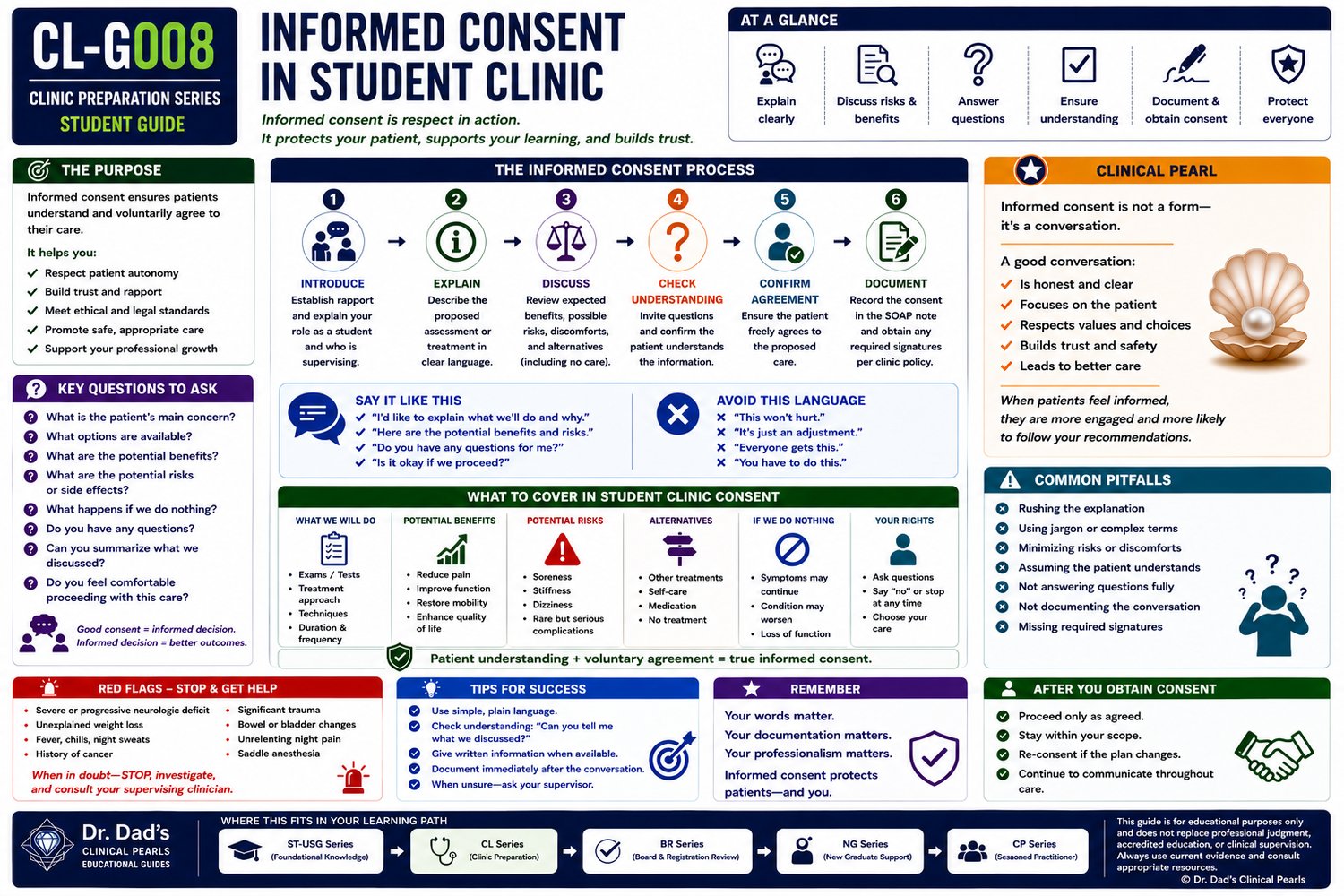
CL-G008 INFORMED CONSENT IN STUDENT CLINIC
On Sale
$7.95
$7.95
Key Topics
- Understanding the purpose of informed consent in the student clinic setting
- Recognizing informed consent as an ongoing communication process rather than simply obtaining a signature
- Explaining the student clinician’s role and level of supervision
- Identifying the supervising clinician and clarifying their involvement in patient care
- Communicating the proposed examination, treatment, and management plan in understandable language
- Explaining the anticipated benefits and reasonable treatment expectations
- Discussing material risks and potential adverse effects
- Presenting reasonable alternatives, including the option of no treatment
- Confirming that the patient has an opportunity to ask questions
- Assessing patient understanding before proceeding
- Recognizing the importance of voluntary decision-making without pressure or coercion
- Understanding patient capacity and situations requiring additional consent considerations
- Respecting the patient’s right to refuse or withdraw consent
- Obtaining specific consent when the examination or procedure warrants additional explanation
- Recognizing when changes in the management plan require renewed discussion or consent
- Documenting the informed-consent discussion appropriately
- Understanding the responsibilities of both the student clinician and supervising clinician
- Applying institutional policies and applicable jurisdictional requirements for informed consent
- Integrating informed consent into professional, patient-centered clinical communication