
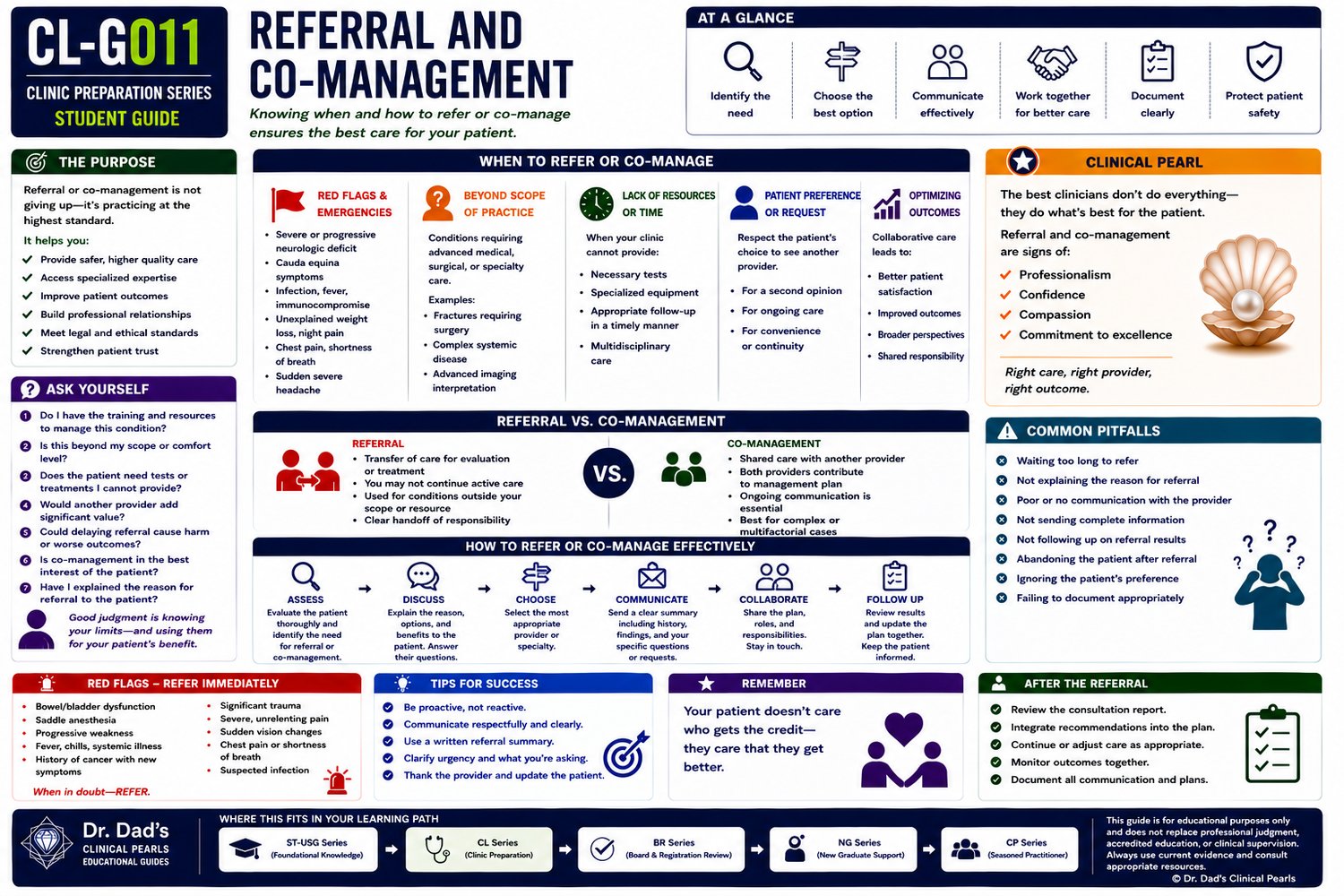
CL-G011 REFERRAL AND CO-MANAGEMENT
On Sale
$7.95
$7.95
Key Topics
- Understanding the difference between referral, consultation, and co-management
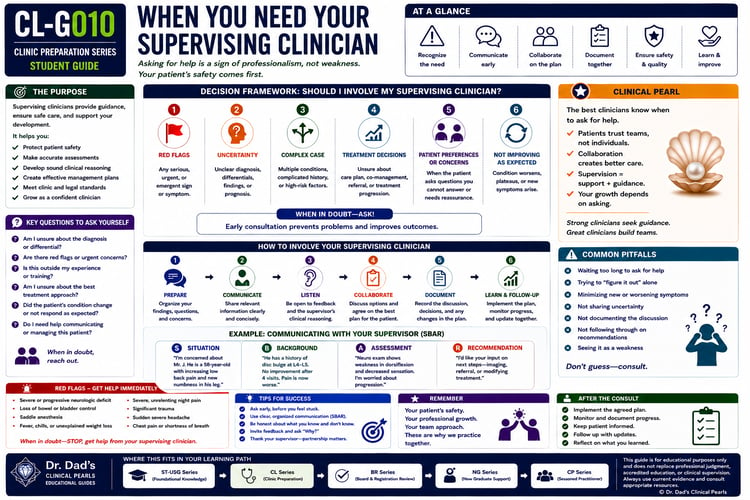
- Recognizing when a patient’s presentation requires care beyond the student clinician’s scope or competence
- Identifying red flags and clinical findings requiring prompt referral
- Distinguishing urgent, expedited, and routine referral situations
- Determining when additional diagnostic evaluation or specialist assessment is appropriate
- Recognizing when co-management may provide a safer or more comprehensive approach
- Identifying the appropriate healthcare professional or specialty for referral
- Discussing the rationale for referral or co-management with the supervising clinician
- Communicating the recommendation clearly and professionally to the patient
- Addressing patient concerns or reluctance regarding referral
- Providing appropriate safety-net instructions while awaiting further evaluation
- Preparing concise and clinically relevant referral information
- Communicating pertinent history, examination findings, clinical concerns, and investigations
- Coordinating care with other healthcare professionals
- Understanding the importance of receiving and reviewing consultation reports
- Integrating recommendations from other providers into the patient’s management plan
- Determining whether chiropractic care should continue, be modified, or be temporarily discontinued
- Documenting referrals, consultations, communications, and co-management decisions
- Following up to confirm that recommended referral or investigation has occurred
- Recognizing referral and co-management as components of responsible, patient-centered clinical care