
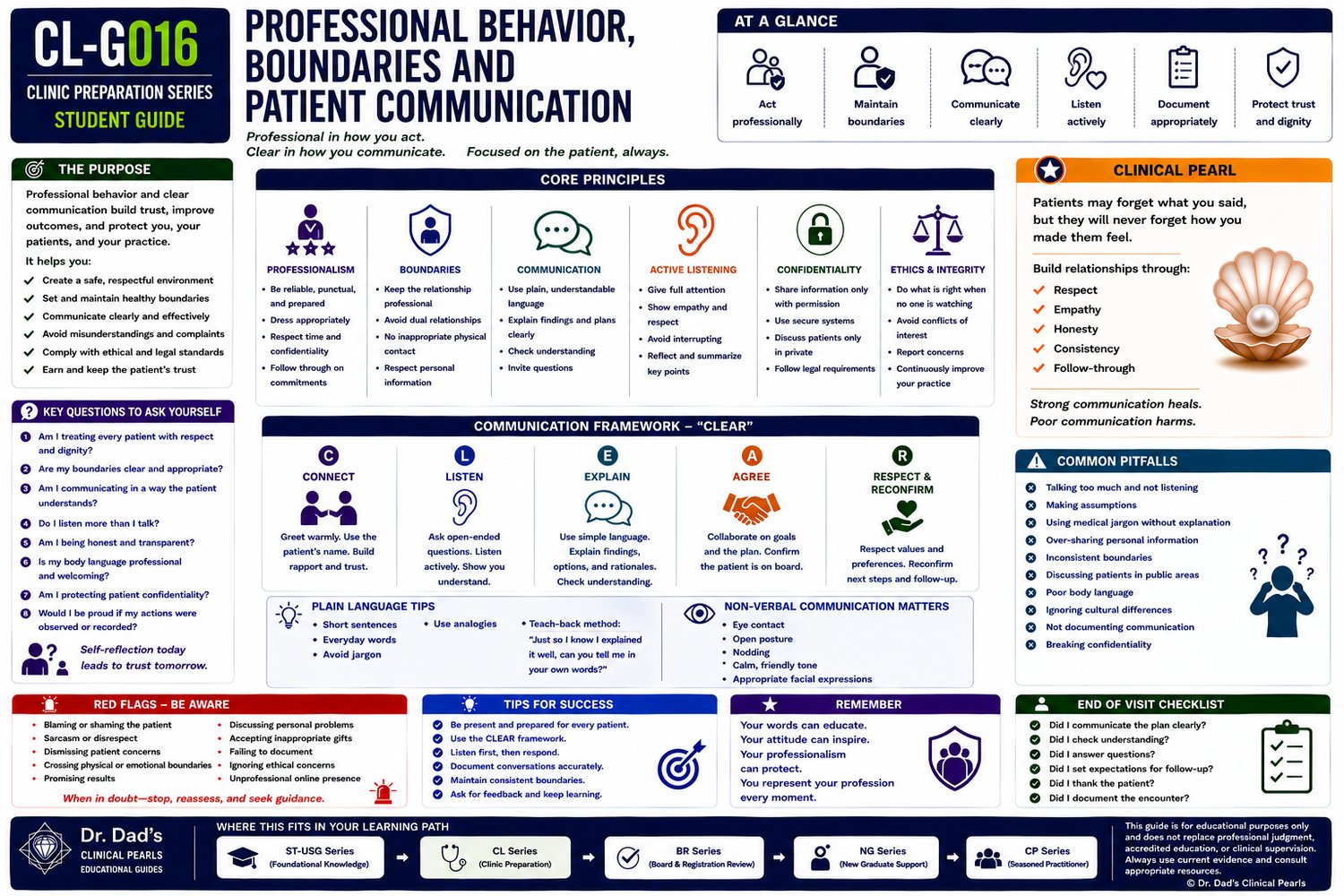
CL-G016 PROFESSIONAL BEHAVIOR, BOUNDARIES, AND PATIENT COMMUNICATION
On Sale
$7.95
$7.95
Key Topics
- Understanding professional behavior in the clinical environment
- Establishing appropriate clinician–patient boundaries
- Maintaining a respectful and professional therapeutic relationship
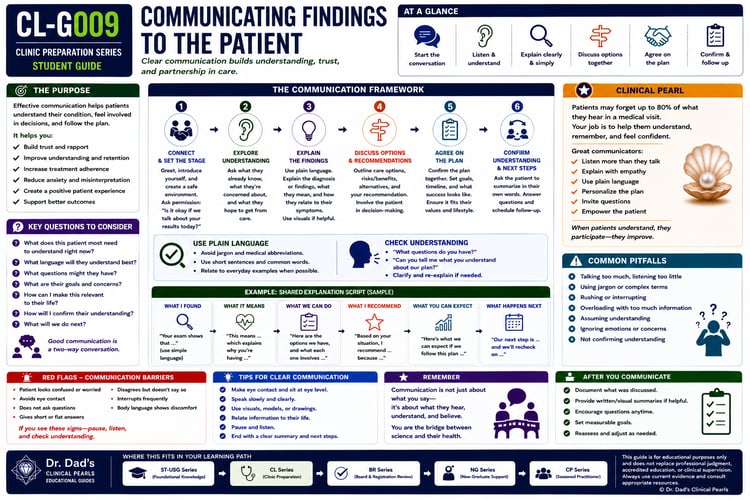
- Communicating with patients clearly, respectfully, and confidently
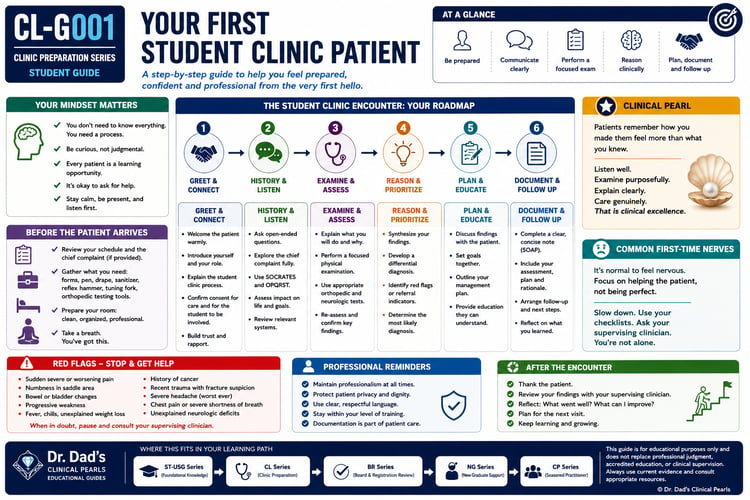
- Introducing yourself and explaining your role appropriately
- Using professional language while avoiding unnecessary clinical jargon
- Demonstrating active listening and acknowledging patient concerns
- Adapting communication to different levels of health literacy
- Recognizing verbal and nonverbal communication cues
- Managing sensitive or potentially uncomfortable clinical discussions
- Maintaining appropriate physical boundaries during examination and treatment
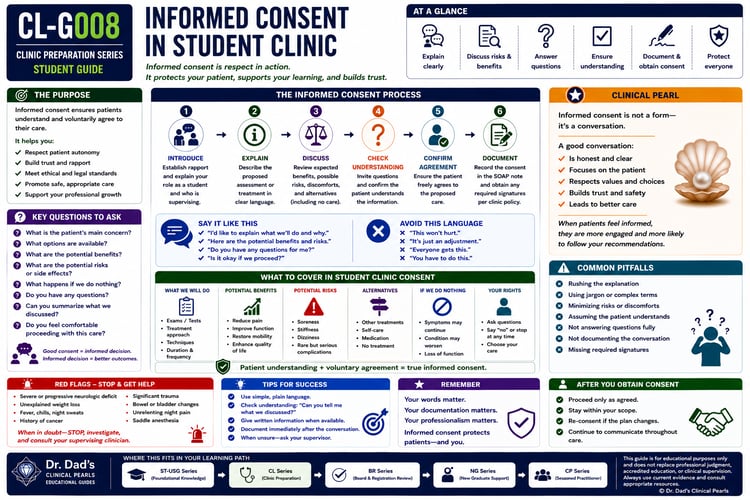
- Explaining procedures before initiating physical contact
- Recognizing when consent should be reconfirmed during an encounter
- Respecting patient privacy, dignity, cultural differences, and personal preferences
- Maintaining confidentiality in clinical and non-clinical settings
- Recognizing inappropriate patient or clinician behavior and responding appropriately
- Managing requests that fall outside appropriate professional boundaries
- Avoiding dual relationships and conflicts of interest
- Communicating professionally with supervising clinicians, staff, and other healthcare providers
- Managing disagreement, frustration, or difficult patient interactions professionally
- Maintaining professionalism in electronic communication and social media
- Recognizing how appearance, punctuality, reliability, and preparation influence professional credibility
- Accepting feedback and responding constructively to supervision
- Understanding how professional behavior supports patient trust, safety, and continuity of care