
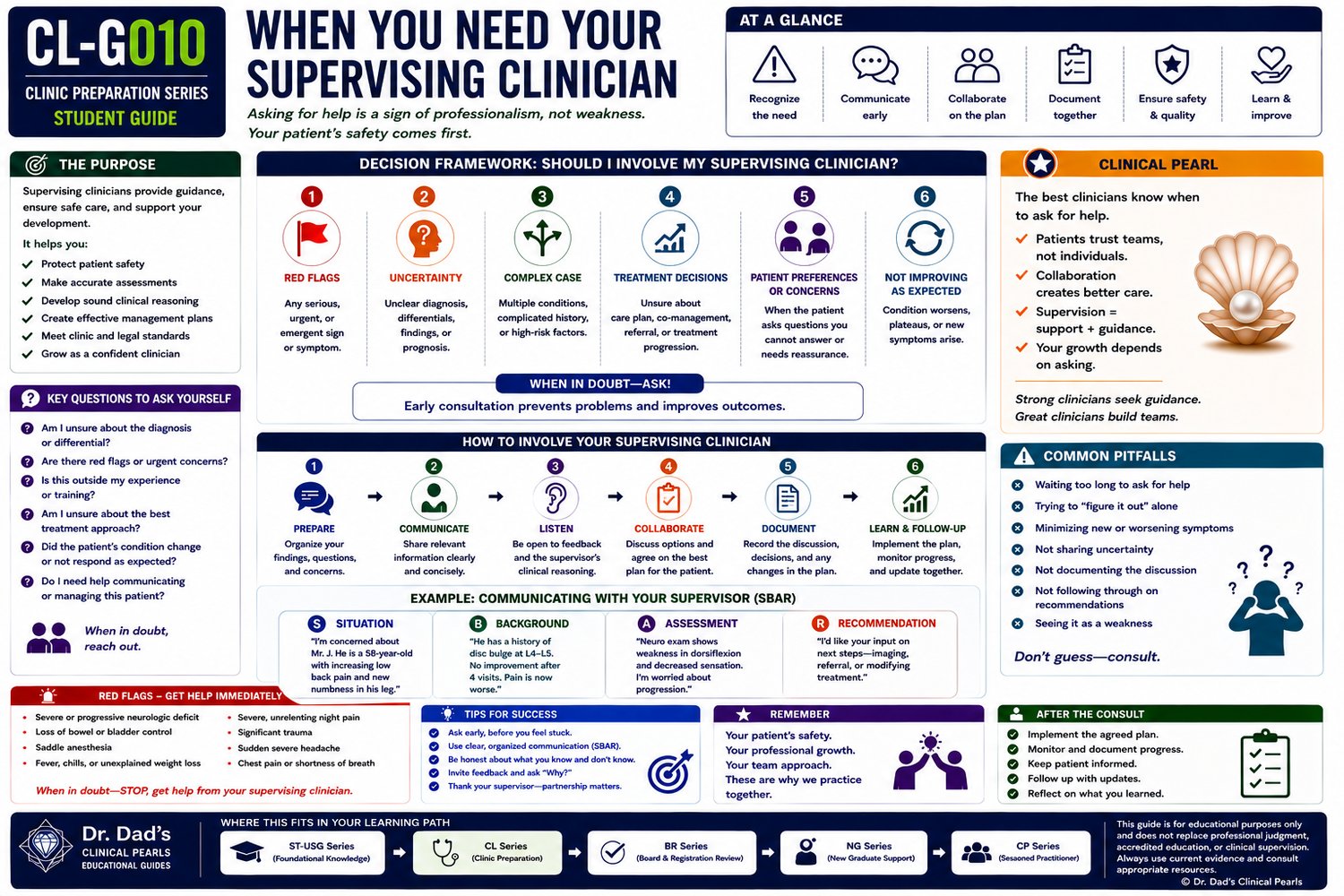
CL-G010 WHEN YOU NEED YOUR SUPERVISING CLINICIAN
On Sale
$7.95
$7.95
Key Topics
- Understanding the role and responsibilities of the supervising clinician
- Recognizing the limits of the student clinician’s knowledge, experience, and authority
- Identifying situations that require immediate supervisory involvement
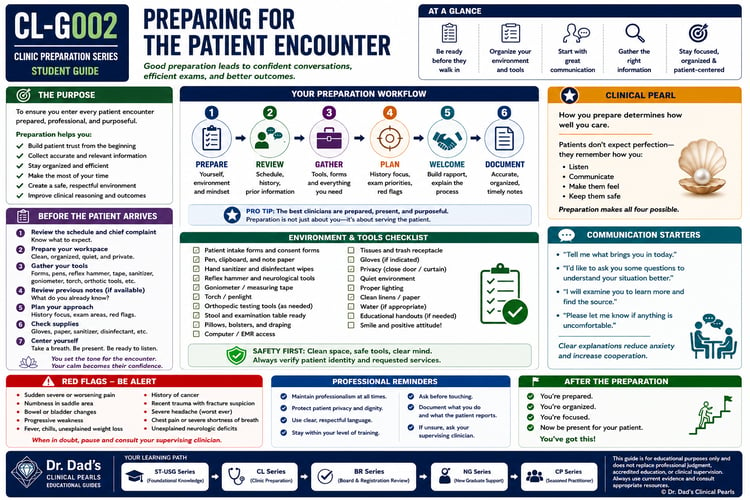
- Recognizing red flags, contraindications, and unexpected clinical findings
- Seeking assistance when the diagnosis or clinical significance of a finding is uncertain
- Consulting before proceeding with unfamiliar examination or treatment procedures
- Recognizing when a patient’s presentation falls outside the student’s current level of competence
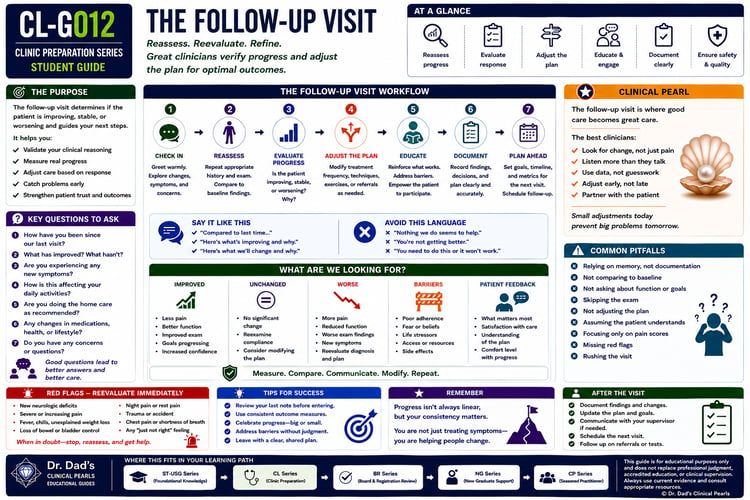
- Seeking guidance when the patient’s condition changes unexpectedly
- Managing conflicting or inconsistent history and examination findings
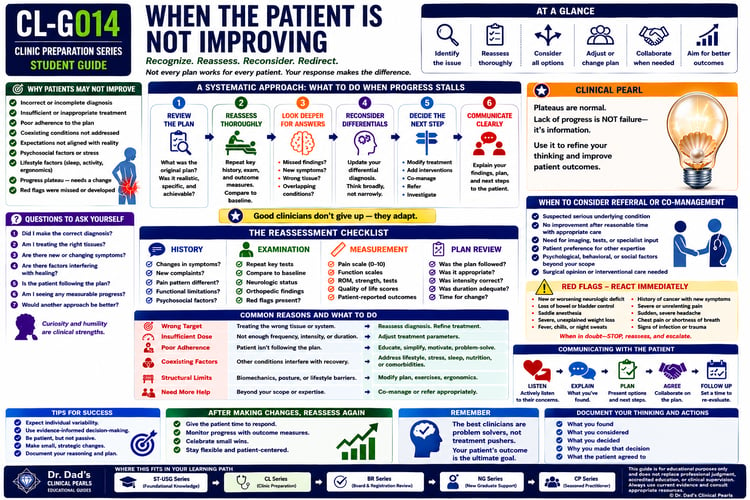
- Consulting when the patient is not responding to care as expected
- Recognizing situations requiring additional investigation, imaging, referral, or co-management
- Knowing when treatment should be delayed until supervisory review occurs
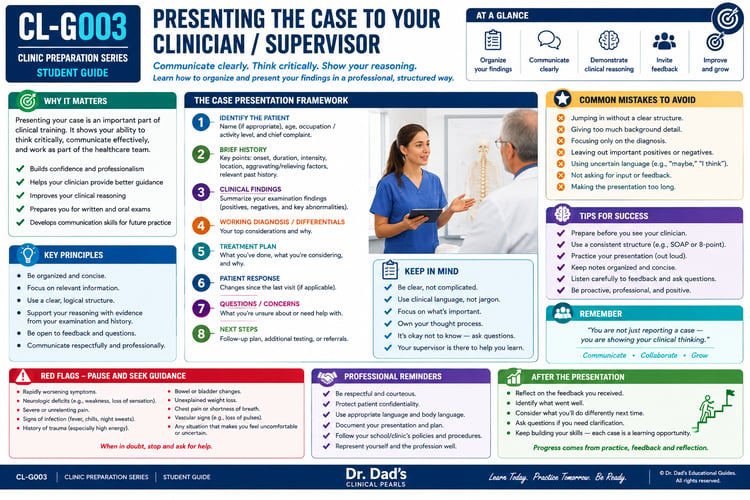
- Communicating clinical concerns clearly and efficiently to the supervising clinician
- Presenting the relevant history, examination findings, assessment, and proposed plan
- Incorporating supervisory feedback into clinical decision-making
- Understanding when the supervising clinician should directly assess the patient
- Documenting supervisory consultation and resulting changes to the management plan
- Developing clinical independence while recognizing when asking for assistance is the appropriate clinical decision