
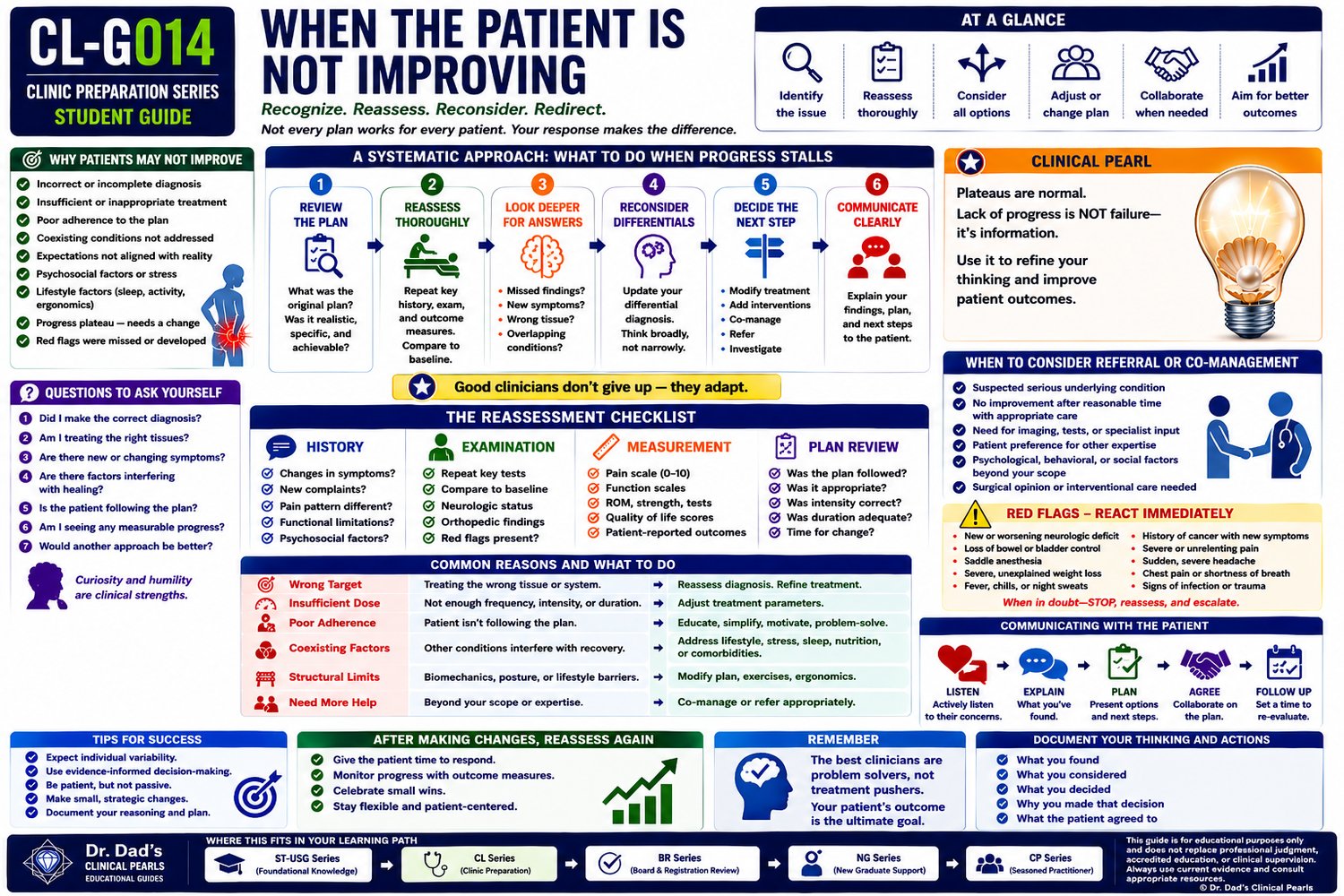
CL-G014 WHEN THE PATIENT IS NOT IMPROVING
On Sale
$7.95
$7.95
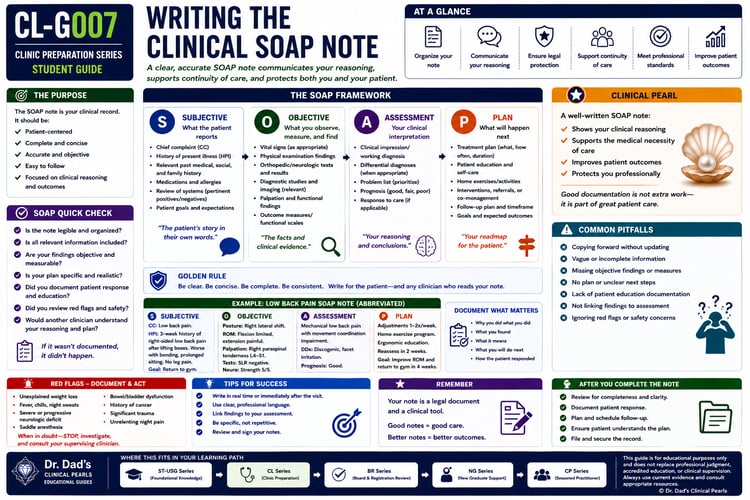
Key Topics
- Recognizing when the patient’s response is outside the expected course of recovery
- Distinguishing slow improvement, plateau, treatment failure, and clinical deterioration
- Reassessing the original chief complaint and current symptom pattern
- Comparing current findings with the initial clinical baseline
- Reviewing objective findings and outcome measures for meaningful change
- Reconsidering the accuracy of the working diagnosis
- Reopening and reprioritizing the differential diagnosis
- Identifying overlooked red flags or evolving warning signs
- Recognizing new symptoms or findings that change the clinical picture
- Evaluating whether the current treatment approach remains appropriate
- Reviewing treatment frequency, dosage, technique, and patient tolerance
- Assessing adherence to home care, exercise, and activity recommendations
- Considering psychosocial, occupational, lifestyle, and other recovery barriers
- Determining whether additional examination or diagnostic investigation is warranted
- Recognizing when imaging or laboratory investigation may be appropriate
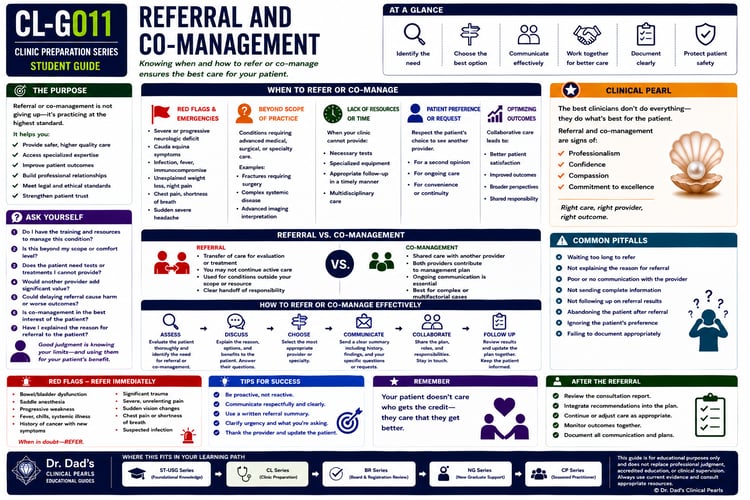
- Determining when consultation, referral, or co-management is necessary
- Knowing when treatment should be modified, suspended, or discontinued
- Establishing revised goals and appropriate next steps
- Communicating lack of expected progress honestly and professionally with the patient
- Documenting the reassessment, revised clinical reasoning, and changes to the management plan