
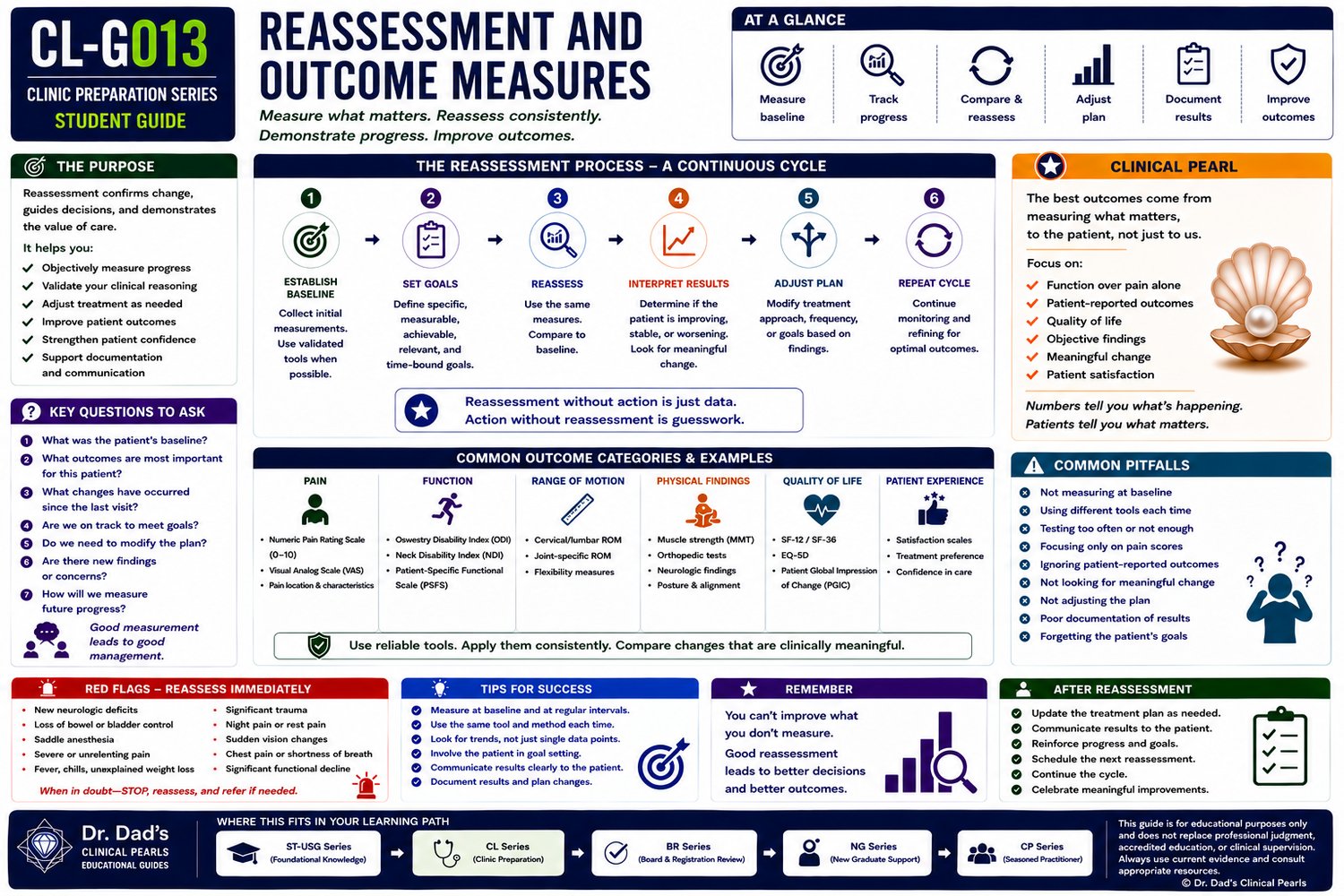
CL-G013 REASSESSMENT AND OUTCOME MEASURES
On Sale
$7.95
$7.95
Key Topics
- Understanding the purpose of formal clinical reassessment
- Distinguishing routine follow-up from a structured reassessment
- Determining appropriate timing for reassessment
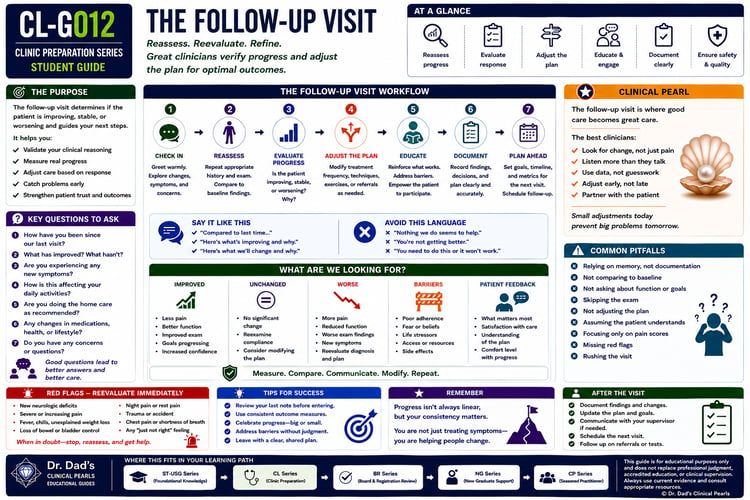
- Comparing current findings with the initial clinical baseline
- Reassessing the patient’s chief complaint, symptoms, and functional limitations
- Selecting clinically relevant patient-reported outcome measures
- Using pain scales appropriately without relying on pain alone
- Measuring changes in function, activity tolerance, and participation
- Repeating relevant objective examination procedures
- Comparing subjective improvement with objective clinical findings
- Recognizing clinically meaningful change versus normal symptom fluctuation
- Identifying improvement, plateau, deterioration, or failure to progress
- Evaluating progress toward established treatment goals
- Determining whether the working diagnosis remains appropriate
- Recognizing when the differential diagnosis should be reconsidered
- Identifying findings requiring additional investigation, referral, or co-management
- Using reassessment findings to continue, modify, reduce, or discontinue care
- Establishing revised goals and management strategies when appropriate
- Communicating reassessment findings and progress clearly to the patient
- Documenting outcome measures, clinical progress, and the rationale for subsequent management decisions